How to Improve Quality and Yield and Increase Benefits in Straw Mushroom Cultivation
When cultivating straw mushrooms, properly applying certain measures can achieve the effect of excellent yield and increased production. The specific methods:
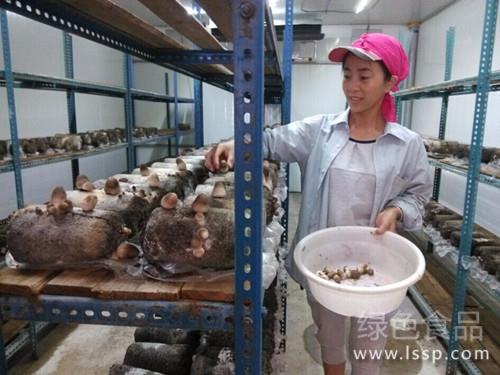
Straw mushroom
1. Secondary inoculation:
Adopting the secondary inoculation measure is beneficial for increasing straw mushroom yield. Straw mushroom mycelium grows quickly and is extremely prone to aging, which weakens its vitality and prevents it from effectively using the nutrients in the substrate to continue producing mushrooms. After harvesting the first flush of mushrooms, loosen the surface of the substrate, splash on lime water, adjust the pH of the substrate to 8-9, then broadcast spawn on the substrate surface, and after sowing cover with a thin layer of fermented substrate. Alternatively, after harvesting the first and second flushes of mushrooms, turn the substrate block over, turn the bottom layer of substrate to the surface, spray with 1% lime water to replenish water and adjust the pH, then perform a second inoculation on the surface with an inoculation amount of 2-3%, which generally can increase yield by about 30%. When cultivating straw mushrooms with rice straw, 4 days after stacking the straw and sowing, insert spawn into the gaps between the straw layers for secondary inoculation, with an inoculation amount of about 20% of the first application. In this way, after the first flush of mushrooms is harvested, the spawn sown the second time can decompose and accumulate nutrients from the straw pile and continue to produce mushrooms.
2. Adjusting pH:
The growth of straw mushrooms consumes a large amount of nutrients from the substrate and produces metabolic products, among which organic acids can increase the acidity of the substrate and affect the recovery of straw mushroom mycelium and continued mushroom production. After harvesting the first flush of mushrooms, supplementing some nutrient solution and adjusting the substrate to slightly alkaline can promote mycelial recovery, extend the harvest period, and increase mushroom yield.
1. Spraying 3% lime water on the substrate not only replenishes water but also makes the substrate slightly alkaline.
2. Spraying the substrate with 0.1% urea and bran water (add 10 kg of bran to 100 kg of water, boil and filter, take 50 kg of filtrate and add 50 kg of clean water). The urea amount is 0.1-0.2%; the amount must not be too much, otherwise it easily produces Coprinus contaminant fungi.
3. Supplement with dry cow dung and human urine. Break up the dry cow dung, add 40% human urine, mix evenly, and before use, pile it for 1 day; after each flush of mushrooms is harvested, apply it to the substrate surface. If chicken or duck manure is added, the effect will be even better.
3. Implementing casing soil:
Casing soil for straw mushrooms can improve the water retention performance of the substrate and its adaptability to humidity changes, making the mushroom bodies larger, reducing dead mushrooms, and increasing yield by 20-40%. The casing soil material can be garden soil (dug from 8-10 cm below the surface), and the casing soil thickness is generally preferably 2 cm.
4. Covering with plastic film:
After inoculating straw mushrooms, covering the mushroom bed with plastic film on all sides can raise and stabilize the substrate temperature, maintain humidity, increase the carbon dioxide concentration in the microclimate around the substrate surface, prompt the reproduction of relevant microorganisms, and promote the growth of straw mushroom mycelium. Covering with plastic film should be done immediately after inoculation, and earlier is better than later. To prevent the plastic film from clinging tightly to the substrate surface and affecting the normal respiration of the spawn, some rice straw or wheat straw soaked in lime water can be scattered on the substrate surface. After covering with plastic film, check the substrate temperature; if the substrate temperature exceeds 40°C, uncover the film promptly to cool it down. After covering with plastic film for 4 days, uncover the film regularly for ventilation or prop up the film with bamboo strips to prevent surface mycelium from growing excessively and affecting the extension of mycelium into the substrate. After mushroom buds appear, uncover the film promptly or prop up the film to prevent the mushroom buds from dying of oxygen deprivation.