Field management techniques for summer Chinese cabbage hitting the market during the vegetable off-season
Summer Chinese cabbage is a type of napa cabbage marketed between summer and autumn, when the vegetable supply is in its off-season, so the economic returns are considerable. However, because summer has high temperatures and abundant rain, it is a season with a high incidence of pests and diseases. When growing napa cabbage, key steps must be grasped: the variety must be chosen correctly and appropriate management measures taken to achieve stable and high yields.
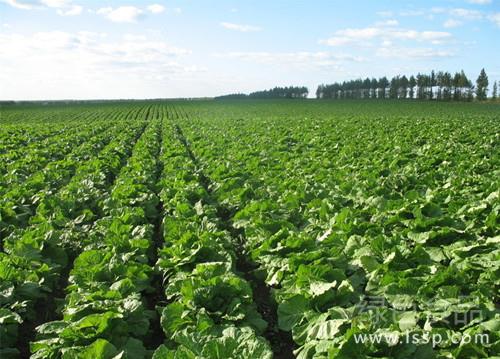
Summer Chinese cabbage
Summer Chinese cabbage varieties are mainly required to have characteristics such as heat tolerance, wind resistance, resistance to viral diseases, resistance to soft rot, tolerance to strong light, moisture tolerance, a short growth period, a high proportion of usable heads, and high yield with good quality. Examples include the summer-sowing-adapted cabbage varieties Re Kang Bai-45, Zaoshu No. 5, Xiafeng, Xialv, Xiaqiubao, Japanese Xiahui, Xiayou, Xiayang and others.
I. Avoid continuous cropping, prepare the soil finely, and apply sufficient base fertilizer
To reduce disease and avoid the soil lacking a certain element, avoid continuous cropping with cruciferous crops. In view of the short growth period of summer napa cabbage, organic fertilizer should be applied heavily. Summer Chinese cabbage grows vigorously and has a high demand for water and fertilizer but is not tolerant of waterlogging. In production, the cultivation method of heavy base fertilizer application and semi-high ridge planting should be adopted, so that watering can moisten the ridge surface thoroughly and drainage after rain is possible. Per mu, apply 3000-5000 kg of decomposed high-quality organic fertilizer, 30-50 kg of superphosphate, and 10-20 kg of potassium chloride or potassium sulfate.
II. Sow at the appropriate time and ensure full, uniform and vigorous seedlings
Sow in staggered batches from mid-May to early July. Sowing methods are divided into drilling and hole sowing. For drilling, the seed rate is about 0.25 kg per mu; for hole sowing, the seed rate is about 0.15 kg per mu. To ensure uniform and vigorous seedlings, whether drilling or hole sowing, the following points should be noted: (1) After sowing, water along the furrow, but do not let the water rise above the ridge surface, so as to avoid crusting of the soil surface and affecting emergence. (2) The bottom of the sowing furrow or hole should be relatively flat, and the covering soil should mainly be loose, fine soil, neither too thin nor too thick. (3) Cabbage sprouts are most afraid of direct sun exposure, so sowing is generally done in the evening or afternoon, so that the sprouts emerge after 2 days and then are exposed to sunlight after a night. (4) Pay attention to pest control.
III. Field management
Thin seedlings early (thinning in stages), final thinning late, and keep strong seedlings. Whether drilling or hole sowing, generally thin 3 times. The first thinning is when the heart leaves appear (if not too crowded, it may be skipped), the second when there are 2-3 leaves, and the third when there are 5-6 leaves, at which point the seedlings are finalized. Because summer Chinese cabbage has a short growth period, it is generally not given a seedling-hardening period, and fertilizer and water are supplied continuously to promote growth. Water and loosen the soil in time. In dry weather with no rain, water lightly once every 2-3 days. On rainy days, if there is standing water in the field, drain it promptly to prevent the seedlings from being waterlogged and becoming diseased. After final thinning, apply 15 kg of urea per mu with irrigation. A second topdressing is given at the heading stage, with 25 kg of urea per mu.
IV. Prevent and treat pests and diseases early
Pests and diseases occur relatively severely in summer Chinese cabbage, so they must be detected and controlled early. The main diseases are downy mildew and soft rot. To prevent downy mildew, at the rosette stage spray 75% chlorothalonil 500x solution, 65% zineb 500x solution, 40% fosetyl-aluminum wettable powder 150-200x solution, etc. To prevent soft rot, spray agricultural streptomycin 2-3 times at the rosette stage. Before disease onset or in the early stage, spray 72% agricultural streptomycin sulfate soluble powder 4000x solution, focusing on lightly diseased plants and the plants around them, and be sure to spray the leaf stalks and stem base near the soil surface. Pull out diseased plants promptly to reduce the source of inoculum and prevent spread. Pests include aphids and cabbage caterpillars, which can be controlled by spraying 4.5% beta-cypermethrin 1000-1500x solution. Strictly eliminate aphids to prevent the occurrence of viral diseases.
V. Harvest in time
Because of the high temperature and high humidity in summer, cabbage can be harvested when it reaches 70-80% maturity. The specific harvest time can also be determined according to market conditions, aiming to harvest and market the napa cabbage when prices are relatively high, so as to obtain greater economic returns.