Mushroom Bags Through Summer Affect Yield: Summer Management Measures for Bag-Cultivated Shiitake
Managing mushroom bags through the summer is an important part of the bag-cultivated shiitake growing cycle, and its success or failure directly affects future yield, quality and returns.
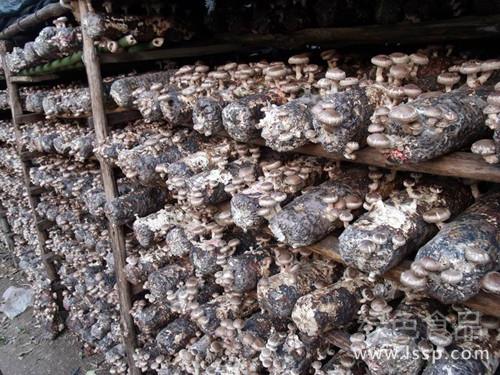
Bag-cultivated shiitake
1. As temperatures gradually rise, prevent bag burning in mushroom bags that were produced later. When enlarging the oxygen openings, reduce the number of mushroom bags placed in the shed: first spread them out, then enlarge the oxygen openings in batches, with 3 days between batches, so as to avoid the high-temperature period. Because the temperature inside the bags rises sharply after the oxygen openings are enlarged, ventilation and cooling are essential; keep the temperature between bags in the shed no higher than 28°C, and once the temperature is stable, continue cultivation away from light. Take special care never to pierce holes on the fleshy nodular growths or at temperatures above 28°C.
2. Before the mushroom bags change color, maintain a constant-temperature environment as much as possible and do not turn the bags roughly. For varieties that change color with difficulty, increase scattered light in the color-changing area and turn the bags one to two extra times to encourage color change. Pay special attention when the weather changes and before and after piercing holes, because both an excessive temperature difference in the environment and vibration stimulation can cause the bags to produce deformed mushrooms or fleshy nodular growths prematurely. For bags that have already produced mushrooms or grown nodular growths, do not turn them; raise the ambient temperature to about 25°C as much as possible and keep it constant, and the small mushroom buds and nodular growths will naturally be absorbed into the mushroom skin as color change proceeds. If nodular growths rot because of improper handling, slit the plastic over the small rotten area and let it dry, or smear it with quicklime.
3. For medium-to-low-temperature-type mushroom bags, after the oxygen openings are enlarged, spread them into their final positions in one go and do not turn them afterward, to prevent the mushroom skin from becoming too thick. Keep the light at "two parts yang, eight parts yin" and cultivate in a low-light environment so as to achieve a thin, brownish-red, glossy mushroom skin. For medium-temperature-type mushroom bags, generally turn them 1-2 times during the color-changing period to encourage even color change to light brown with a few small white dots. When the temperature difference between summer and autumn is large, do not turn them, to avoid premature mushroom production, and keep the light at "three parts yang, seven parts yin" during cultivation.
4. All mushroom bags should basically finish changing color before June 30. However, during the color-changing process, because of factors such as excessive moisture in the substrate and relatively high temperatures, some bags accumulate too much yellow liquid, which impairs air permeability; in severe cases the local mushroom mass autolyzes, causing bacterial infection and bag rot. If the yellow liquid is clear and transparent and not plentiful, no treatment is needed. If too much has accumulated, place the bags at a slant so the yellow liquid flows naturally to one corner of the bag, then use an iron nail to cut through the plastic and release the yellow liquid. If the yellow liquid has turned black and caused bag rot, treat it as a rotten bag.
5. Over-summering mushroom bags in outdoor shade sheds is recommended. Place them in a single layer on the shed frame, 3 cm apart, leaving the topmost layer empty; arrange a layer of spent mushroom bags that have already produced mushrooms to block light and heat. For mushroom bags placed on the ground, dig good drainage ditches around the shed, shape the bed surface like a turtle shell, and arrange the bags in the same way as for over-summering inside a shed. Thicken the shading material at the top of the shade shed and around its upper sides so sunlight cannot enter the shed. For shade sheds built entirely with shade netting, the thickness must be no less than 3 layers. Keep the area around the bottom of the shed ventilated. When high temperatures arrive, the mushroom bags must be spread out and moved to the shade shed as early as possible, without delay; transport them in the early morning, late evening or on cloudy days, handle them gently, and spread them out promptly. It is strictly forbidden to move or turn mushroom bags under the blazing sun or in high temperatures above 30°C. Pay special attention and strictly prevent bag burning caused by high temperatures. When consecutive high temperatures occur, be sure to take good ventilation and cooling measures: after 10 p.m. each night and before 7 a.m. each morning, spray cool well water or spring water on the surface or around the area to lower the temperature. Ditches can also be dug in and around the shed floor to carry flowing clear water for cooling. At the same time, strengthen ventilation: after the temperature drops at night, ventilate and exchange the air, and in places where air does not circulate, use fans to strengthen ventilation.
6. Check frequently to prevent pathogenic bacteria from infecting the shiitake or pests from boring into and eating them. Disinfect and control insects regularly, prevent cross-infection by diseases and pests, and spray once a month with deltamethrin and kemeiling fungicide used alternately for control.