Control Methods for Pumpkin Leaf Yellowing and Wilting Caused by Magnesium Deficiency
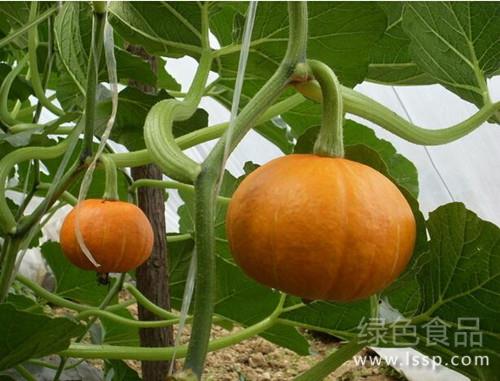
Pumpkin
Main symptoms: Magnesium deficiency in pumpkin is prone to occur in the middle and late stages of growth, so it is often mistaken for natural senescence. However, there is a difference between the two: naturally senescent leaves yellow evenly, with veins and mesophyll losing green simultaneously, often showing a wilted appearance and lacking freshness. In contrast, magnesium-deficient leaves remain fresh and alive for a longer period, and the veins do not lose their green color. Where conditions permit, the available magnesium content of the soil can be analyzed. Generally, soil with an available magnesium (MgO) content of less than 100 mg/L serves as a diagnostic indicator. For the determination of total magnesium in plant leaves, the diagnostic indicator for most vegetables is 0.2%——0.3%; below this content indicates magnesium deficiency.
Causes of Magnesium Deficiency in Pumpkin
① Insufficient soil magnesium supply Insufficient soil magnesium supply is the main cause of magnesium deficiency in vegetables. Southeastern China is warm and rainy, with relatively strong leaching, and is generally a region prone to magnesium deficiency, especially in light-textured soils. The main factors affecting the level of available magnesium in soil are as follows: First, the degree of soil weathering. Different soils have different magnesium contents due to different parent materials and degrees of weathering. Red soils have a high degree of weathering, with minerals decomposed relatively thoroughly, and generally contain very little magnesium, only 0.06%——0.30%. Purple soils belong to young soil types with a low degree of weathering and can contain up to 3% magnesium. Generally, total soil magnesium has a good correlation with available magnesium; soils with high total magnesium also have relatively high available magnesium. Magnesium deficiency is more likely to occur in red soil vegetable bases in the Jiangnan region, and attention needs to be paid to the application of magnesium fertilizer. Second, soil texture. When soil is highly sandy, magnesium is easily leached, and the available magnesium in the soil is low, often unable to meet the needs of crop growth. Generally, the order of available magnesium from low to high across different textures is: sandy soil, sandy loam, loam, clay soil. Magnesium-deficient soils with coarser texture are mainly distributed in river valley and hilly areas, and their vegetable bases should also receive more attention. Third, soil acidity and alkalinity. Soil available magnesium is closely related to acidity and alkalinity; soil available magnesium decreases as soil acidity increases (pH decreases). Strongly acidic soils often have insufficient magnesium supply, mainly because acid promotes the leaching loss of available magnesium.
② Climatic conditions The influence of climatic conditions on magnesium deficiency mainly has two aspects: one is excessive rain, and the other is drought and strong light. Excessive rain leads to magnesium loss, and this effect is regional in scale, such as the wide distribution of magnesium-deficient soils in the south. Magnesium deficiency induced by drought and strong light is a small-area effect. For example, vegetables at the edges of beds and corners of fields fully exposed to sunlight tend to have a higher incidence and greater severity than those in inner rows shaded by each other. Drought reduces the absorption of magnesium by vegetables, and strong light in summer can aggravate magnesium deficiency, possibly because strong light destroys chlorophyll and accelerates leaf chlorosis.
③ Improper fertilization When vegetables are excessively fertilized with potassium fertilizer and ammonium nitrogen fertilizer, magnesium deficiency can be induced, because excessive potassium and ammonium ions disrupt the nutrient balance and inhibit the plant's absorption of magnesium. The widespread practice of excessive nitrogen application in vegetables is also one of the reasons for the relatively common magnesium deficiency in vegetables at present.
Control Methods for Magnesium Deficiency in Pumpkin
① Applying magnesium fertilizer For magnesium deficiency caused by insufficient soil magnesium supply, magnesium fertilizer can be applied as a supplement. Generally, magnesium salts such as magnesium sulfate are used, with a dosage of about 2——4 kg per mu (calculated as Mg). For some acidic soils, it is best to use magnesium lime (lime made from dolomite) at 50——100 kg, which both supplies magnesium and improves soil acidity. Many chemical fertilizers, such as calcium magnesium phosphate fertilizer, contain relatively high levels of magnesium and can be selected according to local soil conditions and fertilization practices. According to some reports, combined application of phosphate fertilizer and magnesium fertilizer helps with magnesium absorption. For magnesium deficiency caused by root absorption obstacles, foliar magnesium supplementation should be used for correction. Generally, a 1%——2% magnesium sulfate solution can be used, sprayed before symptoms become severe, once every 5——7 days, for 3——5 consecutive sprays. Magnesium fertilizers such as magnesium nitrate can also be sprayed.
② Controlling the dosage of nitrogen and potassium fertilizers For soils with the lowest magnesium content, prevent the effects of excessive nitrogen fertilizer and potassium fertilizer on magnesium absorption. In particular, greenhouse vegetables are often over-fertilized and have no leaching effect, leading to nutrient accumulation in the root zone and inhibiting the absorption of magnesium by pumpkin. Therefore, for nitrogen and potassium application in greenhouses, it is best to apply small amounts in split applications.