Control methods for eggplant stiff fruit with pale color, hard fruit and blackened flesh
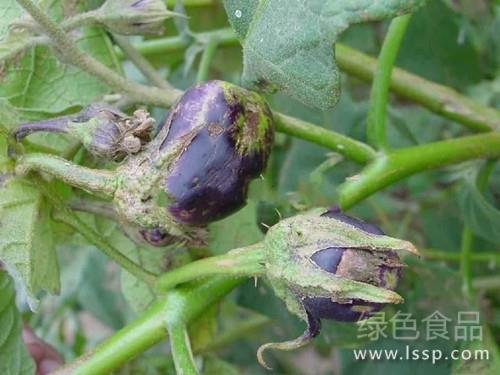
Eggplant stiff fruit
Symptoms: Eggplant stiff fruit, also called "stone eggplant", occurs mostly in the early and late stages of winter-spring crop cultivation and in the late stage of open-field cultivation. The fruit is small and irregular in shape, pale in color, and relatively hard; when cut open, the flesh is blackened. It is inedible and has no commercial value.
Cause: After eggplant flowering, if normal fertilization cannot occur, parthenocarpy will develop into stiff fruit. In the early stage of winter-spring crop cultivation in a solar greenhouse, because the temperature is often below 17°C, pollen germination and elongation are poor, fertilization cannot be completed, leading to parthenocarpy and easy formation of stiff fruit. In the late production stage, if the greenhouse is not ventilated in time or the ventilation volume is insufficient, and the indoor temperature often exceeds 35°C, short-styled flowers increase, which is also a cause of flower drop and stiff fruit.
To increase the fruit-setting rate of greenhouse-cultivated eggplant in the early stage, hormone treatment is often used. Although the number of set fruits increases, if the nutrients provided by assimilation cannot meet the needs of a large number of eggplants for growth and development, the eggplants cannot develop properly and will form stiff fruit.
When the climate is dry, too much fertilizer is applied, the fertilizer concentration is too high, or the water supply is insufficient, the assimilation of the plant decreases, nutrition is insufficient, and stiff fruit is also likely to appear. Insufficient light, early and excessive leaf removal, and too low or too high temperatures are also causes of stiff fruit.
Four methods for controlling eggplant stiff fruit:
① Environmental regulation: Throughout the entire growth period of eggplant, temperature must be well controlled to avoid too low temperatures in the early stage and too high temperatures in the later stage. Generally, control it below 30°C during the day, not higher than 35°C, and 15-16°C at night, not lower than 14°C. During the day, pay attention to increasing light intensity and ventilate in time.
② Water and fertilizer management: During the fruiting period of eggplant, water in a timely and appropriate amount, and do not control water excessively. Irrigation should be uniform and thorough, and after watering, ventilate in time to remove moisture. For open-field eggplant, pay attention to drainage after rain. Adopt formula fertilization technology, apply sufficient fully decomposed organic fertilizer, pay attention to the reasonable combined application of nitrogen, phosphorus and potassium fertilizers, and do not lack calcium. After a small number of stiff fruits are found, foliar fertilizers such as Baoduoshou, Yemianbao, and potassium dihydrogen phosphate can be sprayed to promote plant growth and reduce stiff fruit.
③ Leaf removal: In the middle and late stages of eggplant growth, properly remove the lower old leaves, but do not remove too many leaves.
④ Foliar fertilizer spraying: Spray plant growth regulators or foliar fertilizers such as Yemianbao, Penshibao, and paclobutrazol at the appropriate time. However, the timing of use must be well controlled, the concentration must not be increased arbitrarily, and it is even less suitable to apply continuously over a short period.