Litchi fruit cracking destroys its market value: find the cause and control it scientifically
Litchi fruit cracking is a common phenomenon in the late ripening stage, especially in varieties such as Nuomici with small seeds and thick flesh; in severe cases, the cracking rate reaches as high as 30%—50%. Growers often say that the fruit reaching their mouths and the money reaching their hands are needlessly "cracked" away.
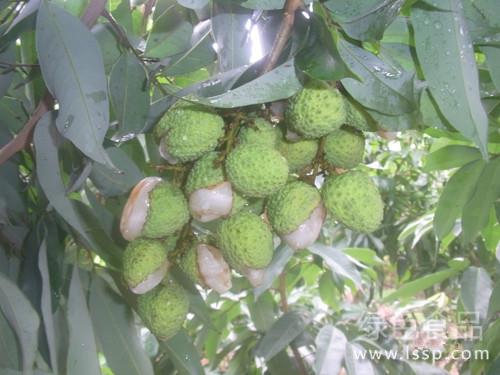
Litchi fruit cracking
The main cause of litchi fruit cracking is an imbalance of fertilizer and water during fruit development. The two elements with the greatest effect on litchi fruit development are calcium and potassium. Calcium is an effective component of the pectin that makes up the peel; if calcium is lacking, the ability of peel cells to bind to one another weakens, and the elasticity and strength of the cell walls become weaker. If the flesh grows too fast or absorbs too much water, the peel will burst open and cracking will occur. In addition, calcium also carries the important task of regulating the water balance inside the fruit; if calcium is lacking, the water in the fruit becomes imbalanced. In dry weather, the fruit loses water, the peel is easily sunburned and stops growing, and when the flesh grows, the peel bursts. In rainy weather, because the fruit is high in sugar, it absorbs a large amount of water and bursts the peel. Litchi flesh development requires a large amount of potassium; if potassium supply is uneven, when potassium is lacking the flesh grows slowly or even stops, while when potassium is abundant it suddenly grows faster, bursting the peel and causing cracking.
Once the cause of fruit cracking is clear, control should focus on two fertilizers and one water. First, ensure that calcium continuously enters the peel. Generally, lime is chosen as the calcium fertilizer and spread evenly under the canopy before flowering: for 3—5-year-old young trees apply 1—1.5 kg, and for 10-year-old trees apply 2—2.5 kg. Second is a balanced supply of potassium fertilizer. Apply potassium fertilizer promptly and in appropriate amounts; generally, for a tree bearing 20 kg of fruit, apply 0.5 kg of potassium chloride per tree, first applying 0.2 kg at fruit set, then 0.15 kg after about 25 days, and when the fruit has almost reached its maximum size, apply the final 0.15 kg. Third is to ensure an even supply of water throughout the entire fruit development process. In dry seasons, soil moisture content is low, which is unfavorable for calcium uptake and transport; while watering more, you can adopt the method of foliar calcium fertilizer application, using a 0.2 percent concentration of calcium chloride or calcium nitrate solution sprayed directly on the flowers and fruit. The number of sprays depends on the weather, generally 2—3 times. In seasons with much rainfall, prevent excessive water uptake; besides doing good orchard drainage work, especially during the final fruit swelling stage (the fruit reddening stage), control root growth to prevent absorbing too much water. The experience of Huangjiang, Dongguan is that around May 25, make two ring cuts; where spiral girdling has already been used, ensure that the wound does not heal before the "Dragon Boat water" arrives.
By taking the above measures, combined with appropriate fruit thinning and timely control of pests and diseases, litchi fruit cracking can be reduced to a minimum.