Prevention and control measures for yellowing leaves, albino seedlings, purple-red, yellow-green, and stunted seedlings in corn at the seedling stage
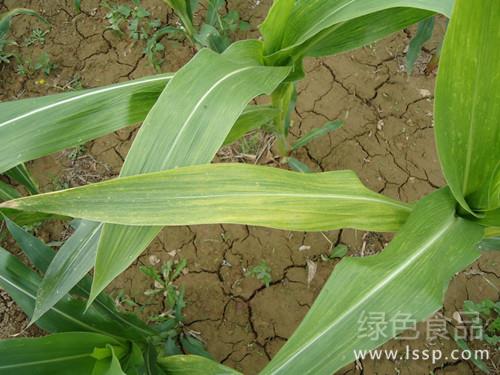
Corn yellow-leaf seedlings
1. Yellow-leaf seedlings: Corn seedlings first have pale green leaves that gradually turn yellow; in severe cases, the whole leaf withers and dies, causing empty stalks or blunt tips.
Cause: Seeds are not plump and seedlings are not strong; sowing is too deep and emergence is weak; density is too high, affecting growth; soil lacks fertilizer.
Prevention and control measures: 1. Before sowing, carefully select good seeds and remove shriveled, moldy, damaged, and small seeds to ensure seed cleanliness and purity are both above 98% and germination rate is above 90%. 2. Germinate before sowing, using seed coating or soaking seeds in fertilizer water. 3. Thin seedlings at the right time; at the 3—4 leaf stage of corn, remove small, weak, and diseased seedlings and field weeds. 4. After thinning, supplement nitrogen fertilizer to promote early and rapid seedling growth. 5. If there are dry clods of soil before and after emergence, break up the dry clods promptly.
2. Purple-red seedlings: The leaves of the seedlings turn from green to red, and finally purple. Symptoms generally appear at the 3-leaf stage of corn and are most obvious at the 4—5 leaf stage. The root system is underdeveloped, the stem is thin and small, growth is slow, the leaves turn from green to purple, and in severe cases the leaves wither and die.
Cause: Because the soil lacks phosphorus, the root absorption capacity declines and chlorophyll synthesis is blocked, causing the leaves to turn from green to purple. After corn emerges, if low temperatures occur, the leaves often turn red or purple, but as the temperature rises, the red-seedling phenomenon gradually eases and disappears later. In addition, low-lying waterlogged fields, damage from underground pests, excessively clayey soil, sowing too deep or too shallow, seedling burning caused by improper fertilization, and seedling poisoning caused by improper chemical treatment can all lead to red seedlings.
Prevention and control measures: Apply more phosphorus fertilizer as a base fertilizer; generally apply 40—50 kg of superphosphate and decomposed fermented organic fertilizer per mu as base fertilizer. Once purple seedlings appear, spray 0.2% potassium dihydrogen phosphate on the leaves 2—3 times; level the land, dig drainage ditches, and ensure the water dries after rain so the field does not accumulate water.
3. Yellow-green seedlings: Corn seedling leaves are narrow and thin, the plant type is short, and the leaves show yellow-green striped patterns. In severe cases, the leaves become dark brown and finally scorch and die. Symptoms start from the lower leaves and gradually move to the upper leaves, greatly affecting yield and making lodging likely.
Cause: The soil lacks potassium.
Prevention and control measures: Apply more potassium fertilizer. If no potassium fertilizer was used, plant ash can be applied at the seedling stage. In cases of severe potassium deficiency, spray potassium dihydrogen phosphate or plant ash extract on the leaves at the 3-leaf stage; the effect is immediate and the yield increase is obvious.
Corn albino seedlings
4. Albino seedlings: Generally starting from the 4-leaf stage, the color at the base of new leaves becomes lighter and yellowish-white. At the 5—6 leaf stage, the 1—3 leaves below the central leaf show stripes alternating pale yellow and pale green, but the veins remain green, and purple stripes appear at the base. After 10—15 days, the purple gradually turns yellow-white, the leaf mesophyll becomes thin, forming “white seedlings”; in severe cases, the whole field turns white. Zinc-deficient corn plants are short, with short internodes, overlapping leaf collars, and slow growth of the central leaf, appearing flat-topped; in severe cases, the white leaves gradually dry up, and even the whole plant dies.
Cause: The soil lacks zinc.
Prevention and control measures: 1. Use zinc fertilizer as seed fertilizer; apply 1.5—2 kg of zinc sulfate per mu, mix evenly with 15—20 kg of fine soil, and scatter it beside the seeds when sowing corn. 2. Mix zinc fertilizer with seeds; mix 1 kg of zinc sulfate with 25 kg of corn seeds. The method is to use 2—3 kg of warm water to dissolve 1 kg of zinc fertilizer, and after it is fully dissolved, spray the zinc fertilizer solution evenly onto the corn seeds so the seed surface is coated with zinc fertilizer, then dry in the shade before sowing. 3. Spray zinc fertilizer on the leaves; for seedlings showing zinc deficiency, use 0.2—0.3 kg of zinc sulfate per mu added to 100 kg of water for spraying, once every 7 days; generally 2—3 sprays can restore the seedlings to normal.
5. Zombie seedlings: This mainly occurs before the 3-leaf stage of seedlings, showing small seedlings, pale green leaves, increased black roots, and soft, flaccid, shrunken growth. After transplanting, except for the new leaves remaining green, the outer leaves turn yellow and stiff, stress resistance is poor, and dead leaves and dead seedlings easily occur.
Cause: The soil is too hard; the fertilizer proportion is too high, causing root burning and bud damage and resulting in stunted seedlings; the soil is too dry after sowing, etc.
Prevention and control measures: Reasonably regulate fertilizer, water, and air conditions. At the corn seedling stage, mainly use decomposed organic fertilizer, and do not use or use less urea as base fertilizer. Phosphorus fertilizer should be applied after composting. Keep the soil at suitable moisture, and transplant strong seedlings. For stunted seedlings that have already appeared, strengthen fertilizer and water management to promote recovery as soon as possible, and replant in time in severe cases.