Key management points for preventing premature senescence and lodging in corn during the flowering and grain-filling stage to achieve full grains and high yield
The period from tasseling to maturity in corn is called the flowering and grain-filling stage. The central task of management during the corn flowering and grain-filling stage is to create a good growing environment for pollination and seed setting, improve photosynthetic efficiency, prolong the physiological activity of roots and leaves, prevent premature senescence, and prevent lodging. This achieves the goal of more grains, heavier grains, full grains, and high yield. The main measures are as follows.
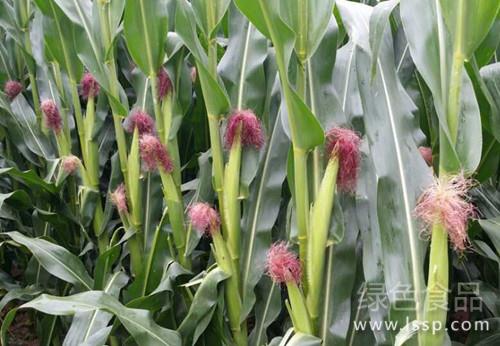
Corn flowering and grain-filling stage
1. Topdressing with grain fertilizer. When the amount of topdressing at the ear stage is insufficient and fertilizer deficiency appears later, flowering and grain fertilizer should be applied to promote full grains, grain weight, and high yield in corn. Three principles should be followed in topdressing. First, topdressing should be early; second, it should be, and should be determined according to soil fertility and the growth condition of the corn; third, 0.4% potassium dihydrogen phosphate can be sprayed, with 80—100 kg sprayed per 667 sq m.
2. Prevent drought and drain waterlogging. The flowering and grain-filling stage is the peak period of water demand for corn. If water is lacking during this period, it will affect grain formation and filling, resulting in bare tips of the ear, missing grains, shriveled and thin grains, and reduced yield. Therefore, when drought occurs, irrigation should be carried out in time to meet the corn's water demand for grain filling. However, in the later stage of corn growth, root activity gradually declines and tolerance to waterlogging gradually weakens. During heavy rain or continuous cloudy and rainy weather, drainage should be carried out immediately. For low-lying fields, after drainage it is best to carry out intertillage to break up hardening, loosen the soil, promote aeration, and prolong root activity.
3. Prevent lodging. Lodging has a very large impact on corn yield after it occurs, so measures should be taken to prevent it. First, promote sturdy and robust seedlings; second, carry out intertillage and hilling to increase the number of support roots and improve lodging resistance; third, on the basis of increasing potassium fertilizer in the base fertilizer, spray potassium dihydrogen phosphate on the leaves to enhance plant toughness. However, if lodging is caused by an irresistible storm during the corn growth period, active remedial measures should be taken. If lodging occurs after jointing, intertillage and hilling should be carried out to allow the corn to recover on its own. When lodging occurs after tasseling, the corn should be lifted manually in time and hilled to reduce losses.
4. Control pests and diseases. Strengthen the control of corn pests and diseases. When large leaf spot, small leaf spot, or corn borer occurs in corn, control should be carried out in time.
5. Harvest appropriately late. When it does not affect multiple cropping, the harvest period can be appropriately delayed to increase corn grain weight and yield. When the corn husks are dry and loose and the grains become hard, glossy, and golden yellow, this is the full maturity stage of corn, and harvesting at this time gives the highest yield.