Citrus Summer Management Measures: Pruning, Fertilizing, and Pest and Disease Control
Summer is a critical period for the growth and development of citrus. To ensure high quality and high yield of citrus, strengthening summer management is very important. The specific measures are as follows:
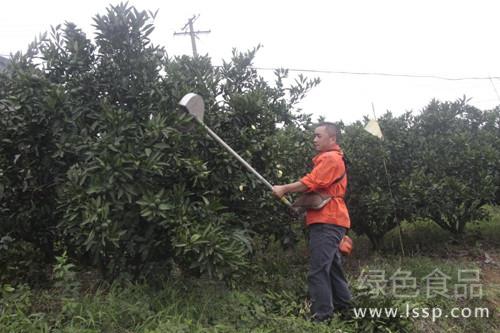
Citrus pruning
I. Summer fertilizing
Fertilizing young trees: Apply a quick-acting fertilizer every 20 days or so. It can be applied in trenches or broadcast at a distance of 30-50 cm from the trunk. Determine the amount of fertilizer based on the size of the tree, applying 1-4 liang per tree each time. At the same time, do foliar feeding well to promptly supplement the trace elements the tree needs.
Fertilizing fruiting trees: Mid-to-late June is the citrus expansion period, and the amount of fertilizer applied accounts for about 60% of the annual fertilizer amount. The method is to open trenches outside the drip line of the canopy and apply the fertilizer into them, with a trench depth of 15-20 cm and a trench width of 25-35 cm. Generally, apply 1.5-2.5 kg of organic fertilizer (decomposed cake fertilizer) or 1-2 kg of compound fertilizer per 100 jin of fruit.
II. Summer pruning
The purpose of summer pruning is to adjust the tree structure and improve fruit quality. The best time for pruning is from June 20 to July 15. Trees with a heavy fruit load should mainly be headed back on flower-and-fruit-dropping branches and declining branches. Trees with a light fruit load should be pruned in combination with tree shape improvement, thinning out upright, dense large branches in the middle and upper part of the canopy, and retrenching or heading back branches on the outer part of the canopy, so that the canopy height is controlled at about 2 m. Partially fruiting trees can adopt the pruning method of alternate bearing and alternate renewal. After pruning, appropriate root cutting should be carried out in combination with fertilizing, branch and trunk protection should be done, and fertilizer and water management should be strengthened. Summer temperatures are high and there is plenty of rain, so citrus easily sprouts a large number of summer shoots, consuming a large amount of nutrients and intensifying the second physiological fruit drop. If summer shoots are allowed to grow, it may cause reduced yield or even total crop failure. Therefore, removing summer shoots is the most reliable measure for fruit retention. Generally speaking, for young and vigorous trees that have entered the fruiting stage, because they bear few fruits and have strong tree vigor, they sprout more summer shoots, so more attention should be paid to removing shoots in time. When summer shoots grow to 7-10 cm, remove them all from the base, remove them again after an interval of 5-7 days, and remove them thoroughly once more in early August, then let autumn shoots grow. For trees that have entered the full fruiting stage, or trees bearing more fruit, the number of summer shoots sprouted is small, but buds should still be removed in time. In late July, let autumn shoots grow again to lay the foundation for stable production in the following year.
III. Pest and disease control
1. Control of the Chinese citrus fly: From early June, before adults land on the fruit to lay eggs, use a 1000-fold solution of trichlorfon or a 1000-fold solution of 48% chlorpyrifos (Lorsban) plus 3% brown sugar (which can also simultaneously control arrowhead scale and citrus whitefly), spraying 1/3 of the canopy each time, once every 7-10 days, for three consecutive times. In addition, hang sugar-vinegar solution in the canopy to trap and kill adults.
2. Control of arrowhead scale, citrus rust mite, and citrus whitefly: In mid-July, choose a 2000-fold solution of 15% saomanjing emulsifiable concentrate or a 2500-fold solution of 73% kemante emulsifiable concentrate.
3. Control of citrus leafminer : When the early autumn shoots of citrus are about 0.5-1 cm long, use a 1000-fold solution of 48% chlorpyrifos or a 1000-fold solution of 40% methidathion or a 600-fold solution of shachongshuang to control citrus leafminer, once every seven days, for three consecutive times.
4. Control of longhorn beetles: First, promptly capture and kill adults; second, whitewash the main trunk with lime to deter longhorn beetles from laying eggs; third, promptly inspect the main trunk. Once moisture or sawdust is found, first use a wire hook to kill the larvae, then plug the hole with poisoned cotton.
IV. Strengthen water management, grasp both drought resistance and drainage
For water management in paddy field citrus orchards, the main focus is on ditching and drainage during the plum rain season and summer and autumn, with appropriate water control to inhibit the sprouting of late autumn shoots and improve fruit quality. For dryland orchards, do a good job of drought resistance and water conservation to prevent fruit drop from high temperature and drought. When citrus leaves are found beginning to curl, promptly channel water into the orchard to regulate humidity with water and increase humidity, and carry out intertillage and loosening of the soil to improve the ability to retain water and fertilizer. In this way, the orchard microclimate is improved, fruit drop is reduced, and fruit enlargement is promoted.