Notes on bagging pears to reduce pesticide residues and improve flavor
Bagging pears can significantly improve the appearance quality of the fruit, prevent pests and diseases, reduce pesticide pollution residues, improve fruit flavor, and raise fruit quality. At the same time, it can also meet the market demand for premium fruit. Bagging cultivation has become an important technique for producing high-quality, premium fruit at present.
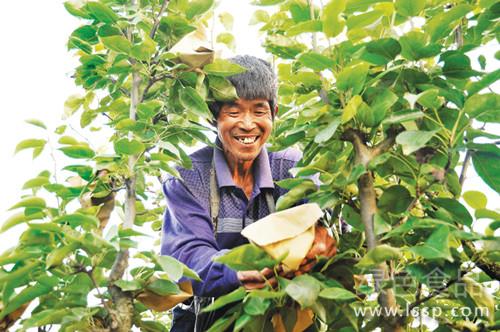
Bagging pears
1. Bagging time. 20-40 days after petal fall, the best time to bag is when the pear's transverse diameter is within 20mm and fruit dots have not yet appeared or have appeared very little. Before bagging, thin the fruit carefully according to the load requirement. Bag immediately after thinning is finished, completing the work in about 10 days. If done too early or too late, the ideal effect cannot be achieved.
2. Insecticide and fungicide before bagging. After the pear tree's flowers fall, in combination with bagging, be sure to spray a mixed insecticide and fungicide 1-2 times, focusing on spraying the fruit surface to kill the fungi and insects on the fruit surface. The targets are mainly pear brown spot, pear black spot, pear ring rot, pear gall midge, pear yellow aphid, pear psyllid, etc. The pesticide can use triadimefon plus fungicide plus insecticide.
3. Strictly select fruit when bagging. Choose strong fruit, large fruit, and side fruit with a long fruit shape and tightly closed calyx for bagging. Remove diseased, pest-damaged, weak fruit, branch fruit, and inferior fruit. Each bag holds only 1 fruit, 1 fruit per bag, and never 1 bag with two fruits.
4. Bagging order and requirements. First the upper part of the tree, then the lower part; otherwise the fruit is easily knocked off. Bags should be evenly distributed from top to bottom, left to right, inside and out.
5. Bagging method. Choose a 20cm×15cm composite paper bag that is gray outside and black inside. Do not use paper bags made of pasted paper, because newspaper bags contain too much lead, which increases contamination of the fruit. First put your hand into the bag to make the whole bag puff up, then grasp the fruit stalk with one hand and support the bottom of the bag with the other, put the young fruit into the middle of the bag opening, then fold the bag opening from both sides toward the middle at the fruit stalk; after all the bag opening is folded to the fruit stalk, on the left edge of the bag opening, tear downward to the length of the wire twist at the bag opening, and finally turn the wire twist 90 degrees and bend and twist it tightly around the fruit stalk. Be careful not to tie it onto the fruit spur branch, and do not tie it too hard, to prevent injuring the fruit stalk and affecting growth. After bagging, use your hand to push up and pat the middle of the bag bottom once, so the whole bag puffs up. The young fruit hangs suspended in the bag and does not stick to the bag wall, which can prevent stink bugs from piercing the fruit and prevent pesticide solution and fungal and insect secretions from contaminating the fruit, causing russeting and mold.
6. Notes after bagging Bagging cultivation of pear trees cannot be separated from good fertilizer management and pest and disease control. After the bagging work in the pear orchard is completed, apply fruit swelling fertilizer in good time, mainly organic fertilizer. Do a good job in preventing pear ring rot and controlling pear lace bug. Suitable pesticide application time: early June. Control agents: ① 80% Daconil 500x solution + Leidiansha 1000x solution + 0.2% potassium dihydrogen phosphate; ② 25% metalaxyl 1000x solution + 65% zineb 500x solution + conventional piercing-sucking mouthpart insecticide. In orchards where pear rust occurs severely, add 15% triadimefon 1000x solution to the above formula.