Causes of Barren Corn Stalks and How to Prevent Them
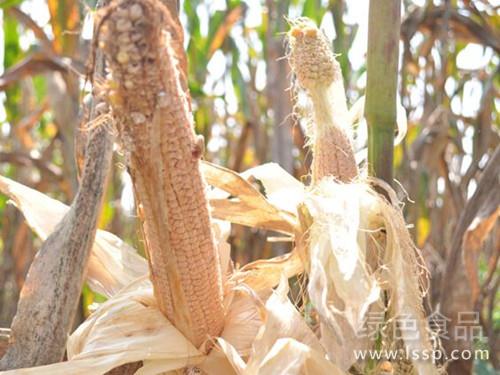
Barren Corn Stalks
I. Causes of Barren Corn Stalks
1. Congenitally sterile barren stalks
This type of barren stalk is mainly caused by the seed itself. Folk tradition calls it "shared corn," meaning it grows only a stalk without forming an ear. Because the seed's own physiological functions decline, metabolism is disrupted, and the conducting tissues are impaired, the nutrients in the stalk cannot be delivered to the ear, yet the tassel develops normally.
2. Non-ear-forming barren stalks
This type of barren stalk generally shows a rudimentary young ear on the corn plant, but during growth and development it fails to extrude silks and does not set kernels, so a normal corn ear cannot form.
1) Soil causes: if the soil where corn grows is relatively poor and lacking in nutrients, it is difficult to meet the needs of corn growth and development, ultimately leading to poor development of the reproductive organs and difficulty in setting grain.
2) The effect of plant density: if the density is too high, the canopy becomes more closed, light penetration worsens, photosynthesis is inhibited, and photosynthetic production becomes difficult; as a result, individual plants grow poorly, the plants age and decline prematurely, and they cannot set grain.
3) Temperature changes and drought are important causes of barren stalks. If rainfall is insufficient before the corn heading stage, "neck-gripping drought" is very likely to occur, or if low temperatures cause chilling injury at the middle stage, young ear differentiation will be inhibited to some extent, and may even stop, thus forming barren stalks.
4) External damage or pests and diseases can also cause it. If mechanical cultivation injures the corn plants, or if severe infestations of aphids, leaf mites, or earworms affect young ear differentiation, a large number of barren corn stalks can also occur.
5) Cultivation factors are also an important cause of barren stalks. Variety selection is also a cause of barren corn stalks: a mistake in variety selection means the variety cannot adapt, or cannot fully adapt, to local conditions, affecting ear differentiation and thus producing barren stalks.
II. Control Measures for Barren Corn Stalks
1. Choose suitable varieties
In variety selection, scientifically and rationally choose excellent varieties according to local natural conditions and cultivation circumstances. Following the principle of matching the variety to the site, choose excellent varieties with high yield, good resistance, tolerance to dense planting, and good quality.
2. Control sowing density
Corn yield is determined jointly by the number of ears, the number of kernels, and kernel weight, and the three are interrelated. Although increasing density can increase the number of ears per unit area, because the supply of nutrients, water, and light is fixed, it leads to a reduction in kernel number and kernel weight.
3. Strengthen management
First, adopt new techniques, such as using plastic film mulching for corn planting, which can maintain soil moisture, raise soil temperature, promote early sprouting and seedling growth of corn, and also avoid early low-temperature chilling injury, so corn develops well. Second, apply fertilizer in a timely and scientific way, emphasize organic fertilizer to improve soil fertility, and fully ensure base fertilizer and seedling-stage fertilizer.
4. Carry out reasonable crop rotation
Do not grow corn continuously on the same plot for many years. Appropriately switch to other crops and rotate the plots.
5. Use growth regulators to promote plant growth
Before sowing, seed coating agents can be used for coating treatment to improve disease resistance. At the large trumpet stage of corn, spray Zhuangfengling to reduce plant height and ear position and shorten internodes. At the same time, improve ventilation and light conditions, prevent lodging, promote female flower development, and effectively prevent the occurrence of barren stalks.