How to prevent and control rotten fruit during the grape growing period, which affects yield
Pests and diseases are important factors that directly affect grape yield and quality, and rotten fruit in the later stage of grape growth is the main cause of harm to grape yield. To avoid rotten fruit in the later stage of grape growth, people often use large amounts of chemical pesticides, which not only causes excessive pesticide residues in grapes but also pollutes the environment. Therefore, in actual production, the plant protection working principle of “prevention first, integrated management” should be carried out. Below is a brief description of the causes and control of rotten fruit in the later stage of grape growth.
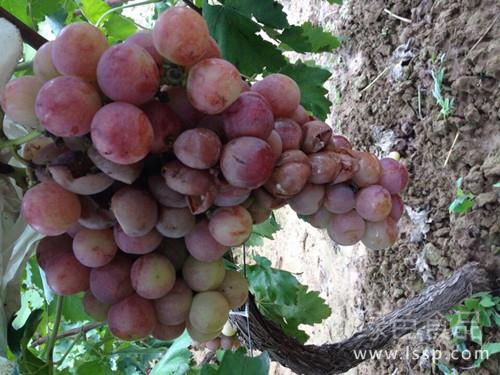
Grape rotten fruit
I. Main causes of rotten fruit:
1. Continuous rainy weather and high air humidity. Pathogens such as those causing grape downy mildew, white rot and gray mold mostly prefer humid environments, and they break out in large numbers and cause serious damage in rainy years, resulting in rotten fruit.
2. Luxuriant branches and leaves and poor ventilation. When the grape trellis has overly dense branches and leaves and too many clusters are retained, ventilation and light penetration are poor, pests and diseases are likely to occur, and rotten fruit results.
3. Nutritional imbalance and insufficient trace elements. Correct application of organic fertilizer or inorganic compound fertilizer can enhance the resistance of fruit trees to many pests and diseases and worsen the nutrition of piercing-sucking pests. However, excessive nitrogen fertilizer, insufficient phosphorus, potassium and trace elements, and waterlogging in the soil all promote the occurrence of pests and diseases and cause rotten fruit.
II. Control methods:
1. Choose high-quality varieties with strong disease resistance. For example, the “Kangtai” grape variety is not only cold-resistant but also relatively resistant to downy mildew and powdery mildew. There are also Kyoho series varieties, which are also relatively resistant to black pox and anthracnose.
2. Pest and disease control should follow the principle of “prevention first, integrated management”.
(1) Disease control: Spraying for disease control should begin at the early stage of disease onset. Fungicides can include 50% anilazine wettable powder at 500 times dilution, 70% thiophanate-methyl wettable powder at 600 times dilution, and 50% carbendazim wettable powder at 800 times dilution. According to the disease condition, apply once every 7-10 days, for a total of 2-5 applications. If rain occurs, appropriately increase the number of applications and promptly respray after rain.
(2) Insect pest control: The main insect pests are thrips, two-spotted leafhoppers, grape tiger moths, and others. Thrips and two-spotted leafhoppers can be controlled with imidacloprid at 2000-3000 times dilution; grape tiger moths can be controlled by spraying cypermethrin at 2000 times dilution or abamectin at 4000-5000 times dilution.
3. Combine bagging to prevent rotten fruit. Bagging grape berries can reduce damage from pests and diseases and reduce fruit cracking and rotten fruit. Bagging should be carried out immediately after cluster shaping. Before bagging, spray once carefully with a fungicide and insecticide. Remove the bags 1-2 weeks before harvest to promote coloring.
4. Combine summer pruning to prevent rotten fruit. Summer pruning should promptly thin out overly dense shoots and vigorous water sprouts, finely prune fruiting branches and groups, and promptly pinch the tips to prevent imbalance between vegetative growth and reproductive growth from affecting the yield of that year. When pruning, note the following: retain only 1 plump bud at each node of the fruiting mother branch, and remove all other lateral buds or secondary buds; 5-7 days before flowering, pinch the tip of the fruiting branch above the uppermost inflorescence, leaving 4-5 leaves. In addition, reasonably retain the flower quantity and prevent excessive load on the grapevine. From the flowering stage to the fruit enlargement stage, promptly thin flowers and fruit, removing small fruit, deformed fruit, pest-damaged fruit and rotten fruit, to improve fruit quality.
5. Combine soil testing and formulated fertilization, and apply fertilizer scientifically to prevent rotten fruit. Generally, apply more farmyard manure in autumn. According to the soil test results, in the second year of spring and summer, supplement chemical fertilizer and bio-organic fertilizer, so that the soil becomes rich in organic matter, loose and fertile, and more suitable for the growth and development of the grape root system.