With this corn planting technique, you can harvest 200 jin more per mu
Today we introduce to farmer friends a wide-narrow row corn planting technique. This technique differs from traditional tillage methods: it changes ridge planting to flat planting, changes uniform rows to wide-narrow rows, and changes semi-precision sowing to precision sowing, with rotational fallow every other year. It is high-yield and efficient, and worth trying.
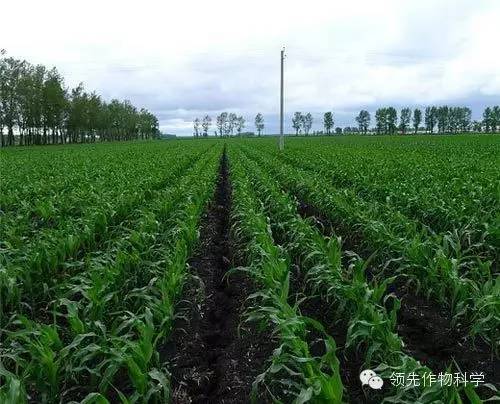
The wide-narrow row corn planting technique changes the uniform row (65cm) planting of the current tillage method to wide rows of 90cm and narrow rows of 40cm. Before corn jointing, subsoiling is carried out in the 90cm wide rows together with topdressing. At autumn harvest, high stubble (about 40cm) is left in the narrow seedling rows.
After autumn harvest, a strip rotary tiller is used to rotary till the wide rows to reach a sowing-ready state, while the narrow rows (seedling strips) are left with high stubble that naturally decomposes and returns to the field. In the spring of the second year, sowing is done in the rotary-tilled wide rows, forming new narrow seedling strips. During the topdressing period, deep loosening and topdressing are carried out again in the new wide rows, thus completing wide-narrow row cultivation with subsoiling every other year, rotation of seedling strips, and alternate fallowing.
> This technique has the following characteristics:
1. Good ventilation and high light transmission, with an obvious marginal effect;
2. The combination of flat planting rotation and fallowing of seedling strips with root stubble return can both prevent wind erosion and rain erosion and effectively protect soil organic matter;
3. Field management is changed from the traditional three hoeings, three ridgings and one topdressing to one subsoiling and topdressing, reducing operation steps and operation area, and lowering operation costs by more than 30%, saving labor and time while also saving production costs;
4. Water storage capacity is increased and moisture conservation capacity is enhanced. Compared with conventional ridge cultivation, soil water content is increased by 1.8 to 3.2 percentage points;
5. Density can be appropriately increased to achieve increased yield through dense planting. Since its promotion and application, this technique has achieved good economic and ecological benefits and is deeply loved by farmer friends.
> Scope of application:
It is suitable for promotion and application in areas with flat terrain or small slopes and contiguous land. This technique should not be used in hilly and mountainous areas.
> Technical points:
1. Leave high stubble to naturally decompose and return to the field
When harvesting corn stalks, leave high stubble (about 40cm) to naturally decompose and return to the field (returned stalks account for more than 30% of the total stalk amount), and keep the root stubble undisturbed. By the next year, after wind, sun, rain, and freezing and thawing, it naturally decomposes and returns to the field, which helps increase soil organic matter, build soil fertility, and reduce soil wind erosion.
2. Autumn rotary tillage and seedbed preparation in wide rows
After leaving high stubble, use a strip rotary tiller to rotary till and prepare the wide rows, with a level seedbed that meets sowing standards. In spring, sow directly without seedbed preparation, which helps conserve moisture and protect seedlings.
3. Precision sowing
Precision sowing refers to fine seedbed preparation and precision sowing. Narrow-row precision sowing refers to precision sowing in the previous year's wide rows on the basis of fine autumn seedbed preparation, forming new narrow seedling strips (40cm), which can save seed quantity and reduce costs.
4. Wide-band subsoiling in the stubble strip
Before corn jointing, carry out wide-band subsoiling in the stubble strip (90cm wide rows). The subsoiling width is 30 to 40cm and the depth is 30 to 40cm. At this time, the rainy season has arrived or is beginning, so subsoiling at this time can take in and store more precipitation and form a soil reservoir. This allows summer rain to be used in autumn and the following spring, improving the use efficiency of natural precipitation.
The technical model diagram is as follows:
* Precautions:
1. Seedbed preparation requirements
When planting wide-narrow rows in the first year, rotary till (harrow) the land level in the autumn of the previous year to reach a sowing-ready state.
2. Planting density and fertilizer application rate requirements
When applying this technique, the planting density should be increased by 10% to 15% compared with conventional planting density, and the fertilizer application rate should be increased by more than 10%.