Five Major Fertilization Mistakes in Grape Growing: How Many Have You Made?
In the short term, there is little difference between grapes that have been given base fertilizer and those that have not. However, after one or two years, under the same fruit load, grape vines that received base fertilizer will show a relatively slower rate of leaf aging, and their leaves will be retained for a relatively longer time, providing a guarantee for continuous photosynthesis to support flowering and fruiting the following year.
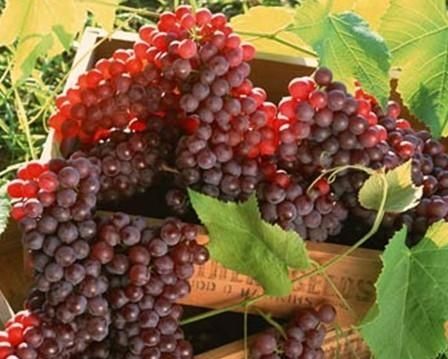
Many fruit growers report that leaves drop quickly in the late fruiting stage, and this is one of the reasons.
In the process of digging trenches to apply base fertilizer, the soil around the vines is indirectly loosened through inter-row cultivation, which helps increase soil permeability. The main component of base fertilizer is organic fertilizer, which helps improve soil structure. The combination of organic and inorganic components in base fertilizer can slowly release nutrients and continuously supply the nutrients needed for early grape growth.
Applying base fertilizer rationally can both avoid excessive vegetative growth in the early stage of grapes, which leads to the problem of only growing leaves without setting fruit, and avoid the problem of poor early growth followed by weakness in the later stage. It also helps the grape vines survive the winter.
> Why is it not recommended to apply base fertilizer twice?
The most direct drawback of applying base fertilizer twice is the increase in economic input, and it causes relatively great damage to the grape root system. The traditional concept of applying base fertilizer holds that cutting old roots stimulates new root growth. In fact, severed main roots are extremely difficult to recover, while fibrous roots recover more easily, so everyone should pay attention to protecting the main roots when digging trenches. Secondly, the main purpose of applying base fertilizer is to supplement a large amount of organic fertilizer, and once a year is sufficient; there is no need for multiple applications. Other supplements can be provided through conventional water and fertilizer methods.
> If base fertilizer is applied once, when should it be applied?
Base fertilizer should be applied one and a half months before pruning, because if applied too early, especially if applied right after harvest, it can easily cause excessive early vegetative growth and lead to weakness in the later stage of grape growth. If it happens to coincide with the fruit enlargement stage, it is not conducive to fruit enlargement. In addition, having one and a half months before pruning gives the root system time to grow and recover. After grape harvest, vine vigor can be restored through conventional water and fertilizer application.
> Five Major Mistakes in Applying Base Fertilizer
1、When applying base fertilizer, deeper trenching is not always better
Few grape roots reach as deep as 40cm; most are distributed between 20-30cm. Especially under sprinkler irrigation systems, the phenomenon of roots floating upward is even more serious. Trenches should not be dug too deep, so as not to reduce the effectiveness of the organic fertilizer.
2、Base fertilizer should be considered for promoting the maturity of fruiting canes
Fruiting canes are very thick and strong, but the flowers are very small after bud break. One important reason for this is that the fruiting canes are not mature enough. Therefore, the choice of inorganic chemical fertilizers in grape base fertilizer is also very important; a balanced formula is not necessarily the best. In this respect, the main considerations should still be promoting the maturity of fruiting canes and promoting root system recovery.
3、When told to cut roots, do not really "cut" them
Countless people have been misled by the saying "cut old roots to grow new roots." In the strict sense, cutting old roots refers to cutting aged fibrous roots and a small portion of not-too-thick main roots, not mainly cutting the main roots. When cutting roots, try to avoid cutting the main roots, and strictly control the amount of roots cut; do not exceed one third of the total root mass.
4、Do not expose roots to the sun for too long
Many people think that since they have finally dug a deep trench, they should let it sun-bake well to disinfect the soil. But have you ever observed carefully that when trenching takes too long, the roots are cut and then exposed to the sun for too long, and gradually the roots will wilt and even rot, making it very difficult for such roots to recover.
5、A good time to eliminate underground pests
In plots where underground pests, especially grubs and other soil-dwelling pests, are severe, combining treatment with this base fertilizer application opportunity can achieve relatively good results.