Key Technical Points for the Establishment and Management of Pineapple Plantations
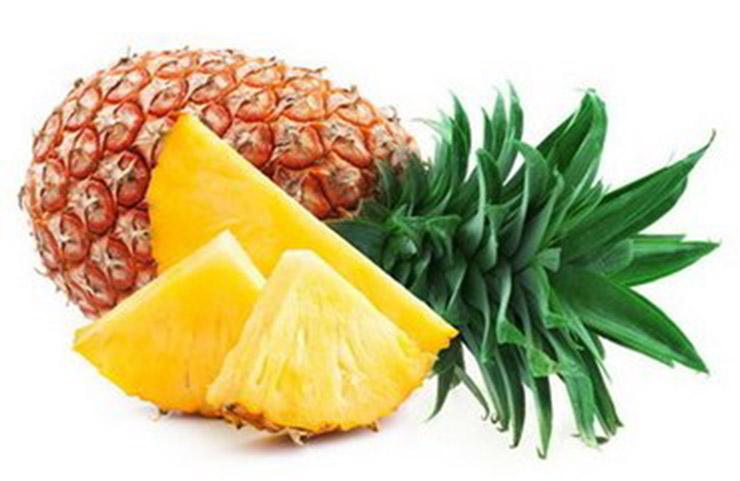
The pineapple has a short stem and numerous leaves arranged in a rosette. The leaves are sword-shaped, tapering to a pointed tip, with entire or sharply toothed margins, green on the upper surface and powdery green on the underside. It is one of the famous tropical fruits. The pineapple is a perennial herbaceous plant, and its fruit has a distinctive aroma, crisp and juicy flesh, a pleasant sweet-and-sour taste and rich nutrition, making it deeply loved by people. So how is the pineapple actually grown?
(1) Preparation Before Planting
Before planting, the planting holes or planting trenches must be dug and basal fertilizer applied. Each hole can be given 0.75 kg of green manure and 0.5 kg to 0.75 kg of compost, farmyard manure or similar. For trench planting, 1000 kg to 2000 kg of green manure and 1250 kg to 2500 kg of organic fertilizer can be applied per mu, along with an appropriate amount of lime.
Strong seedlings must be selected. The standards for strong seedlings are: thick stems, unfolded central leaves, broad and thick leaves, numerous and densely packed leaves, green color, glossy appearance, free of pests, diseases or other wounds, and fresh sprouts about 20 cm tall. The selected strong seedlings must also be separated according to the different types of sprouts. Sprouts of the same type should be graded into large, medium and small, so as to facilitate planting and management and produce uniform fruiting. After grading, remove the 3 to 4 outer layers of basal leaves, and for slips also remove the slip tuber, to encourage new root sprouting. After sun-drying the seedlings for 1 to 2 days, they can be planted out.
(2) Planting Time
Planting can be done from April to September, with May to July being the most suitable planting period, as plants grow easily after planting and suffer less root rot.
(3) Planting Density
At current management levels, the Smooth Cayenne variety can be planted at 2000 to 2500 plants per mu, and the Balinese variety at 3000 to 4000 plants per mu. Mountainous areas with steeper slopes can be planted somewhat more sparsely, while low hilly land can be planted somewhat more densely. Generally speaking, after dense planting, phenomena such as smaller fruit, earlier emergence of suckers and weak suckers tend to appear; therefore, after dense planting, other management measures should be correspondingly kept up.
(4) Planting Patterns and Methods
There are three planting patterns for pineapple: single-row single-plant, double-row single-plant and triple-row single-plant. The double-row single-plant pattern in a zigzag arrangement is relatively superior, as it makes full use of soil fertility and sunlight while also being easy to manage. The large row spacing is generally 1.3 m. The small row spacing and plant spacing vary with variety: for the Smooth Cayenne variety, the small row spacing is 33 cm to 40 cm and the plant spacing is 26 cm to 33 cm; for the Balinese variety, the small row spacing is 33 cm and the plant spacing is 20 cm to 23 cm.
The planting method follows the principle of deep plowing, shallow planting and firming the soil. Large suckers are set 3 cm to 7 cm into the soil, and crowns and slips 2.5 cm to 3.5 cm, with the soil around the base firmed slightly as each plant is set.
>> Later-stage management of the pineapple plantation is also very important:
(1) Flower Forcing
Artificial flower forcing can shorten the pineapple's growth period, advance fruit harvest and increase yield per unit area; it can make the pineapples flower uniformly, facilitating management, harvesting, storage, transport and processing; it can also control the fruiting period of the pineapple, regulate the harvest season and allow harvesting in batches at different times, thereby resolving the contradiction between production, supply and sales and significantly improving the economic benefits of pineapple production. The chemicals commonly used for artificial flower forcing are ethephon and calcium carbide.
1. Ethephon: pour a 250 to 500 μl/l ethephon solution into the heart of each plant, 30 ml to 50 ml per plant. If 1% to 2% urea and 0.5% potassium sulfate are added, it has a degrading and nutritional effect and works even better.
2. Calcium carbide: place 0.8 g to 1 g of calcium carbide powder into the funnel-shaped top of the pineapple plant, then add 30 ml to 50 ml of water; alternatively, first prepare the calcium carbide solution according to the required amount and pour it into the heart when small bubbles begin to form. However, it must be prepared and used immediately, otherwise its effectiveness is easily reduced or it may even become ineffective.
In addition, 50 ml of a 5 to 10 μl/l solution of 2,4-D or 2,4,5-T can also be poured into the heart, but the effect is poorer and it easily causes chemical injury, so it is now rarely used. It must be noted! Plants subjected to artificial flower forcing should generally be over 16 months old, over 33 cm tall, with no fewer than 25 leaves for the Balinese variety and no fewer than 35 leaves for the Cayenne variety, and the plants must be growing vigorously.
(2) Promoting Fruit Enlargement
Applying plant hormones to the fruit during flowering and fruit development can both enlarge the fruit and promote uniform ripening; it is a yield-increasing measure. The chemicals commonly used include gibberellin and naphthaleneacetic acid.
1. Gibberellin (GA3, "920"): generally 50 to 70 μl/l is used, or 50 μl/l for the first application and 70 μl/l for the second.
2. Naphthaleneacetic acid: generally 100 to 200 μl/l is used, and it is best to add 0.5% to 1% urea to the solution to enhance the yield-increasing effect. In field production, it is generally sprayed 2 to 3 times: the first spray at the late flowering stage, then a second spray 15 to 20 days later; some also spray once each at the early, full and late flowering stages. The first concentration is lower and the second higher.
(3) Bud Forcing
Some varieties, such as the Cayenne variety, produce few suckers; especially after dense planting with insufficient fertilizer and water and inadequate sunlight, suckers often fail to emerge or emerge late and at high positions, affecting high and stable yields of pineapple. If hormones are used to force buds, suckers can emerge earlier and at lower positions, preventing premature senescence.
Pineapple bud forcing is generally carried out about 1 month after flower forcing, using 25 to 75 μl/l ethephon, 10 μl/l 2,4-D or 40 μl/l naphthaleneacetic acid; select two lower leaves per plant and inject 10 ml of the solution into the base of each leaf. The bud emergence effect is very good. (Source: China Food Science and Technology Network)