How to Control the Green Leafhopper in Orchards for Good Results
The green leafhopper has 3 generations a year and overwinters as eggs in the tissue beneath the bark of twigs; the eggs hatch into nymphs the following April. After hatching, the nymphs move to crops and weeds to cause damage, and reproduce for 2 generations on these hosts. The third-generation nymphs damage late-autumn crops and vegetables, and generally do not damage fruit trees in summer. By late September, most green plants have withered, so the adults fly to autumn vegetable gardens to cause damage, and by mid-to-late October they fly to orchards and lay eggs on the twigs of fruit trees.
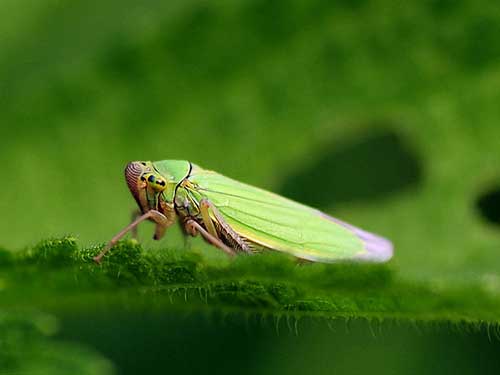
When juicy crops such as Chinese cabbage, radish, carrot and sweet potato are intercropped in orchards, the fruit trees suffer more severe damage. If these crops are harvested or removed early, the damage to the fruit trees is noticeably reduced. When orchards are overgrown with weeds, the damage to the fruit trees is also more severe.
>> Control methods:
(1) Manual control:Before the adults lay eggs, brush a whitewash onto the trunks of young trees to prevent the adults from laying eggs. The whitewash is prepared as follows: quicklime 25%, coarse salt 4%, lime sulfur mixture 1%-2%, water 70%; a small amount of insecticide may also be added. Remove orchard weeds in a timely manner, preferably by turning them under the trees as fertilizer before the weed seeds mature.
(2) Agricultural control: In young tree orchards, avoid intercropping juicy late-maturing crops such as Chinese cabbage, radish, carrot and sweet potato; if these crops are intercropped, they should be harvested before the end of September.
(3) Chemical control:When the population is large, spray in early to mid-October before the adults lay eggs or at the beginning of egg laying to control the adults. In addition to spraying the trees, also spray the weeds between the tree rows. Commonly used pesticides include 20% fenvalerate emulsifiable concentrate at 2000 times dilution, 80% dichlorvos emulsifiable concentrate at 1000 times dilution, and 50% phoxim emulsifiable concentrate at 1000 times dilution.