As the weather turns cooler, it's time to get busy with cold protection and warmth for grapes
When the soil temperature around the grape root system drops to minus 6°C, the roots will suffer frost damage to varying degrees; when it drops to minus 8°C, they will be completely frozen and ruined. Therefore, the temperature during the grape root system's dormancy period should be kept above minus 6°C. What cold protection methods are available? Let's take a look together!
1. Sawdust cold protection method: Tie the pruned grape vines into bundles, wrap them with two layers of burlap or straw curtains, then cover with 15-20 cm thick sawdust, tamp it firm, and then cover with a layer of plastic film, pressing the edges of the film down firmly with soil. Sawdust and plastic film are easy to find, and these materials can be used continuously for 2 or 3 years.
2. Ice freezing cold protection method: Place the pruned and bundled grape vines on the ground, and in mid-to-late October cover the vines with straw bag pieces, then cover with 5-8 cm of soil, and put another layer of straw bag pieces on the soil. When the temperature drops in November—December, pour water onto the covering several times in succession to form a thick ice shell, thereby isolating the plants from the outside and achieving safe overwintering. In late April of the second year, remove the leaves and weeds for the first time, open the ventilation holes for air, and in early-to-mid May remove all the covering.
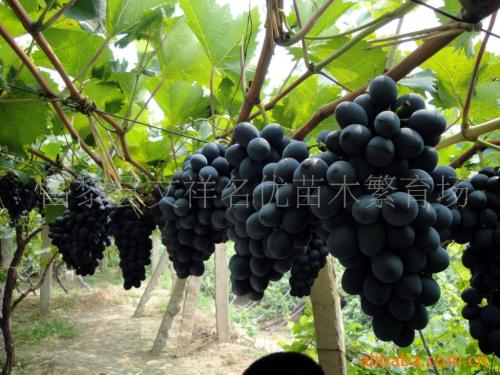
3. Sand, film, leaves, and straw four-layer cold protection method: First cover the grape vines with 20 cm thick sand, cover the sand with a layer of plastic film, spread a layer of about 10 cm thick corn leaves on the film, then lay 60 cm of corn stalks along the leaves, achieving the effect of sand nourishing the vines, film retaining moisture, leaves increasing density, and straw keeping warmth. The first 3 layers should be covered in mid-to-late October. The last layer should be done after the ground freezes.
4. Soil burial and frozen vine cold protection method: Dig a trench in the courtyard, and bury the excavated soil near the grape trunk to prevent the roots from freezing. After tying the grape vines, place them in the trench after digging. When the temperature drops below 0°C, fill the trench with water and let it freeze. In this way the vines are wrapped in ice and can overwinter safely. The water in the trench is both freezing water and spring bud-breaking water. This method also works very well in courtyards.
5. Hollow cold protection method: Build a trough shape in the trench with bricks and adobe, tie the winter-pruned grape vines well and place them in the middle, build a shed frame above with wooden poles, put sorghum stalks and straw bags on top, covering 20-30 cm; then cover with leaves or firewood and grass 50 cm, leaving several ventilation holes along the ground so temperature can be measured and air can pass at any time; close them at 0°C, and open them again at Qingming the following year.
6. Plastic film cold protection method: With the continuous improvement of cold protection techniques, in recent years a cold protection method using plastic film covering has also appeared. For the single dragon vine tree form, the grape vines also need to be coiled up, and any raised branches must be laid flat to avoid piercing the plastic film. Tie the winter-pruned grape vines well, place them in the trench, cover with plastic film, bury the edges with soil, then cover with leaves and firewood and grass more than 50 cm, leaving ventilation holes along the ground. This cold protection method requires less labor and has relatively lower labor intensity, and because the cold protection plastic film can be reused, the cost will not increase.
7. Comprehensive cultivation overwintering method: During the grape growth and management process, nitrogen fertilizer should be applied in an appropriate amount, phosphate fertilizer and potassium fertilizer in sufficient amounts, and nitrogen fertilizer must be strictly prohibited in the later growth stage to prevent excessive vegetative growth, which is beneficial for flower bud differentiation, plump buds, and well-filled vines. In winter, pruning should be moderately light, and after sprouting in early spring, pruning should be done again. Water thoroughly for overwintering to keep the soil temperature constant, and it is strictly prohibited to water heavily again in the later growth stage, which would cause excessive vegetative growth. Manage pests and diseases well throughout the year to reduce pest and disease damage and increase the accumulation in the branches and trunks. The comprehensive application of these measures can ensure the safe overwintering of grapes.
8. Watering antifreeze method: In winter, 10 days before burying cold protection soil for grapes, irrigate once with freezing water, the purpose being to prevent root frost damage and early spring drought. When irrigating, be sure to irrigate enough, with the standard being that the soil reaches a saturated state, and when the surface soil is slightly dry, then carry out soil burial for cold protection. The first soil burial should not be too much, with the standard being that no vines are exposed after burial. Complete the second cold protection soil burial before the freeze. At the same time, note that young trees should be buried early, while large trees can be buried appropriately later. When burying the second cold protection soil, cover with corn stalks or dry grass before burying soil, which can significantly increase the temperature around the grape roots and is beneficial for cold protection. The width of the buried soil must not be less than 1.8 m, and the thickness of soil buried over the vines must be no less than 60 cm. The front face of the cold protection soil should be trapezoidal, with an upper width of 1.2 m. For the sake of safe cold protection, the cold protection soil should preferably be buried 80 cm deep. Precautions: The cold protection soil must be taken from the rows on both sides outside the main trunk of the grape tree, and must not be too close to the roots, so as not to injure or freeze the roots. In places with irrigation conditions, after freezing, the soil-taking trench should be filled with water and frozen into ice, which both reduces the thickness of frozen soil and helps the root system overwinter and prevents drought the following spring. In places without irrigation conditions, loose grass and other items can also be used to cover the soil-taking trench to prevent grape frost damage. If cracks appear on the cold protection soil after winter begins, they should be promptly covered tightly with soil. Entering January—February of the following year, especially when the weather is particularly cold, some firewood, grass, or horse manure and other cold protection materials can be piled on top of the cold protection soil to ensure the grapes are not frozen.