What are the control methods for the rice stem maggot?
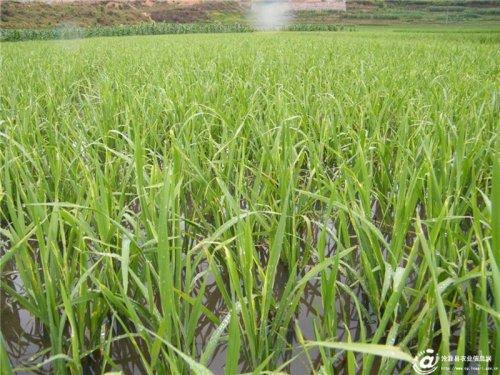
The rice stem maggot, scientific name Chlorops oryzae Matsumura, belongs to the order Diptera, family Chloropidae. Also known as the rice stem fly, rice stem-boring fly, two-tailed worm, etc. It is distributed in Heilongjiang, Zhejiang, Jiangxi, Hunan, Hubei, Guangdong, Guangxi, Yunnan, Guizhou and other provinces.
Hosts of the rice stem maggot
They are rice, wheat, shortawn foxtail (Alopecurus aequalis), Kentucky bluegrass (Poa annua), barnyardgrass (Echinochloa crus-galli) and others.
Damage characteristics of the rice stem maggot
The larvae bore into the stem and damage the central leaf, growing point and young panicle. When damaged at the seedling stage, the emerging central leaf bears oval or elongated small holes, which later develop into longitudinal cracks and long strips, causing the leaf blade to break apart, and the new leaves that emerge are twisted or withered. Affected plants show increased tillering, stunted growth, delayed heading, small panicles and more empty grains. When damaged at the young panicle formation stage, twisted short white panicles appear, and the panicle shape is incomplete or white-streaked panicles occur. In recent years, the damage caused by this insect has shown an upward trend.
Morphological characteristics The adult is 2.3—3mm long, with a wingspan of 5—6mm, and the body is bright yellow. The head and thorax are equal in width, and the back of the head has 1 large diamond-shaped black spot; the compound eyes are large and dark brown; the antennae have 3 segments, the basal segment is yellowish brown, the second segment is dark brown, and the third segment is black, swollen and disc-shaped, and the arista is yellowish brown and nearly as long as the antennae. The back of the thorax bears 3 large black longitudinal stripes, the abdomen is spindle-shaped, the front margin of the back of each segment bears a dark brown transverse band, and each side of the back of the first segment bears 1 small black dot. The ventral surface of the body is light yellow. The wings are transparent, with brown veins. The legs are yellowish brown, and the end of the tarsi is dark black. The egg is 0.7 to 1mm long, white, and long oval. The mature larva is about 6mm long, nearly spindle-shaped, light yellowish white, with a tough and glossy epidermis. The tail end is forked into two. The pupa is 6mm long, light yellowish brown to yellowish brown, with black spots, and the tail end is also forked into two.
Life habits of the rice stem maggot
In Fujian it produces 2—3 generations per year, and in Hunan, Hubei, Guizhou, Yunnan, Zhejiang and other places it produces 3 generations per year. In the Xinning area of Hunan, from late March to early April of the following year, adults lay eggs on the rice seedlings, which hatch in mid-April; the newly hatched larvae move down along the underside of the leaves by means of dew and bore into the central leaf to cause damage until they pupate in mid-May, and emerge in June. The second-generation larvae hatch from late June to early July and damage rice at the booting and heading stages. The second-generation adults emerge irregularly and, after emergence, fly to sweet potato fields, and from late September to October they successively lay eggs on the leaves of potato, autumn mulberry, autumn vegetables, shortawn foxtail and early-sown winter wheat. The eggs are laid singly, generally one egg per leaf. A warm winter and cool summer climate is suitable for its occurrence, and when the daily average temperature is above 35 degrees C, larval development is hindered. Heavy dew, insufficient sunlight, a humid environment and low field water temperature lead to more severe damage. Mountainous areas above 3000m in altitude suffer even more severe damage.
Chemical control methods for the rice stem maggot
(1) In mountainous areas where single-cropping rice and double-cropping rice are mixed, single-cropping rice should be planted as little as possible, which can suppress the occurrence level. (2) Adopt the strategy of vigorously controlling the first generation, spot-treating the second generation, and skillfully treating the seedling fields. The first generation causes severe damage and occurs uniformly, and its peak period is also obvious, which is favorable for control. The peak adult occurrence period and the peak egg hatching period are the suitable control periods. When there are 3.5—4.5 insects per sq m in the seedling field, or 1—2 insects per 100 hills in the main field, or at the end of the peak egg-laying period, when there is an average of 0.1 egg per rice seedling in the seedling field and an average of 2 eggs per hill in the main field, begin control by spraying adults with 80% dichlorvos emulsifiable concentrate or 50% fenitrothion emulsifiable concentrate, 50ml per 667 sq m, mixed with 50kg of water. To control larvae, use 150—200ml of 40% dimethoate emulsifiable concentrate mixed with 50kg of water for spraying, or use 50% fenitrothion emulsifiable concentrate, 100ml per 667 sq m, mixed with 50kg of water; for seedling fields, 3% carbofuran granules can be used, 2—3kg per 667 sq m, mixed with 20kg of fine soil and broadcast. For seedling fields with egg masses, the seedling roots can be soaked for 1 minute in a 250-fold dilution of 40% dimethoate emulsifiable concentrate, or soaked in a 300-fold dilution of 50% fenitrothion emulsifiable concentrate or a 1000-fold dilution of 36% kelthion emulsifiable concentrate. The soaking time must be determined after testing according to the temperature at the time, the rice variety and its quality, so as to prevent phytotoxicity.