What are the fertilization methods for growing spinach in winter?
How should spinach be fertilized when grown in winter? What fertilizer is best for spinach? Experienced readers, please share your advice.
Spinach is a cold-tolerant vegetable. Its seeds can germinate at 4°C, with 15-20°C being optimal. The above-ground part of spinach can withstand low temperatures of minus 6-8°C, which makes it one of the main vegetables in winter. Spinach is also rich in carotenoids, vitamin C, vitamin K, minerals (calcium, iron, etc.), coenzyme Q10 and many other nutrients, making it a nutritional model among vegetables.
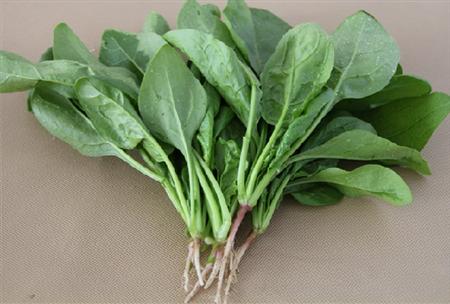
Spinach is a leafy vegetable, so it needs a relatively large amount of nitrogen fertilizer and appropriate phosphorus and potassium fertilizer during growth. Therefore, Zhongdiwang has compiled the fertilization methods for growing spinach, listed in detail below for readers' reference.
1. Base fertilizer for spinach:
Because overwintering spinach has a long growth period, the base fertilizer must be sufficient to prevent nutrient deficiency. Generally, organic fertilizer together with all the phosphorus and potassium fertilizer to be applied is worked into the whole soil layer as base fertilizer, then the soil is prepared and beds are made.
2. Reduce nitrogen fertilizer before spinach overwinters:
Before overwintering, it is best to keep spinach growing 4-5 true leaves before winter. This is because spinach with 4-5 true leaves has the strongest cold resistance; if the plants are too large or too small, they are more susceptible to freeze damage. Therefore, if the sowing date is appropriate and fertilizer is sufficient, nitrogen fertilizer application should be properly controlled before overwintering to prevent the seedlings from growing excessively, which reduces dry matter and sugar accumulation and makes them vulnerable to freeze damage. If sowing is too late or soil fertility is insufficient, topdressing nitrogen fertilizer can be considered to promote seedling growth so that spinach overwinters at a suitable seedling age.
3. Timely topdressing and watering after spinach turns green again:
The key to fertilizer and water management for spinach after it turns green again following overwintering is to seize the right timing for topdressing. Spinach topdressing is done together with irrigation. If topdressing is too early after greening, it lowers soil temperature and affects seedling recovery and growth; if topdressing is too late, it delays spinach growth. For overwintering spinach, it is generally more suitable to apply topdressing twice, in mid-to-late March and early April, because at this time both the outdoor temperature and soil temperature rise steadily.
4. Reasons for topdressing spinach:
Spinach topdressing is best done before bolting and flowering. Topdressing at this time can prolong the time before spinach bolts and flowers, which helps increase spinach yield and quality.
5. Key points for fertilizing spinach:
Because spinach is sensitive to ammonium nitrogen fertilizer, and the production season of overwintering spinach falls at the junction of autumn-winter and winter-spring, when soil temperature is low and soil nitrification is very weak, it is best to use less ammonium nitrogen fertilizer and appropriately use more nitrate nitrogen fertilizer.