How do you grow cilantro so it thrives? One little trick lets you keep harvesting it at home nonstop
Cilantro, also called coriander or hu sui, is rich in carotene, vitamin C, calcium and iron, and eating it often whets the appetite and strengthens the spleen. Usually when you make noodles, cook a fish, or have hot pot, cilantro makes it taste even more delicious. In fact, growing a pot or two of cilantro at home is no trouble at all; as long as you know the two little tricks below, the cilantro grows really vigorously.
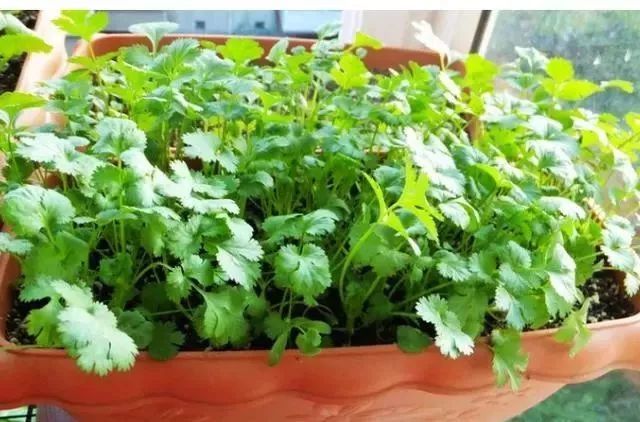
Little tips for sowing cilantro:
Some friends say the cilantro they plant sprouts rather slowly, or not many sprouts come up, but as long as you do this one thing before sowing, there is no problem. Because cilantro seeds are round, like twin seeds. So you have to rub them apart. Since they are hard, soak them in clean water for ten hours in advance, then gently rub, and they all come apart. Then sow them.
Prepare a round pot 20 cm in diameter or a long strip pot; ordinary soil works too. First water the soil thoroughly, scatter the seeds, cover with 1 cm of soil, then water again. They sprout in a little over a week.
The secret to making cilantro grow well: when they are seedlings they grow a bit slowly, so do not worry, just keep the soil moist and do not water too much. When they grow to three leaves, if the seedlings are crowded you can thin them out. Then spray once with a relatively dilute decomposed organic fertilizer, especially nitrogen fertilizer, which will make the cilantro grow nice and strong. Nitrogen fertilizer is the main fertilizer that promotes the growth of a plant's roots, leaves and stems, and it is easy to find at home; a bit of decomposed okara or cooked soybeans will do.
Usually put leftover soybeans and mung beans, okara, peanuts, sunflower seeds, vegetable leaves, and fruit and vegetable peels into a sealed jar or an empty oil jug, pour in water, and put it in a sunny, warm place; after about three months it becomes a dark, odorless organic fertilizer water, and then you can take it out and dilute it with water to feed vegetables and flowers. The residue inside can also be buried at the bottom of the pot as a base fertilizer, and the cilantro grows really strong.
When the cilantro grows to 10 cm, spray decomposed organic fertilizer water once every half month; it likes cool weather, and grows very fast at around 20 degrees. So in late autumn and early winter it can grow especially lush.
When it grows to 15 cm tall, you can harvest the leaves to eat. Eat the largest plants first, and leave the smaller ones to keep growing. Or pick leaves off one plant to eat; the remaining roots will grow again, and after pulling, fertilize once more.
When the winter temperature is very low, cover the cilantro with a layer of plastic sheeting; if it is grown in a flower pot, just use a simple plastic bag to give it a warm environment. When it snows heavily in winter, it can still quietly grow, and it can also give your home a touch of green. You can pick fresh leaves to eat at any time.
If you want to grow just a small amount of cilantro, you can also use this simple and quick method:
Take the cilantro you bought from the supermarket, eat the leaves, leave a bit of the heart, and keep the roots; keeping a bit of soil on them makes it easier for them to survive.
Prepare a flower pot on the balcony, fill it with soil, use a small stick to poke a few holes, and plant the cilantro hearts with roots into them. If you do not have a flower pot, you can also use the bottom of an empty oil jug with a few ventilation holes punched in it.
Press the cilantro roots down with soil, leaving a little space between each cilantro plant. Then water thoroughly. For the first two days, put them in a cool place with scattered light, then move them into the sun, and after ten days or so, plump and tender cilantro will grow.