Can Paraquat Be Used on Lawns? An Analysis of the Severity of Paraquat Poisoning
Do you know about the pesticide paraquat? This pesticide is extremely harmful, and if a person accidentally ingests it, it can cause serious harm.
The herbicide paraquat is cheap and effective, and can be widely used on weeds in citrus orchards, tea plantations, sugarcane fields, and more. It is also used as a defoliant before harvesting red beans, so it is deeply favored by farmers, and in the past its sales performance consistently ranked in the top three. However, because paraquat is highly toxic, it has repeatedly made media headlines in the past due to people abusing it to take their own lives, and the medical community has long called for it to be banned. According to research published in the Journal of Internal Medicine, just 4 milliliters of 24% paraquat concentrate may cause severe damage to the lungs, and may ultimately lead to death from respiratory failure.
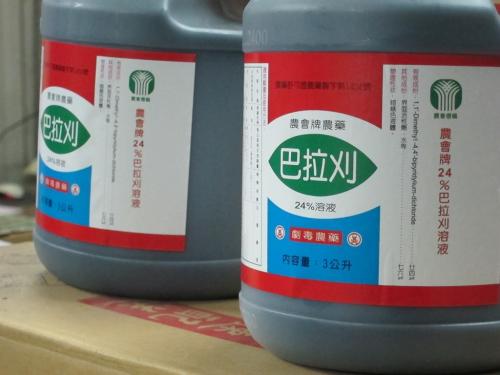
The Council of Agriculture announced in May of year 106 that it had decided to ban imports and manufacturing starting February 1 of last year, and to implement a full ban starting February 1 of this year, and promised to plan follow-up supporting measures, calling on farmers not to rush to stock up. Deputy Director-General of the Bureau of Animal and Plant Health Inspection and Quarantine Zou Huijuan said that during the most recent inventory on January 15, it was found that, as of the end of last year, production by manufacturers and sales by pesticide stores showed that farmers and a small number of pesticide stores still had 700 metric tons in stock, and that a forced ban could create many risks.
Zou Huijuan explained that paraquat has a shelf life of 2 years, and that during this period farmers had originally been urged to return it to stores to help with destruction, but now the inventory shows that destroying it all at once is very difficult. The main reason is that pesticides are industrial waste, and the amount of paraquat has not yet been added to the total. The amount of counterfeit and banned pesticides originally seized and awaiting destruction was already very large, and forcibly taking back paraquat would also make immediate destruction difficult. Therefore, it is hoped that, without increasing risk, and given that the first phase of banning imports and manufacturing was already adopted last February, farmers can be given a buffer period for the downstream use this year, in the hope that farmers can use it properly and safely.
The Bureau of Animal and Plant Health Inspection and Quarantine emphasized that the policy of phasing out paraquat has not changed. The timeline for banning processing, imports, and repackaging will still be handled according to the original announcement, and the relevant permits have already been revoked. It called on sellers and farmers who still have paraquat on hand to sell and use it up within the deadline. If the ban is violated at that time, fines ranging from 15,000 yuan to 150,000 yuan will be imposed under the Pesticide Management Act.
Zeng Deci: Sales of Highly Toxic Pesticides Need to Be Controlled by the Government
However, according to statistics from the Bureau of Animal and Plant Health Inspection and Quarantine, Taiwan, China's annual use of paraquat is about 400 metric tons. Zeng Deci, a distinguished professor in the Department of Plant Pathology at National Chung Hsing University, said that if the bureau's data are used for inventory, 700 metric tons would not be used up in a year. After the ban was announced the year before last, manufacturers everywhere rushed to stockpile, and this situation was predictable. The alternative agent nonanoic acid promoted by the Council of Agriculture has not been reported by red bean farmers to be very effective. The Council of Agriculture should not forcibly require pesticides to be phased out before supporting measures have been properly developed.
Zeng Deci emphasized that highly toxic pesticides still need to be discussed within the existing management framework. In the past, some people drank paraquat to commit suicide because some pesticide sellers had not received rigorous professional training, and there was no control over buyers and sellers, which led to pesticides accidentally flowing into use for suicide. He called for the highly toxic pesticide sales system to be transferred to township and town offices or other professional units, so that the government can strictly control the flow direction and volume and solve the problem at its root.