What should you pay attention to when raising rabbits? An introduction to breeding techniques and methods
Do you know how to raise rabbits? What aspects should you pay attention to when breeding them? How should you raise them to produce good rabbits? Let's take a look together.
Rabbit raising methods
1. Quiet by day, feeds well at night
The living habits of rabbits are close to those of rats. During the day they lie quietly in the cage, and at night they are very active and consume large amounts of feed. According to observations, nighttime feed intake accounts for more than 70% of the whole day. Under certain conditions, meat rabbits easily enter a drowsy or sleeping state, at which point their senses diminish or even disappear. For example, if you lay a rabbit on its side or with its four feet up in a “U” shape, then gently stroke its fur with your hand, or press and rub its temples, the meat rabbit will enter a sleeping state within one or two minutes.
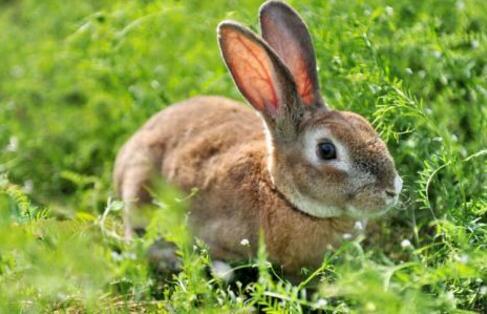
2. Timid and easily startled
The rabbit is a timid animal. Sudden loud noises, strangers and unfamiliar animals such as cats and dogs all make it panic. In feeding and management, you should try to avoid noises that startle the rabbits, and at the same time forbid strangers and cats, dogs and the like from entering the rabbit house.
Aversion to heat and humidity, preference for a dry environment
Rabbits have underdeveloped sweat glands and mainly rely on breathing to dissipate heat, so prolonged exposure to a humid environment with high temperatures (above 35°C) will cause mass deaths. Experiments have proven that the ideal ambient temperature for adult rabbits is 14—20°C, and the temperature inside the nest for newborn kits is 30—32°C. Dryness and cleanliness are very beneficial to the health of domestic rabbits. Rabbits are also very hygienic and often use their front paws to “wash their faces”, and they designate three fixed spots for eating, defecating, urinating and sleeping. When a rabbit's anus, mouth and nose are not clean, it indicates illness, and the cause should be identified as soon as possible for targeted treatment.
3. Fixed times and fixed amounts
Feeding should be done a certain number of times, at certain times and in certain amounts, to develop an eating habit. The rabbits must not go hungry or overeat, so as to avoid digestive tract diseases.
4. Pay attention to hygiene, prevent spoilage and mold
Sweep the rabbit cages every day, remove rabbit droppings daily, select and scrub feeding utensils, frequently change the bedding straw, disinfect regularly, keep the rabbit house clean and dry, pay attention to feed quality, do not feed moldy, rotten or toxic feed, and keep drinking water clean.
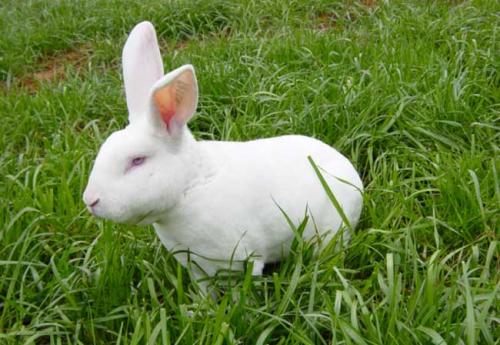
5. Not sociable, prefers to live alone
Under natural conditions, rabbits each dig their own burrows and live alone. Only during the mating season do they come together. Whether male and female rabbits or rabbits of the same sex, they often fight when together, causing external injuries, such as biting off ears or testicles. Therefore, domestic rabbits are best raised in single cages.
6. Fond of gnawing
A rabbit's front teeth are permanent teeth and grow continuously. If soft feed is given regularly, the rabbit will naturally gnaw on wooden cages and other objects to maintain the proper tooth length. Therefore, some tree branches should be placed inside the rabbit cage. When making rabbit cages, try not to leave sharp edges, so that the rabbits cannot gnaw on them, thereby extending the service life of the cage.
Feed should be diverse and reasonably matched. Legume, grass family and aster family plants should be used more, with green feed as the main part, supplemented daily with about one or two qian of concentrated feed. Based on their nutritional components, make up for each other's deficiencies to meet the various nutritional components needed for the growth and development of wild rabbits. Absolutely avoid a single type of feed. At the same time, prepare winter feed well, and you can plant ryegrass, radishes and other green feed.
7. Group management, strengthen exercise
Divide into groups according to the three factors of age, sex and production method. Where conditions permit, regularly give wild rabbits exercise to maintain their wild nature.
Feeding and management of kits
Kits from birth to weaning are characterized by incomplete body development but rapid growth, poor regulatory function, weak adaptability and low resistance.
According to their growth and development characteristics, feeding and management are divided into two stages, namely the sleeping period and the eye-opening period. During the sleeping period, besides taking effective measures to let the kits drink enough milk, work should be done well in cold protection and warmth, mosquito and rodent control, disease prevention and suffocation prevention, while also maintaining cleanliness and hygiene inside and outside the box. During the eye-opening period, the focus of feeding is supplementary feeding and weaning. Feed a small amount of nutrient-rich, easily digestible feed with good palatability, and mix in a small amount of minerals and antibiotics, feeding 5~6 times a day, small amounts but more meals, gradually increasing until weaning. The focus of management is to separate the mother and kits into separate cages when the kits are 15 days old, nursing once every 12 hours. Frequently change the bedding straw, and wash or replace the nest box.
After each feeding, the mother rabbit takes them to the exercise yard for appropriate exercise. Regularly check their health condition
Wild rabbits
Wild rabbits feed on plants such as wild grasses and tree leaves. Under artificial breeding, feed sources are extensive, and various pasture grasses, green vegetables, straw and the like can all be used for feeding. Generally, green feed and succulent feed are given for breakfast and lunch, and green feed plus a small amount of pelleted feed is given in the evening.
Many people hunt wild rabbits to eat them, and some people have also spotted the business opportunity in wild rabbits and breed some wild rabbits, which relatively speaking can fetch a good price, so in recent years more and more people have been raising wild rabbits. Wild rabbits do not have the same high feed conversion rate as bred purebred rabbits, so many issues need attention in feeding.
1. Environmental requirements for wild rabbits: Wild rabbits rest in a very wide range of places and generally do not dig burrows. However, to avoid natural enemies, they often use hollows, grass thickets, gaps between stones or cracks when resting. During artificial breeding, attention should be paid to creating a similar environment for them. The site should be spacious, hygienic and dry, which can prevent the occurrence of infectious diseases.
2. Activity patterns of wild rabbits: Wild rabbits are mainly active at night, especially frequently around dusk or dawn. Since they live on the ground their whole lives, when they encounter natural enemies, wild rabbits try their best to hide and stay completely still. In addition, they are timid, so during breeding, disturbances should be prevented as much as possible and the environment kept quiet. Drinking water and forage should be provided during the day (preferably in the afternoon) for them to eat and drink at night.
3. Feeding habits of wild rabbits: Wild rabbits mainly feed on grass. In the severe cold of winter, especially when heavy snow covers the ground, if food is lacking, they will gnaw on tree bark, tender twigs and grass roots. In addition, wild rabbits have the habit of eating soft droppings; this is normal digestive function, and it should not be considered that eating droppings is a pica habit. To supplement insufficient feed intake, an appropriate amount of green grass can be placed daily in the wild rabbits' enclosure or housing. In winter, some straw can be provided, such as bean straw and corn straw.
Some concentrated feed such as corn and bran can also be provided, and water is even more indispensable. Usually place some table salt on a wooden board for the wild rabbits to consume, which can increase their appetite. 4. Breeding techniques for wild rabbits: After wild rabbits reach sexual maturity, they begin mating when the temperature is suitable.
In the north, 3~4 litters are produced each year; in the south, 6~8 litters each year. Because forage is abundant from May to October, the young rabbits produced by spring mating have a relatively high survival rate. When wild rabbits are in heat, they chase, wag their tails and release urine. Female rabbits come into heat multiple times, and male rabbits fight each other for mates. After mating, the gestation period is 30~40 days. Young rabbits reach sexual maturity in the second year. During the mating period, when breeding artificially, they can be placed into the rabbit group at a ratio of 1 male to 4 females and allowed to mate freely. It is best for people not to intervene, as this gives a relatively high conception rate.
After domestication, artificial assisted mating can then be carried out. 5. Disease prevention and control of wild rabbits: Because wild rabbits are timid and difficult to catch, which often easily causes injury or death, injecting vaccines is very difficult. You can add oxytetracycline to the feed at 0.1 grams per rabbit per day, give it for 3 consecutive days, stop for 1 week, then give it for another 3 days, and repeat this, which can play a role in reducing inflammation when sick and promoting growth when healthy.
Furazolidone can also be added to the feed once a week, which can prevent diarrhea and coccidiosis.