Aichi Prefecture, Japan, releases two new heat-tolerant grape varieties, Amethyst and Ruby, with market launch expected in 2031
(Nongxun Net News Flash) Recently, the Aichi Prefectural Agricultural Research Center in Japan officially released two new heat-tolerant grape varieties developed in-house - Amethyst (アメジストアイ) and Ruby (ルビーアイ). Both varieties are early-ripening grapes and are expected to become the main grape varieties locally for coping with summer high temperatures. Under the plan, nursery plants will be supplied to grape growers in Aichi Prefecture from December 2027, with market launch expected to begin around 2031.
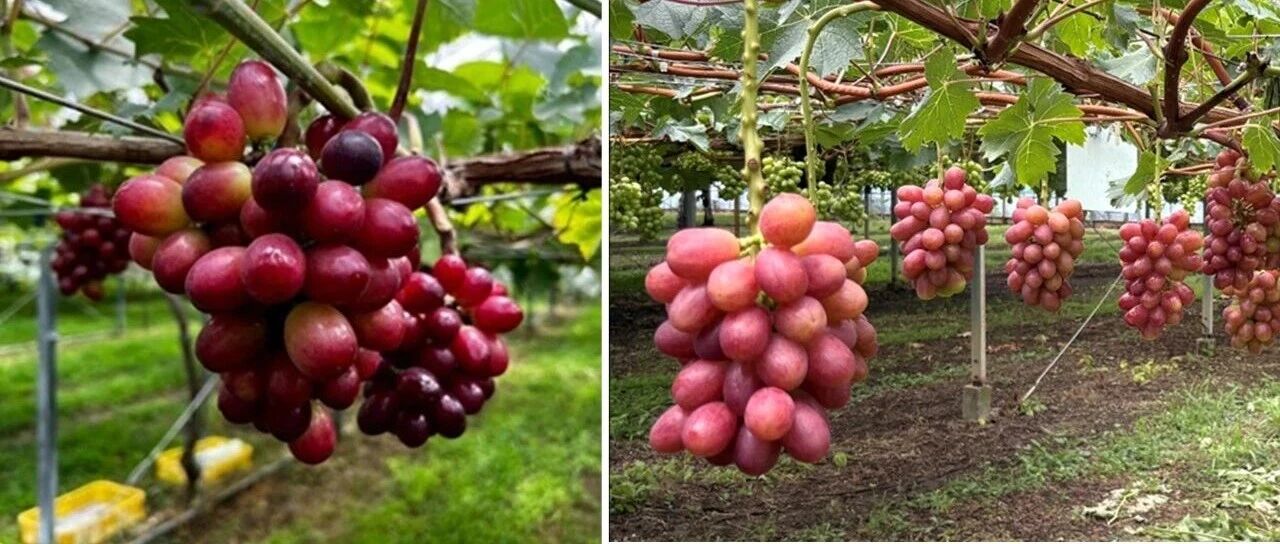
Characteristics of the new varieties: early-ripening, large berries, edible with the skin
According to the Aichi Prefectural Agricultural Research Center, both grapes are early-ripening varieties, with the market period concentrated in late July to early August, when market demand is strongest. The berries are large and can be eaten with the skin, and the varieties can effectively resist poor coloring or sunburn caused by summer high temperatures; like Kyoho and Shine Muscat, they can be grown seedless.
- Amethyst grape: ripening period in open-field cultivation is late July, rich flavor, sugar content above 19°Brix, and relatively soft flesh texture.
- Ruby grape: harvest period in open-field cultivation is early August, with a strong Muscat grape aroma, sugar content above 18°Brix, and relatively firm flesh texture.
Breeding background: designed to address coloring problems under global warming
In recent years, due to global warming, temperatures during the grape coloring period in July and August have generally been high, and black and red varieties such as Kyoho and Aki Queen have colored poorly, affecting both cultivation and sales. The two in-house bred varieties released by the Aichi Prefectural Agricultural Research Center target precisely this pain point: verified through adaptability trials at the research center and across various locations in Aichi Prefecture, the fruit still colored well even under the high-temperature conditions of July and August in 2024 and 2025.
Distinguished parentage: bred by crossing Shine Muscat
Both varieties were developed by crossing Beni Ballard with Shine Muscat, and were selected from 255 lines. At present, both varieties had applications for variety registration filed on April 1 this year under Japan's Plant Variety Protection and Seed Act.
Promotion and market launch timetable
The Aichi Prefectural Agricultural Research Center plans to begin supplying nursery plants to grape growers in Aichi Prefecture from December 2027, with market launch expected to begin around 2031, when consumers are expected to be able to taste these two new heat-tolerant grape varieties on the market.
Production area background: a major fruit prefecture in central Japan
Aichi Prefecture is located in the southwestern part of the Chubu region on Honshu, Japan, and its prefectural capital is Nagoya City. The local climate is warm with abundant water resources, and it is rich in fruits such as mandarin oranges, grapes, pears, peaches, strawberries, persimmons, figs, and melons. In 2024, Aichi Prefecture's grape planting area was 373 hectares, accounting for 2.3% of Japan's total planting area, with output of 3,070 tons (1.9% of Japan's total), both ranking 9th in Japan.