Macadamia nuts from seed to seedling: Wang Zhengguo, founder of Yunnan's macadamia industry
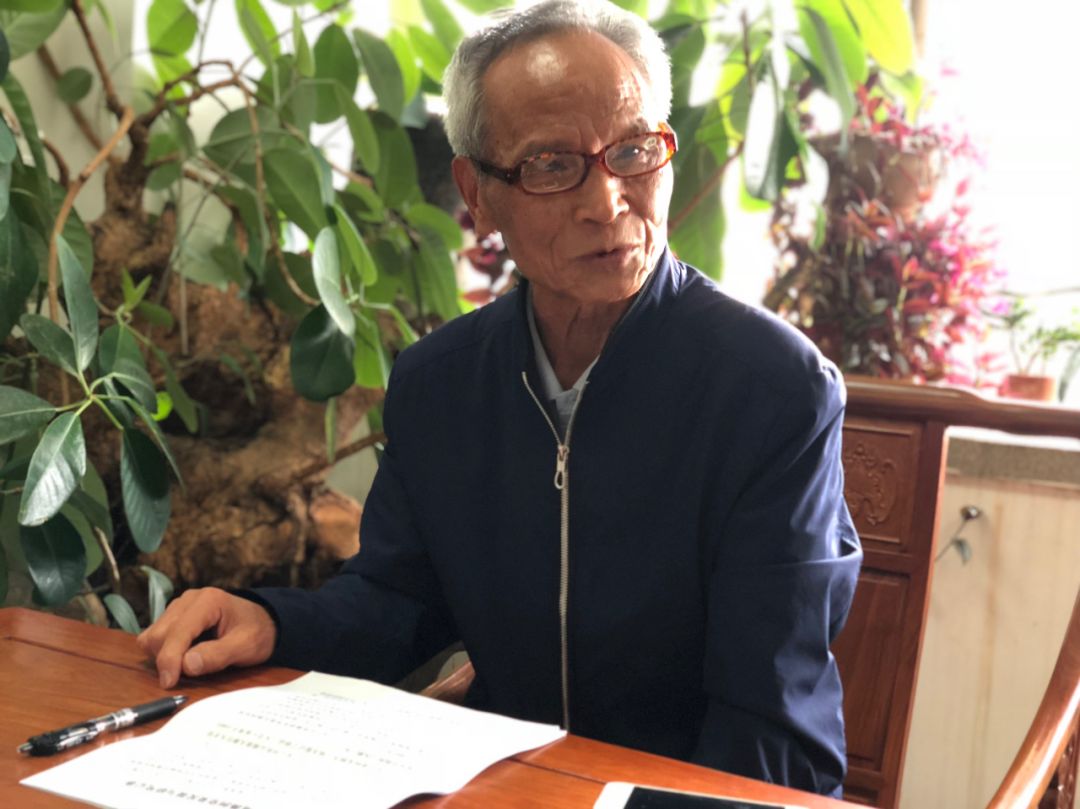
Wang Zhengguo never imagined that the macadamia nuts he once planted would grow into a booming industry, or that his home province of Yunnan would become the region with the largest macadamia nut planting area in the world, exceeding the combined total of all other regions worldwide. Whenever the topic turns to nuts, this man in his eightiesbecomes spirited and animated. Although he has been retired for many years, those who know him well still call him “Director Wang”. Someone once said: The development of macadamia nuts is a classic case of technology transforming into productivity, and Wang Zhengguo was indispensable at every important stage of that development.
That year, Yunnan had only 7 macadamia nut trees
In 1981, for the purpose of academic observation and research, the Yunnan Institute of Tropical Crops, where Wang Zhengguo worked, introduced 12 macadamia nut seedlings from Hainan, of which 7 ultimately survived. At the time, for the people of Yunnan, macadamia was still just a technical term confined to academic research.
In 1991, Dr. Ma Tiansong, president of the US-China Talent Exchange Center (CAPS), visited the Yunnan Institute of Tropical Crops and was delighted to find that the macadamia nuts at the institute were just as good as those native to Hawaii. “Could we cooperate with you? We provide the technology, funding, and talent, and we research macadamia cultivation in Yunnan together?” Dr. Ma Tiansong's question delighted Wang Zhengguo beyond measure.
In the days that followed, the two sides held multiple discussions on how to carry out a research project on macadamia cultivation in Yunnan, but no one imagined that these 7 seedlings at the institute would, over the following decades, develop into an industry in Yunnan Province capable of influencing the world.
In 1993, the Yunnan Provincial Government implemented the 18 Biological Resources Development Projects Program across the province. Macadamia was one of the 18 biological resources development projects, with plans to plant 30,000 mu across the province. The Yunnan Institute of Tropical Crops took full responsibility for the seedling cultivation work, and Wang Zhengguo, as the specific executor, was responsible for site selection, seedling cultivation, and other work across the province. At the time, the rubber industry was the economic pillar of Yunnan Province. As for what macadamia was, no one knew, and even fewer were willing to provide land. Wang Zhengguo had no choice but to head into the deep mountains and find relatively flat small basins in the valleys, starting from clearing the land to carry out macadamia seedling cultivation work.
From 7 seedlings to 30,000 mu: one man led a team to plant across 15 counties
Seedlings were the first problem that had to be solved to develop the macadamia industry. But macadamia has several varieties, and no one knew which ones were suitable for planting in Yunnan.
The only solution was: trial planting with multiple varieties across multiple regions, grafting, and then trial planting again……
In 1996, Wang Zhengguo chose a plot of cornfield in Mengding, Lincang, and decided to build a seedling base there. Because macadamia seedlings have a high demand for soil and water conservation, how to irrigate the 150 mu seedling base became yet another problem. Wang Zhengguo transferred eight technicians and two senior engineers from the Institute of Tropical Crops and hauled two large truckloads of water pipes from Kunming to Mengding to lay out the irrigation system for the base. They cleared land by day and laid lines and pipes by night, and it took the 10 people several months of hard work to build the 150 mu plot.
Immediately after that, with only these 10 people, how were they to sow 25 tons of seeds?
Wang Zhengguo went to the county party secretary of Mengding Town and asked him to mobilize the surrounding villages, while he himself went to neighboring Zhenkang County to mobilize people. After many twists and turns, he found 25 local ethnic minority farming households to join, which temporarily solved the sowing problem.
The biggest difficulty was having nothing to eat!
Mengding is located on the border of Yunnan. The weather is hot and food was scarce. The nursery base was still 25 km from the county town, and at the time all supplies for the base were brought in by asking others to carry them from Kunming. But the journey from Kunming to Lincang took five days, and if it rained or the roads were blocked, the delay was even longer. Meat and vegetables would rot halfway there, and the only things edible at the base were noodles and soy sauce.
“Sometimes there were not even noodles. When we were too hungry to do anything else, we could only catch bamboo rats to eat!” Wang Zhengguo said.
Under these conditions, Wang Zhengguo worked for 4 years, finally completing the construction of the 150 mu seedling base in Mengding Town. Starting from the construction of the first base in 1993, over the course of 7 years, Wang Zhengguo led his team across 15 counties in Yunnan Province, overseeing the completion of 30,000 mu of macadamia seedling bases, laying a solid foundation for the later takeoff of Yunnan Province's macadamia industry.
Trained Yunnan's first cohort of professional macadamia technicians
Talent is another core element of industry development, but at the time, no one knew what macadamia was, let alone the techniques for planting and managing it. In 1996, Wang Zhengguo selected 20 of the 25 ethnic minority farming households involved in sowing at the Mengding base and sent them to the Xishuangbanna Institute of Tropical Crops for training to learn grafting and management techniques. These 20 people became the first cohort of professional technicians in the development history of Yunnan Province's macadamia industry.
Wang Zhengguo held five training sessions and personally wrote the teaching materials, inviting macadamia experts from Australia and China to lecture for the trainees and explain macadamia planting, grafting, and management techniques. Even today, some of those original trainees are still active on the front lines of macadamia seedling cultivation and planting in Yunnan.
Postscript:
In 2016, according to survey data from the Xishuangbanna Institute of Tropical Crops, Yunnan had become the region with the largest macadamia planting area in the world, accounting for 57% of the world's total macadamia planting area. The macadamia seedlings Wang Zhengguo once planted have now become a flagship industry for Yunnan Province in developing plateau-characteristic agriculture and a green ecological economy. Thanks to the careful support of the Yunnan Provincial Government and the dedicated efforts of colleagues across Yunnan's macadamia industry, macadamia has now become a typical targeted poverty alleviation industry that converts science and technology into productivity, and is called a “cash cow” and “wealth tree” by local fruit farmers. By this time, Wang Zhengguo was already 80 years old. At the end of the interview, Wang Zhengguo said: “In this life of mine, I have no regrets.”