Yunnan Province's macadamia planting area reaches 1.6 million mu, ranking first in the world
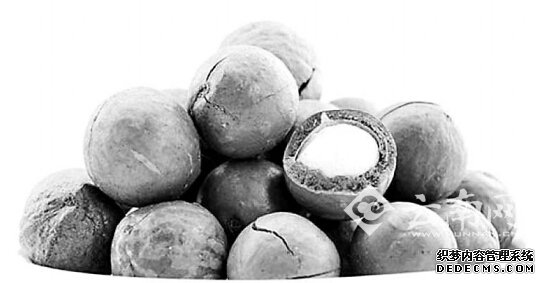

35 years ago, Yunnan Province's Tropical Crops Research Institute introduced and trial-planted macadamia nuts. Who would have thought that now Yunnan Province has planted more than 1.6 million mu of macadamia nuts, surpassing not only other provinces but also the planting area of any country in the world. Macadamia nuts have also driven farmers' income growth; by intercropping with other crops, the yield per mu can reach 10,000 yuan.
Current situation: 35 years since the introduction of macadamia nuts, planting area exceeds 1.6 million mu
On the 15th, the third interview group of the “Yun Series · Brand Stories” series promoting plateau characteristic agricultural products came to Lincang to conduct on-site visits of macadamia nut planting conditions and attended the provincial macadamia nut industry promotion on-site meeting on the 16th.
Macadamia nuts are also called Hawaii nuts. They are tree fruit trees of the Proteaceae family and are internationally recognized as a valuable edible dried fruit and woody oil crop. Their kernel fat content reaches over 78%, of which unsaturated fatty acids account for 84%; the nut oil is fragrant and delicious and is a premium edible oil. Native to Australia, they were introduced and planted elsewhere in 1850.
China began introducing and trial-planting them in the 1980s. Because their main root system is not well developed and they are afraid of strong winds, they are very suitable for planting in Yunnan. Yunnan Province first planted them in 1981, introduced and trial-planted by the Yunnan Tropical Crops Research Institute.
Liu Yidan, Party Leadership Group member and Deputy Director of the Provincial Forestry Department, said that as of now, the province's macadamia nut planting area has reached more than 1.6 million mu, of which 5 counties including Zhenkang and Yingjiang have planting areas exceeding 100,000 mu. The plan is that by 2020, the province's macadamia nut forest area will be developed and stabilized at 4 million mu. So, despite its foreign-sounding name, in reality the vast majority of what consumers eat is grown by Yunnan people.
Benefits: Planting macadamia nuts has good returns; intercropping with coffee can yield 10,000 yuan per mu
People cannot help but ask: in just 35 years, how did macadamia nuts achieve such a large planting area in Yunnan, and what attracted so many farmers and enterprises to plant and process them?
Lu Biao, a villager from Xiamanzhe Village, Manzhe Village, Xingfu Town, Yun County, Lincang City, said that his family used to grow sugarcane and corn, but the yield and output value were very low. In 2010, he began planting macadamia nuts. At that time, he planted 1.2 mu of “nuts + coffee”, and by this year 16 trees had borne fruit (22 trees planted per mu), selling sporadically for more than 3,100 yuan; the intercropped coffee harvested more than 600 kg (fresh fruit), selling for more than 1,000 yuan. “Much better than before, and now farmers are very enthusiastic about planting macadamia nuts,” Lu Biao said.
Because Shifoshan in Xingfu Town, Yun County, had long grown low-yield, low-efficiency crops such as sugarcane and corn, soil erosion and drought intensified, and the ecological environment deteriorated year by year. Later, Shifoshan launched the “nuts + coffee” planting project under the Grain for Green program. Tang Xiong, mayor of Xingfu Town, said that after the project enters the full-production period, the nut income per mu can reach more than 6,000 yuan and coffee income more than 4,000 yuan, which together can achieve a “10,000-yuan mountain.” In addition to intercropping with coffee, crops such as corn, upland rice, tea, coix seed, and cassava can also be intercropped, using the harvest of fast-maturing crops to make up for the time before there is any nut harvest.
Shortcomings: 90% of bases have not yet entered production; product processing rate is less than 30%
The reason Yunnan's macadamia nut industry has developed so quickly is also inseparable from the active participation of enterprises. Liu Yidan said that as of 2014, there were 19 enterprises engaged in macadamia nut planting, processing and operation. The main products included kernels, shell nuts, nut oil, nut capsules, nut nougat, and so on. The main trademarks and brands included “Yunaoda,” “Yunguo,” “Aozhen,” and others, with an annual processing output value of more than 70 million yuan.
Speaking of the difficulties and problems in the development of the macadamia nut industry, Liu Yidan said that at present 90% of our province's macadamia nut bases have not yet entered production, and nearly 80% of the bases are newly afforested land since the “12th Five-Year Plan,” making the task of tending and management very arduous. Products are mainly sold as shell nuts, mainly used for cultivating rootstock. The product processing rate is less than 30%, processing enterprises are small, product varieties are few, and market share is low.
Suggestions: Increase investment in nut varieties and strengthen research and development of high-grade products
At this industry promotion on-site meeting, the government, enterprises and experts enthusiastically discussed the development of macadamia nuts in Yunnan and offered suggestions and advice.
Wan Juhe, general manager of Jiangcheng China-Australia Agricultural Science and Technology Development Company, said that macadamia nuts have self-incompatibility and require cross-pollination between varieties, meaning that generally 2 to 4 varieties must be configured in the same plot to ensure high and stable yields. However, only 11 varieties have been approved across the province, and variety selection and breeding are far from meeting market demand. There is also a major problem: there are many primary products, but very few intermediate products and deep-processed products, leaving much room for development. The products sold most on the market are still primary product kernels. Products such as nut oil and capsules similar to deep-sea fish oil are still rare. The development and research of deep-processed products remain insufficient. It is hoped that the government and relevant departments will strengthen investment in scientific research and enhance the technological content of Yunnan macadamia nuts.