Taiwan black tea was once presented as tribute to the Japanese Emperor; after the 921 reconstruction, Yuchi Township is fragrant once again
Yuchi Township is located in the heart of Nantou County, at the center of Taiwan. It can be said to be the most famous black tea production area in Taiwan. It features gently rolling hilly basin terrain, stable humidity, an elevation of 600 to 800 m, varied slope aspects, and red brick soil, forming a uniquely blessed geographical environment. Wild mountain tea with a wonderful flavor was already discovered here in the early days.
Yuchi Township is located in the heart of Nantou County, at the center of Taiwan. It can be said to be the most famous black tea production area in Taiwan. It features gently rolling hilly basin terrain, stable humidity, an elevation of 600 to 800 m, varied slope aspects, and red brick soil, forming a uniquely blessed geographical environment. Wild mountain tea with a wonderful flavor was already discovered here in the early days.
Yuchi black tea was once selected as a tribute treasure for the Japanese Emperor
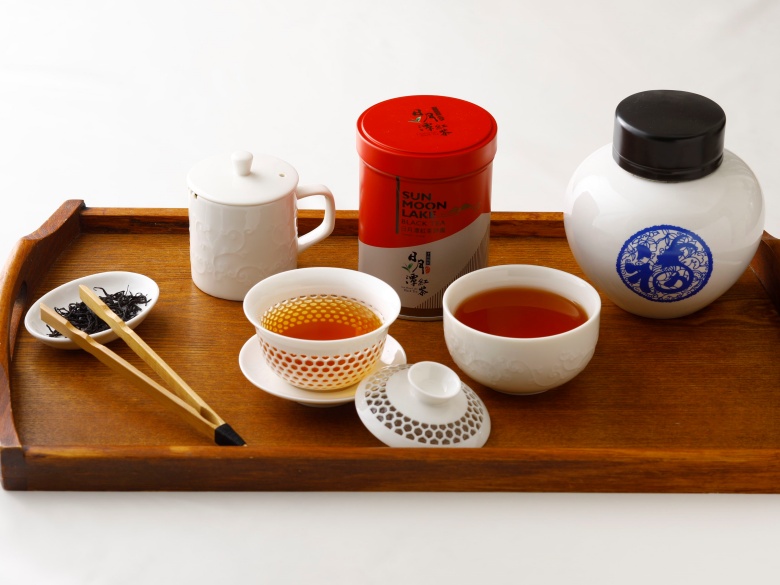
During the Japanese occupation era, the Japanese discovered that the growing environment of Sun Moon Lake was very similar to the Assam tea region of India, which launched the development of the black tea industry in Yuchi Township. Moreover, Yuchi black tea was selected as a tribute treasure for the Japanese Emperor, opening a glorious era of international renown for the Yuchi and Sun Moon Lake areas. The Sun Moon Lake area became the only production area in Taiwan for Taiwan Assam black tea, and during the Japanese occupation era the Governor-General's Office also established a black tea research institute here to promote Assam black tea.
Taiwan's black tea industry could not compete with low-priced foreign black tea
⟦NL>
Taiwan's black tea industry continued to export until the late Japanese colonial period, with 1934 being the peak period, becoming the third export tea category besides oolong tea and pouchong tea. But after 1971, because Taiwan's wages rose sharply, especially since wages for tea picking could not match other industries, labor flowed away, hand-picked fresh tea leaves could not compete with low-priced foreign black tea, and later the government more actively promoted oolong tea. The black tea industry thus suffered one blow after another and eventually declined.
The 921 earthquake shook new life into black tea
On September 21, 1999, a major earthquake struck Taiwan, and Yuchi Township in Nantou became one of the hardest-hit areas, unexpectedly shaking out a new opportunity for black tea. The government promoted post-disaster reconstruction projects, and the Tea Research and Extension Station Yuchi Branch and others cooperated on multiple fronts to revive the black tea industry. In 2003, the Yuchi Township Office began holding the Assam Black Tea Culture Festival, bringing TTES No. 8 and TTES No. 18 "Ruby" promoted by the Tea Research and Extension Station to the market. Now, the younger generation carries on the fragrance of Yuchi black tea, and Yuchi Township has become the most famous black tea region in Taiwan. It has driven highly educated people and the younger generation to return home to grow and make tea, and many new brands have also been founded. The new generation of tea farmers at tea estates targets younger groups and works together with one heart. Among them, "Heguo Forest," where visitors can experience the tea-rolling technique, "Liao Township Chief Black Tea Story House," where visitors can see tea-making machinery and artifacts, and Mr. Guo Shaosan, known as "Grandpa Black Tea," whose third generation carries on the award-winning "Dongbang Black Tea" year after year, attract the most attention.