Tea Industry Talent Cultivated This Way: International Students at Dayeh University Experience Tea-Tasting Culture
Dayeh University's "Food Fashion Management, Farming in Harmony with Nature - Taiwan Tea (TWT) Industry Xin Talent Cultivation 2.0 Project" received a grant from the Ministry of Education's University Social Responsibility Practice Project. Project host and Dean Li Shijie led students out of the classroom to pick tea at Songboling, and together with the Mandarin Teaching
Dayeh University's "Food Fashion Management, Farming in Harmony with Nature - Taiwan Tea (TWT) Industry Xin Talent Cultivation 2.0 Project" received a grant from the Ministry of Education's University Social Responsibility Practice Project. Project host and Dean Li Shijie led students out of the classroom to pick tea at Songboling, and jointly with the Mandarin Teaching Center held the "Three Beauties Series - Beautiful Cuisine - Tea-Tasting Culture Experience Activity," leading international students from Indonesia, Vietnam, Malaysia and other countries to learn about Taiwan's tea culture and savor the aesthetics of tea.
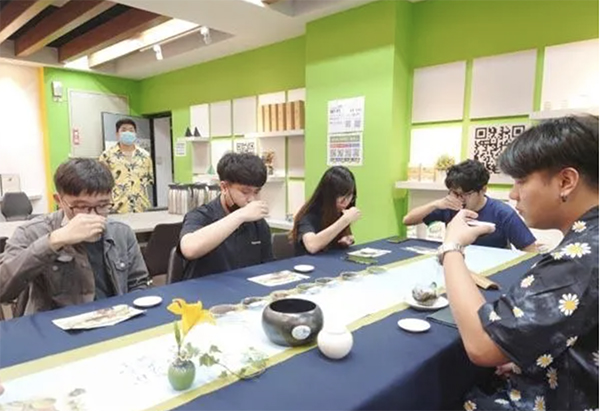
Li Shijie, Dean of the College of Tourism and Hospitality and professor in the Department of Food and Applied Biotechnology, said today (the 28th) that Dayeh University's "Food Fashion Management, Farming in Harmony with Nature - Taiwan Tea (TWT) Industry Xin Talent Cultivation 2.0 Project" received a grant from the Ministry of Education's University Social Responsibility Practice Project. It not only cultivates talent for the industry and helps upgrade tea industry technology, but also organizes experience activities to spread the merits of Taiwan tea to more people. In response to epidemic prevention, the activities were held in a small-scale format with masks worn throughout. In April, a tea-tasting culture experience activity was held for international students, and in May, Taiwan students were led to Songboling to harvest tea leaves and to Ruicheng Tea Factory to learn white tea production, experiencing it firsthand and learning about tea production areas, tea characteristics and tea-making techniques.
Lin Shangwei, Director of the Mandarin Teaching Center, said that language learning is not just listening, speaking, reading and writing, but also includes cultural understanding. Through a series of "Beauty," "Beautiful Cuisine" and "Beautiful Scenery" three-beauties experience activities, the Mandarin Center helps international students improve their Mandarin ability. "Come over to my home for tea when you have time" is the phrase hospitable Taiwanese elders most often say to relatives and friends. The flourishing hand-shaken drink culture has made Taiwan the kingdom of bubble tea, and the once-friendly tea invitation has gradually been replaced by "I want a bubble tea, half sugar, no ice." Therefore, the Mandarin Center specially planned the tea-tasting culture experience activity, inviting teachers and students from the Department of Food and Applied Biotechnology to interact with the participants, giving international students in Taiwan the opportunity to learn about Taiwan tea's tea ceremony and tea art.
Lin Fangyi, associate professor in the Department of Food and Applied Biotechnology, explained tea culture to the participants, starting from the distribution of Taiwan tea, introducing common Taiwanese tea varieties, and setting up a beautiful tea seating environment, leading students to demonstrate tea art and letting international students personally experience the etiquette and details of tea tasting. Huang Lintao, a Vietnamese student and fourth-year student in the Department of English who took part in the tea-tasting culture experience, said she very much enjoys attending activities at the Mandarin Teaching Center, as she can not only improve her Mandarin ability but also understand Taiwanese culture. The tea-tasting culture experience activity helped her learn more about Taiwan tea, and she gained a lot.