Daily Production and Management Requirements for Organic Tea and Organic Tea Gardens
The significance of organic cultivation in tea gardens lies in avoiding the use of chemically synthesized pesticides and chemical fertilizers to produce tea; its purpose is to safeguard the health of cultivators and consumers and to protect the Earth's ecological environment. The method of organic cultivation in tea gardens lies in using organic fertilizers
The significance of organic cultivation in tea gardens lies in avoiding the use of chemically synthesized pesticides and chemical fertilizers to produce tea; its purpose is to safeguard the health of cultivators and consumers and to protect the Earth's ecological environment. The method of organic cultivation in tea gardens lies in using organic fertilizers to supply the nutrients needed for tea plant growth, while effectively recycling agricultural waste into resources; for pest and disease control, non-pesticide methods must be adopted, including biological control, manual capture, physical control and cultivation management control; for weed control, non-pesticide methods must also be adopted, such as: mechanical and manual weeding, planting green manure and ground mulching. Operators of organic cultivation in tea gardens should keep records of all cultivation and management operations, and participate in certification operations of relevant agencies or organizations, obtaining the relevant "organic tea" product mark to facilitate product sales.
In addition to being used for drinking, tea produced by organic cultivation can also be developed into diversified organic tea products such as organic powdered tea, organic tea bags, culinary tea, tea wine, etc., giving consumers one more choice and further expanding the tea sales market.
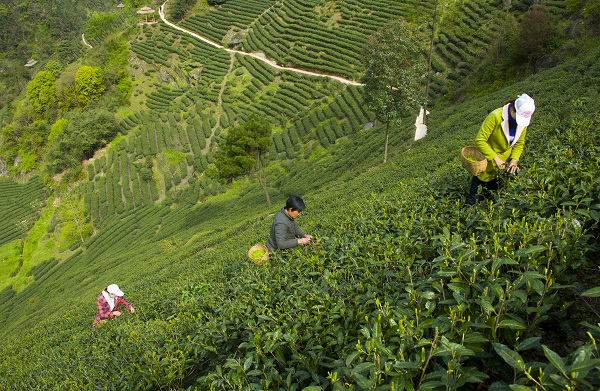
The current guidance situation for organic tea is summarized below in terms of the implementation guidelines for organically cultivated tea gardens, and the certification and specifications of organic tea:
I. Implementation Guidelines for Organically Cultivated Tea Gardens
(1) Environment: tea gardens where air, water quality and soil are not polluted.
(2) Fertilization:
Purely organically cultivated tea gardens: synthetic chemical fertilizers or growth regulator materials may not be used; instead, uncontaminated organic fertilizers are used or green manure crops are planted, and only those doing so for three years or more may be called pure organic tea products.
(3) Pests and diseases:
Purely organically cultivated tea gardens: completely do not use chemically synthesized pesticides to control pests and diseases. Control methods include biological control: using Trichogramma to control the tea tortrix, using Wen's predatory mite to control Kanazawa spider mite, using sex pheromones to control the tea smaller tortrix, using green lacewing (Chrysopa), to control small pests and Bacillus thuringiensis to control tea tussock moth, tea slug moth, bagworm moth, inchworm moth and other lepidopteran pests. Physical control: inserting yellow sticky boards in tea gardens can be used to control the smaller green leafhopper, tea whitefly, thrips and aphids. During drought, high-pressure water spraying facilities can be used for control. Manual capture method: tea tussock moth, bagworm moth and inchworm moth can be reduced in pest density by manual capture. Cultivation management: use pruning to cut off diseased plants, keep the tea garden ventilated, and avoid excessive shade and humidity.
⟦NL>
(4) Weed control:
1. Manual weeding:
Weeds whose stems and leaves spread over the tea canopy and hinder tea plant growth, such as chicken vine, chicken manure vine and Plumbago zeylanica, are removed manually. Weeds beside the tea canopy, such as Japanese false nettle, cogon grass, purple nutsedge and Bidens pilosa, are dug out manually including their roots.
2. Mechanical weeding:
Weeds growing in the tea rows that hinder picking operations and compete for nutrients can be controlled by carrying out intertillage and fertilization together with weeding.
3. Ground mulching:
Mulching materials such as grain husks, peanut shells, bagasse and straw can be selected and spread between tea rows; the thickness should preferably not exceed 5 cm, to avoid being too thick, which causes poor soil aeration or water accumulation during the rainy season.
4. Planting green manure crops:
In winter (November to December), interplant lupine (lupin) and ryegrass (annual Italian type) between tea rows; in summer, interplant sesbania to prevent weeds, though planting lupine is best for tea gardens.
5. Cultivating a vigorous tree vigor can naturally form a shading effect; branches from summer or winter pruning can also be spread over tea rows to prevent weed growth.
6. Appropriately retain weeds with a short growth period, low stature, soft stems and leaves, and strong ground-creeping ability that have soil and water conservation functions, such as wood sorrel and gotu kola.
II. Certification and Specifications of Organic Tea
(1) Certification conditions:
1. The production process has undergone technical guidance and investigation by the Tea Research and Extension Station, confirming that it is cultivated in accordance with the crop organic cultivation implementation guidelines and field management methods set by the Department of Agriculture and Forestry, and has complete management records.
2. Harvested finished tea is sampled by the responsible persons of each region of the Tea Research and Extension Station from trial-farming households according to regulations, sent to the pesticide institute or relevant units for testing, confirmed to have no pesticide residues, and accompanied by test report data.
3. The product meets the specifications of organic agricultural products.
(2) Specifications:
1. Appearance tightly rolled and neat, hemispherical or strip-shaped, good dryness, no scorched appearance.
2. Bright color, dark green, with a faint golden edge on tender leaves.
3. Resistant to multiple infusions; liquor color honey-green or golden yellow, clear and bright.
4. Fresh and elegant fragrance, no raw grassy taste, smooth throat and sweet mellow.
5. Adopts quasi-organic or pure organic cultivation, with no pesticide residues.