-

Key Technical Points and Rearing Management Methods for White-Feathered Broiler Farming
The white-feathered broiler is one of the largest industries in our country's livestock and poultry farming sector, and many farmers raise them on a large scale, so what are the white-feathered broiler farming techniques? Please see the details below. I. Building the chicken house The first issue to consider when building a chicken house is
-
What are the farming methods for fast-growing chickens?
Fast-growing chickens usually refer to white-feathered broilers, a type of edible chicken with a short rearing cycle, low farming cost and a high meat yield. They are currently farmed in some regions, so what are the farming methods for fast-growing chickens? 1. Seed selection Select breeder chickens that have undergone continuous improvement and optimization and are introduced from abroad as white-feathered broilers; the meat yield of this kind of chicken has made a qualitative leap.
-
Detailed Explanation of Key Points in White-Feathered Broiler Farming Technology
White-feathered broilers are characterized by fast growth, a short rearing cycle, and a large average body weight at market. Below I will share a few insights based on the physiological characteristics of white-feathered broilers. 1. Housing requirements: in Northeast China, insulation of the housing is key. Some farmers pursue only the number of birds raised rather than quality, blindly expanding production, with pitifully crude housing, resulting in high labor intensity, high heating costs, and high rates of chick disease and culling. Therefore, in Northeast China the construction of chicken houses is very important, paying attention to the design of main-body insulation and ventilation openings. This achieves high-quality rearing results. 2. Brooding: whether chicken raising succeeds depends 50% on brooding. During the brooding period, temperature, humidity, indoor air freshness, and chick density must all be reasonable. Temperature varies slightly according to the season, but with one goal: as long as the chicks do not huddle together or breathe with their mouths open, that is fine. Do not stare obsessively at the thermometer, and do not violate their physiological requirements; humidity should be controlled at 60-65%. Suitable humidity can prevent floating dust from entering the respiratory tract, which would cause snorting and coughing after the first immunization vaccine; ventilation for the chicks cannot be ignored. In fact, during the brooding period, the fuel for indoor heating consumes a lot of oxygen, and after oxygen deficiency the chicks will overdrink, causing non-pathological diarrhea or death by suffocation; too high a density affects the uniformity of the chicks and induces proventriculitis, so they should be moved to new groups at the proper time. 3. Selection and use of vaccines: choose vaccines prepared from SPF eggs. Some vaccines are prepared from ordinary eggs. Formulate the immunization program according to the epidemic characteristics of local diseases. 4. Drug prevention and treatment: there are many misunderstandings in the use of drugs. Using florfenicol at the start can easily cause immunosuppression; cephalosporin antibiotics should be used, which are effective against both inflammation and Gram-negative bacteria. Before 20 days of age, try not to use Western antiviral drugs; use more pure Chinese medicines to prevent damage to the immune system. Drugs should be used according to the course of treatment to prevent the development of drug resistance. Do not rely completely on drugs to prevent disease; do a good job in environmental management. Once conditions suitable for growth are created, the probability of disease is much lower. 5. Reasonable nutritional levels: do not pursue whether the feed cost is high or low; it is enough that the nutrition is complete, balanced, and of stable quality. The feed formulas made by each manufacturer differ slightly, and the amounts cannot be compared with one another. Early rearing requires protein, while later stages require energy, so for concentrated feed, add it when needed and reduce it when needed (with reasonable feeding costs, generally after 33 days of age reduce the proportion of concentrated feed; corn is the source of energy)
-
Effective measures to reduce chick mortality in white-feathered broiler farming
Chicks at 0-4 weeks of age have an imperfect thermoregulatory function, high nutritional requirements, and weak resistance to disease, and often die from various diseases. Preventive measures should be taken to reduce mortality and improve brooding survival rates. (1) Preventing pullorum disease in chicks: the causes of chick mortality
-
How to carry out good hygiene and disease prevention during the brooding period of white-feathered broilers
Chicks have weak constitutions and poor resistance to pathogenic microorganisms. Once any disease occurs, it is difficult to control; even if the progression of the disease is brought under control, it will still cause irreparable losses to future production. Therefore, during the brooding period, hygiene and disease prevention work must be done well, and prevention must be the priority.
-
Key Technical Points for Natural Mating Breeding of White-Feathered Broiler Chickens
(1) Male-to-female ratio The male-to-female ratio refers to the number of hens each rooster is responsible for mating. Taking free-range floor rearing as an example, the male-to-female ratio for fast-growing white-feathered broilers is 1:8-10, for high-quality white-feathered broilers it is 1:9-12, and for layer-type chickens it is 1:10-13. If raised on wire-floor flat rearing, the lower limit should be adopted;
-
Causes and Prevention and Control Methods of Newcastle Disease in White-Feathered Broiler Chickens
Newcastle disease is also called Asian fowl plague. Newcastle disease is a highly contagious, acute septicemic infectious disease caused by a virus. The main characteristics of Newcastle disease are difficulty breathing, diarrhea, nervous dysfunction, and hemorrhage of mucous membranes and serous membranes. It mainly attacks chickens and turkeys,
-
Causes and Prevention and Treatment Methods of Infectious Laryngotracheitis in White-Feathered Broiler Chickens
Infectious laryngotracheitis in chickens is an acute respiratory infectious disease caused by a herpesvirus. Infectious laryngotracheitis in chickens is characterized by difficulty breathing, coughing, and expectoration of exudate containing blood. On necropsy, swelling, hemorrhage, and erosion of the laryngeal and tracheal mucosa can be seen
-
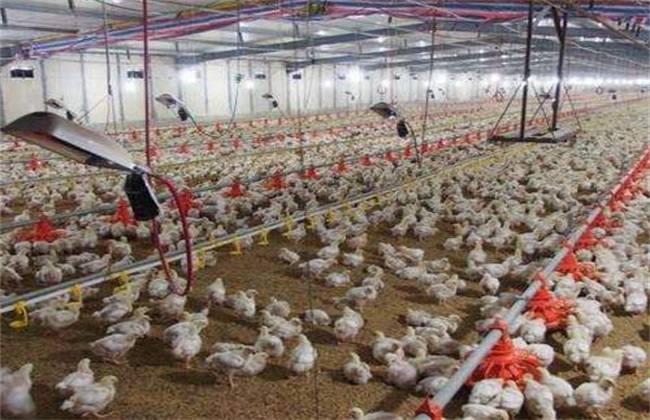
What are the growth stages of white-feathered broiler chickens?
Growth stages of white-feathered broiler chickens
-
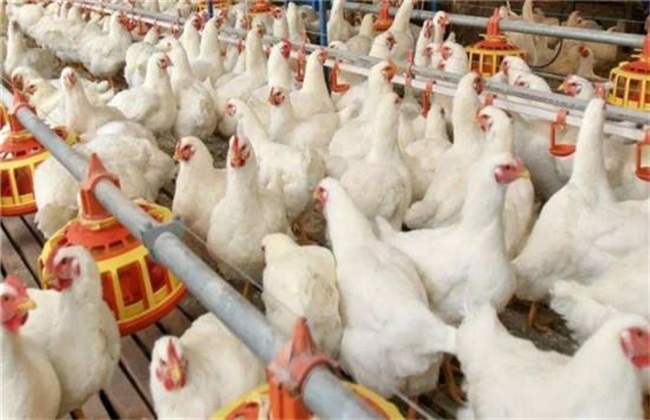
What kind of growing environment do white-feathered broilers need?
The growing environment for white-feathered broilers
条件筛选