What are the growth stages of white-feathered broiler chickens?
The white-feathered broiler is one of the most commonly farmed meat chicken breeds in China. It is also the breed with the highest level of farming development in China's livestock and poultry industry. White-feathered broilers have excellent growth performance, tender meat and rich nutrition, and are welcomed by many people. As a result, more and more people are now raising them, and when we raise white-feathered broilers, we must first understand their growth stages. So today the editor brings you the growth stages of white-feathered broilers. Let's take a look!
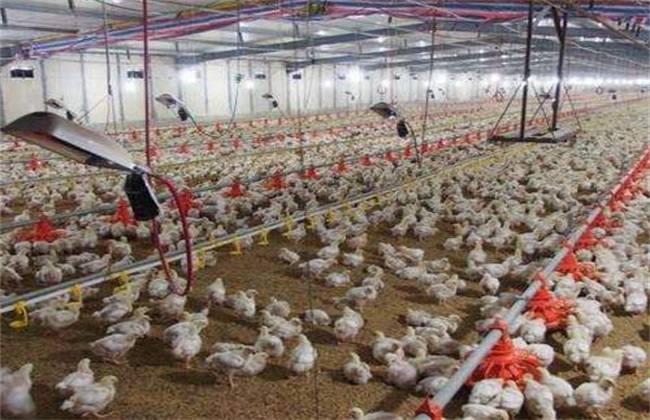
1. Early brooding period
The early brooding period of white-feathered broilers refers to chicks from after hatching to two weeks of age. The early brooding period is the most vigorous growth stage of white-feathered broilers, and it is also a very important growth period. White-feathered broilers in the early brooding period need large amounts of high protein and amino acids. This can increase the appetite of the chicks and enhance the digestive capacity and immune capacity of white-feathered broilers. Feeding should follow the principle of feeding more frequently in small amounts, and because the chickens are younger at this stage, the variety of enzymes in the digestive tract is not very great and their content is not large. Therefore their digestive capacity is relatively large, so the feed should mainly be easily digestible high-quality energy and protein feed.
2. Late brooding period
The late brooding period refers to chicks from two weeks to four weeks of age. This period is also a key growth stage for white-feathered broilers, and at this stage the growth of bones and muscles is most critical. Therefore special attention should be paid to supplementing high protein and energy, because the growth of bones and muscles has a very large demand for these two nutrients. However, at this time the digestive capacity of the chicks gradually strengthens, so the feeding of energy feed can be appropriately increased, and some crude protein feed can also be appropriately fed.
3. Mid pullet period
The mid pullet period mainly covers the time within one week after the late brooding period. The mid pullet period is a key period for the rapid development of the internal organs of white-feathered broilers, and at this time the feed intake of white-feathered broilers increases greatly. They enter the peak period of growth and development, and the absorption and conversion of feed gradually strengthen. Moreover, the daily weight gain of white-feathered broilers is also continuously expanding. Therefore, in order to ensure the development of the bones and cardiovascular system of white-feathered broilers and to increase fat content, attention should be paid to raising the energy level and appropriately reducing the protein content at this time, so as to promote rapid weight gain in white-feathered broilers.
4. Late pullet period
After passing through the mid pullet period comes the late pullet period. The late pullet period continues until the time of marketing, and during the late pullet period it is the stage of rapid weight gain of the body of white-feathered broilers. At the same time, the fat of white-feathered broilers also gradually deposits, and at this time the fat deposition capacity is the strongest. Therefore attention should still be paid to energy supplementation, but at this stage the requirements of white-feathered broilers for protein and amino acids gradually decrease.
The above is a brief introduction to the growth stages of white-feathered broilers. That is all for today's introduction. This article is for reference only. Thank you for reading and supporting.