-

The Latest Cultivation Technique and Method Tutorial for Replanting Welsh Onions after Spring Wheat
Yield and output value Welsh onions generally yield 2000-4000 kg per mu, with an output value of 400-800 yuan per mu. Main cultivars Zhangqiu onion, Linbang onion. Cultivation points ①Select fertile soil with irrigation and drainage conditions on high, dry plots for raising seedlings. ②Raise strong seedlings and transplant at the right time. Sow and raise seedlings in early to mid-March, with a sowing rate of
-
Detailed Explanation of Corn Replanting Methods and Precautions
Missing corn seedlings is a very common phenomenon, and many farmers choose to replant their corn. So, how is corn replanted? What are the corn replanting methods and precautions? Let's take a look together! 1. How is corn replanted? 1. Variety selection:
-
Key Management Techniques After Top Grafting and Replanting of Lychee
After top grafting of lychee, sun protection and ant prevention work must be done well, and new shoots on the original rootstock and water-drawing branches should be removed promptly and regularly so that nutrients are concentrated in the scion, facilitating the sprouting of new shoots and growth and development. After the graft has survived, cut off the water-drawing branches in stages and batches. After the first flush of shoots has completely turned green, cut off part of the water-drawing branches; after the second flush of shoots has fully matured, cut off part of the water-drawing branches; in the spring and summer of the second year after grafting, cut off all water-drawing branches.
-
What are the field management measures for Coptis chinensis cultivation?
1. Replanting: In the first 3 years after planting, replanting should be done promptly. Generally, replanting is done 2 times: the 1st time in the autumn of the same year, and the 2nd time after the snow melts the following year but before new leaves emerge. 2. Weeding: In the year of planting and the following year, weed promptly and loosen the surface soil, weeding 4-5 times each year; chemical herbicides can also be used.
-
Mango Top Grafting and Replanting: Operation Methods and Key Technical Points
Over the past decade, mangoes have been planted in contiguous orchards on hillsides throughout the south, and production has developed rapidly. However, large trees and new trees that have been planted for many years need top grafting and replanting due to poor quality or mixed varieties and low yields. The methods are: 1. Preparation before grafting. Before replanting, strengthen fertilizer and water management for the trees to be replanted. Prune the aboveground parts appropriately, removing diseased branches, dead branches, shaded branches, overly dense branches, and crossing branches; for perennial large trees, in spring and autumn, saw off the main and lateral branches at 1.2-1.5 m above the ground (saw in spring and graft in autumn, or saw in autumn and graft the following spring), leaving some small branches. After new shoots emerge from the saw cuts, keep only 2-3 evenly distributed new shoots per cut. After the new shoots mature and their diameter reaches 0.5-0.8 cm or more, grafting can be done on the new shoots. Stop fertilizing 15 days before grafting, which can slow sap flow and benefit grafting.
-
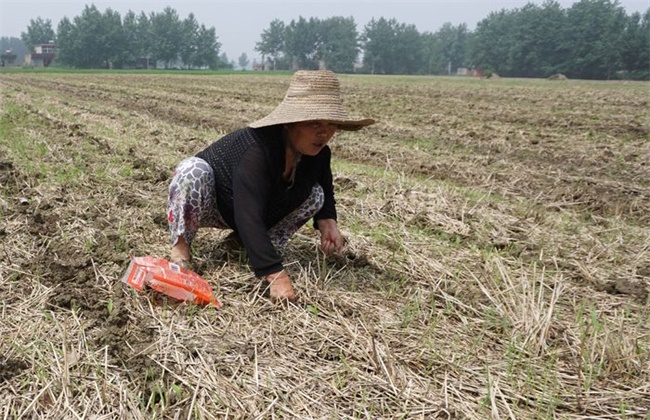
Understanding Corn Replanting Methods and Precautions in One Article
Corn Replanting Methods and Precautions
-
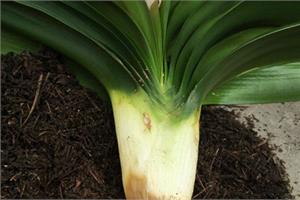
What to do when Clivia replanting breaks roots? Replanting precautions
Clivia roots broken during replanting: Clivia replanting precautions
-
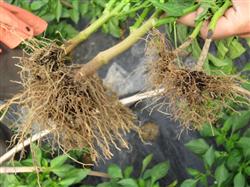
Three precautions when replanting peppers after dead plants
Recently, some vegetable growers came to the Qingzhou Denong Supermarket to report that the peppers they had just transplanted were dying off severely, and even the replanted pepper seedlings grew poorly and were prone to disease infection, causing further dead plants. The author observed in the vegetable growers' arched sheds and found that this situation was mainly caused by improper replanting methods. So how...
-
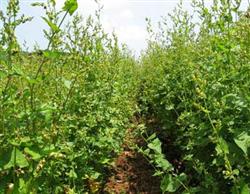
Replanting autumn buckwheat for disaster relief and increasing income at the same time
Buckwheat has a short growth period, strong adaptability, moderate yield and high nutritional value. It is an excellent catch crop and disaster-relief crop, and can be planted from south to north in our province. Experts remind that in the area along the Yangtze River and south of it in our province, sowing can be done around mid-August, while in the area along the Huai River, early to mid-August is suitable. For autumn buckwheat, it is advisable to choose varieties with a growth period of 70-80 days, ...
-
Detailed Explanation of Methods for Releasing, Thinning, and Replanting Rootstock Seedlings
Methods for Releasing, Thinning, and Replanting Rootstock Seedlings
条件筛选