-

When is the best time to apply mepiquat chloride to corn?
Correct use of mepiquat chloride can not only regulate the growth rate of corn, but also strengthen the plants and increase yield. So when should mepiquat chloride be applied to corn? 1. When should mepiquat chloride be applied to corn? Generally at the small funnel stage of corn, that is, 8-10 leaves,
-
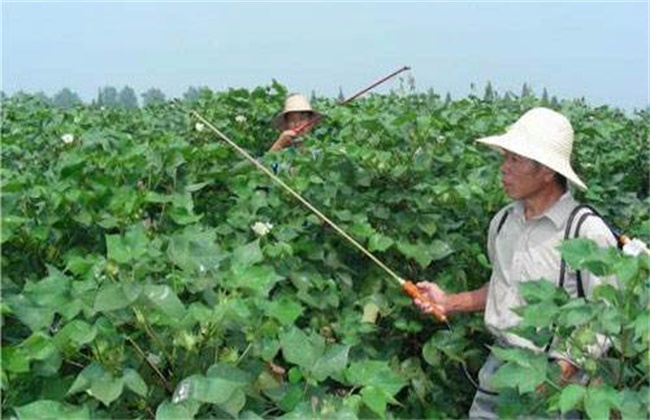
How to use mepiquat chloride? Detailed explanation of usage methods and precautions
Mepiquat chloride usage methods and precautions
-
What are the benefits of spraying mepiquat chloride on cotton?
Mepiquat chloride is a growth regulator specifically for cotton, with the effects of controlling excessive vegetative growth in cotton, regulating nutrient distribution, and increasing boll set. Entering September, cotton growth and development have reached the late boll-setting stage, so spraying an appropriate amount of mepiquat chloride, at 20 milliliters per mu, can reduce the occurrence of ineffective flower buds. After spraying on cotton, the leaves become greener and the leaf flesh thicker, which can effectively enhance cotton photosynthesis. After cotton is sprayed with mepiquat chloride, it can also make the fruiting branches in the upper part of the cotton plant grow sturdy, reducing the impact of pests such as cotton bollworm and tobacco cutworm. At the same time, in recent years due to climate
-
Study on the Absorption Rate of Cotton to Different Doses of Mepiquat Chloride
The indeterminate growth habit of cotton and its strong plant-type plasticity determine that multiple mepiquat chloride growth-regulation treatments must be carried out during its growth period. This is especially true under the "early, dense, dwarf, film" cultivation model, where directional induction is used to shape a reasonable field structure and obtain the optimal temporal and spatial distribution of cotton bolls. This article uses large-scale spraying machinery and takes Xinluzao 23 as the subject to study the absorption rate of mepiquat chloride by cotton at different stages of growth and development as follows. 1. Selection of spraying machinery: traction power between 30 and 65 horsepower, tank volume between 1.7 and 2.2 cubic meters,
-
Application Technology of Mepiquat Chloride for the New Large-Boll Cotton Variety Shuofeng No. 9
Characteristics and traits: This variety was developed from the original Shuofeng No. 9 through purification and rejuvenation selection. The plant is tall, with thick and hard stems, a loose plant type, and relatively long fruiting branches with few hairs. The leaves are large and dark green, the bolls are large, long-oval in shape. It emerges well, with uniform seedlings, vigorous growth in the early and mid stages, and growth stabilizing in the late stage, with good uniformity. The first fruiting branch node is low, boll setting is good, boll opening is full and smooth, easy to pick, the pre-frost boll rate is 91.0%, fiber length is 31.1 mm, fiber quality is excellent, making it a high-quality cotton variety. The growth period is 125 days, plant height 110-130 cm. Comprehensive traits are stable, resistant to
-

Why should mepiquat chloride be used cautiously on tomatoes?
In recent years, many farmers have used hormones such as mepiquat chloride when carrying out chemical control on tomatoes. However, improper use of mepiquat chloride often causes phenomena such as small fruit, fruit cracking and green shoulders. For this reason, it is recommended that chemical control of tomatoes should focus on nutritional regulation, and attention should be paid to preventing the following situations. 1. "Small fruit disorder": because farmers at...
条件筛选