-

Key Points of Thelephora ganbajun Cultivation Techniques and a Detailed Explanation of Growing Methods
Site selection: Choose a semi-shaded slope with high forest coverage and a thick soil layer, pull out the weeds, and cut off excess branches. || Sowing: After watering the planting site thoroughly, dig open the soil around the tree roots, inoculate the fungal spawn onto the lateral roots and cover it well with soil. || Post-planting management: After planting, no
-
Jingning, Zhejiang: Insurance coverage rate for breeding sows reaches 100%
Jingning, Zhejiang: Insurance coverage rate for breeding sows reaches 100 percent
-

China strives for full rural power coverage within five years
China aims to extend rural power coverage nationwide within five years
-

Guangdong rural e-commerce to achieve village-to-village coverage by 2020
Guangdong rural e-commerce village-to-village coverage by 2020
-
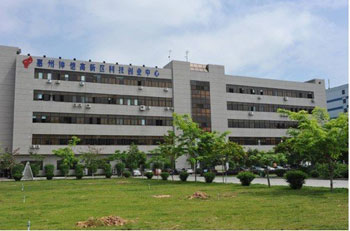
Guangdong achieves full coverage of incubators in cities at and above the prefecture level
All cities at and above the prefecture level in Guangdong covered by incubators
-

Do a good job of the Ten Full Coverages, and the forest farm takes on a completely new look
Look on | Do a good job of the "Ten Full Coverages", and dare to make the forest farm take on a completely new look~
-
Angelica sinensis with shade net coverage: high yield increase and quality improvement benefits
The shade cultivation technique for Angelica sinensis starts from the three-leaf stage of its growth (that is, from mid-May to early August after summer begins, when temperatures are high and light is intense). A shade net with a 50% shading rate is timely placed over Angelica sinensis, providing a suitable micro-environment of moderate temperature, weak light, and moisture that mimics its original ecological growing conditions. By lowering temperature, increasing humidity, and reducing light, it reduces the early bolting rate of Angelica sinensis in dry flatland cultivation to about 30%; moreover, shade cultivation of Angelica sinensis also helps prevent and reduce pest and disease damage, thus improving the quality of Angelica sinensis.
-
Key Points of Late-Stage Management and Plastic Mulch Coverage Techniques for Lilies
I. Late-Stage Management (1) Timely removal of bulbils. Bulbils should be harvested on a sunny day, and care must be taken to avoid breaking the plants or knocking off the upper green leaves. (2) Shading and cooling, clearing ditches to reduce humidity. Shading is a measure to prevent high temperatures. Adding a straw cover at the seedling stage can reduce water evaporation and lower soil temperature for the late-stage growth of lilies. (3) Increasing fertilizer application. After the bulbils are harvested, the leaf color of lilies gradually becomes lighter, indicating that nutrients have become imbalanced, and nutrients must be added to prevent premature senescence of the lilies. At this time, an appropriate amount of quick-acting chemical fertilizer should be applied as a supplement. During the flowering period of lilies, applying 2
-
Key Techniques for Shade Net Coverage Cultivation of Allium Vegetables
Chives, scallions, garlic and other allium vegetables prefer cool climates and have poor heat tolerance, but they tolerate shade well. Cultivating them under shade net coverage during the high-temperature seasons of summer and autumn can promote growth and increase both yield and quality. For example, after covering chives, the leaf tips show no scorching, the leaves are tender and green, and the quality is noticeably improved. For garlic planted in August, covering with shade net increased the seedling survival rate by 44.54% compared with no covering, and plant height and leaf number increased significantly. In shade net coverage cultivation of allium vegetables, floating row cover can be used after sowing and before emergence, and after emergence, large tunnels, flat shelters and small arched tunnels can be used for covering.
-

Lightweight foundation with buildable coverage, waterproof and sweat-proof, no makeup meltdown or smudging for 24 hours
For beauty lovers, the biggest frustration is probably makeup meltdown. Sweat, heavy rain, and oil are all reasons your makeup breaks down. It constantly leaves you looking a mess and ruins the flawless finish of your entire face. And this kind of embarrassment even affects those who live...
条件筛选