Guangdong achieves full coverage of incubators in cities at and above the prefecture level
Original title: Guangdong: Cities at and above the prefecture level basically achieve full coverage of science and technology business incubators
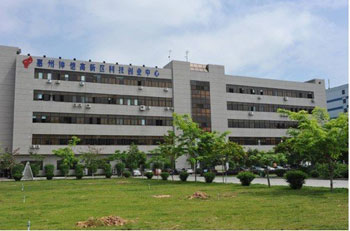
Huizhou Zhongkai Science and Technology Entrepreneurship Service Center (network illustration)
As of the end of last year, Guangdong had 399 science and technology business incubators across the province, an increase of 166; 61 national-level incubators, an increase of 18; more than 18,000 incubated enterprises, an increase of 4,056; more than 150 makerspaces, an increase of 100, of which 44 were national-level registered makerspaces; various types of incubation carriers have been developing like bamboo shoots after spring rain, with the number of new additions exceeding the highest historical levels. At present, cities at and above the prefecture level across the province have basically achieved full coverage of science and technology business incubators, with multiple cities in the Pearl River Delta achieving coverage in 70% of their districts (counties). Incubators in the high-tech zones of Shantou and Qingyuan were recognized as national-level science and technology business incubators, achieving a breakthrough of “zero” national-level incubators in the eastern, western and northern regions of Guangdong. This is the latest information the author learned during a recent interview on Guangdong’s “dual innovation” at the provincial Department of Science and Technology.
The Guangdong Provincial Party Committee and Provincial Government attach great importance to “dual innovation” work. At last year’s provincial on-site meeting on science and technology business incubator construction, it was proposed that science and technology business incubators should be taken as an important lever for implementing the innovation-driven development strategy. Last year, the provincial government launched the heavyweight Guangdong Government Document No. 1 —— “Several Policy Opinions on Accelerating Scientific and Technological Innovation” (12 Articles on Scientific and Technological Innovation), 3 of which concern policies on incubator construction. In response, the provincial Department of Science and Technology and the provincial Department of Finance also issued related supporting policies. At the same time, together with the Financial Affairs Office, it issued the “Opinions on Developing Science and Technology Equity Crowdfunding, Building Makerspaces, and Promoting Innovation and Entrepreneurship” (Yue Ke Gui Cai Zi [2015] No. 104). At present, cities across the province have also successively issued corresponding policy implementation rules, and are stepping up implementation of provincial and municipal policies to improve support measures for science and technology business incubators.
For many years, the development of Guangdong’s science and technology business incubators and makerspaces has been led by science and technology departments, and a special fund for the incubation and breeding system has always been established. It is understood that in the past two or three years, the provincial Department of Science and Technology has arranged no less than 100 million yuan each year, mainly for subsidies for newly added incubation space, support for the construction of incubators and makerspaces, and so on. Under the active guidance of science and technology departments, a preliminary pattern of diversified investment entities in Guangdong’s dual innovation platforms has taken shape. Leading enterprises such as Tencent and Kingfa Sci. & Tech. have all established industrial incubators; universities such as Sun Yat-sen University and South China University of Technology have also established entrepreneurship service platforms serving teachers and university students; investment institutions such as Fortune Capital and Inno Fund have established incubation carriers such as makerspaces…… According to statistics, in 2015, more than 60% of newly added science and technology business incubators in Guangdong were invested in and built by private capital. Among the 18 newly recognized national-level science and technology business incubators, 12 were invested in and built by social capital.
At the same time, Guangdong science and technology departments actively guide localities and incubation institutions to build a full incubation chain of “makerspace—incubator—accelerator,” achieving services for the full growth cycle of enterprises. By integrating various provincial plan projects, they vigorously support science and technology business incubators in building public service platforms and improve incubation service capabilities. They actively encourage the construction and development of “four crowds” platforms. A group of platforms and service institutions for crowdsourcing, crowdfunding, crowd support and mass innovation, such as Zhongda Innovation Valley, Xiaocong Qingtou Platform, and Dalian Machine Tool (Dongguan) R&D Center, have risen rapidly, forming incubation services such as “angel investment + incubation,” “entrepreneurship coaching + angel investment,” and entrepreneurship display and exchange. Innovation and entrepreneurship competitions have been successfully held, and a number of outstanding participating projects have received support from all sectors of society.
They actively use talent programs such as the Pearl River Talent Plan, the Sailing Plan, and the Special Support Plan to vigorously introduce returning overseas students, academic leaders, technology-based entrepreneurs and other talents to start businesses in Guangdong. According to statistics, in 2015, incubators across the province introduced more than 10,000 entrepreneurial talents, and more than 4,000 incubated enterprises were newly added. At the same time, they strengthened the introduction of incubator management and service teams. Last year, well-known domestic incubation service teams such as Boji Science and Technology Park, Houde Coffee, and 36Kr were newly introduced; they strengthened the cultivation of incubation service talent teams, holding more than 10 training sessions for practitioners throughout the year, with more than 2,000 person-times trained; they strengthened the building of entrepreneurship mentor teams, with more than 2,000 entrepreneurship mentors across the province and 73 newly added national Torch entrepreneurship mentors, ranking 2nd in the country in number.
Adhering to the combination of “inviting in” and “going out,” in recent years Guangdong has actively built cross-border cooperation and exchange platforms and vigorously carried out Guangdong-Hong Kong-Macao and international entrepreneurship services.
At present, Guangdong has built international incubation platforms such as the Guangzhou International Bio Island biomedical incubator, the Sino-German metal new materials incubator, and the Sino-Israeli water treatment incubator; incubators such as Guangdong IoT World have established incubation and exchange platforms with countries such as the United States, Israel, and Hungary, gathering a number of international innovation resources; the Huizhou Zhongkai Science and Technology Entrepreneurship Service Center has also set up multiple off-site incubation bases overseas, attracting global high-end entrepreneurship projects and teams to settle in Huizhou.
At the same time, the provincial Department of Science and Technology actively implements national deployments and adopts multiple measures to vigorously attract young people from Hong Kong, Macao and Taiwan to innovate and start businesses in Guangdong. It has built innovation and entrepreneurship service platforms oriented toward the “four regions across the strait,” and a number of platforms such as the Guangzhou Guangdong-Hong Kong-Macao (International) Youth Innovation Factory, the Shenzhen Qianhai Shenzhen-Hong Kong Youth Dream Factory, the Zhuhai Macao Youth Hengqin Entrepreneurship Valley, and the Dongguan Tianan Digital City are actively connecting with innovation and entrepreneurship youth from Guangdong, Hong Kong, Macao and Taiwan. A series of innovation and entrepreneurship activities were held, such as the “Entrepreneurship China——Guangdong-Hong Kong-Macao Youth Forum” and the “Red Bird Fly Together” Dream Flight Practical Training Camp. (Qiren)