-
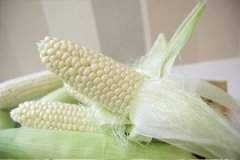
Is Sweet Corn the Same as Corn? A Detailed Look at Hokkaido White Sweet Corn Variety Characteristics, Taste and Sweetness
To grow corn well, you must pay close attention to corn cultivation methods and precautions. Hokkaido white sweet corn is one of the Japanese agricultural products that Hong Kong food lovers look forward to every year! But it is generally only in season in autumn, and during this gap you can try white sweet corn produced in Taiwan, China
-

Hokkaido euonymus is a new variety among landscaping nursery stock
Hokkaido euonymus (Euonymus japonicus L.): Celastraceae, Euonymus. Native to Hokkaido, Japan. An evergreen broadleaf tree species with an upright posture, evergreen throughout the four seasons, and tolerant of shaping and pruning. After being introduced to Beijing and through cultivation and acclimatization, it has become a new tree species extremely strong in cold and drought resistance that adapts to the northern climate. In northern China, where winters and springs are dry, cold, and windy, evergreen broadleaf tree species that are cold- and drought-resistant are extremely lacking. Hokkaido euonymus, however, has very good cold and drought resistance, can endure low temperatures of -23°C, and is more drought-tolerant than common euonymus. With luxuriant branches and leaves, four
-
Detailed Explanation of Hokkaido Boxwood Cultivation Techniques
There are many propagation methods for Hokkaido boxwood. The following is a brief introduction to several commonly used methods: 1. Cutting method: The cutting method is further divided into hardwood and softwood cutting methods. Hardwood cuttings are carried out between October each year and the end of March of the following year. For units with sufficient seed sources, the cuttings can be cut slightly longer; for units lacking seed sources, the cuttings can be slightly shorter. The cuttings are 8 to 15 cm long, and the insertion depth is generally 3 to 5 cm. Roots can grow after 1 month. As long as cuttings are made according to the methods introduced below, seedlings with relatively good growth can be obtained quickly
-
What are the water-saving and drought-tolerant management and care methods for Hokkaido euonymus?
Hokkaido euonymus is an evergreen broadleaf small tree in the Celastraceae family, genus Euonymus. When Euonymus bungeanus is used as rootstock to graft Hokkaido euonymus, the tree has an upright posture and stays evergreen in all four seasons. After winter arrives, the mature fruit splits open to reveal the red aril, with green leaves and red fruit, giving extremely high ornamental value. It is a rare evergreen broadleaf tree in the cold regions of the north. It is not demanding about soil and can grow very well in sandy soil, sandy loam, loam and soil with a soil organic matter content above 0.8%. It adapts to soil with a pH value of 6 to 9 and a total salt content within 2‰. The high graft height is 1 to 1.8 m, and the low graft
-
Cultivation Techniques and Care Methods for Hokkaido Euonymus
Variety origin. Hokkaido euonymus, also known as Japanese euonymus, originated in Sapporo, Hokkaido, Japan. It was introduced in 1986 and, after many years of breeding and selection, became an excellent new variety suited to the climatic conditions of northern China. Characteristics. Hokkaido euonymus has relatively broad, elliptical leaves with bluntly rounded tips, sturdy shoot tips, obvious apical dominance, and a single straight trunk, showing excellent tree-like traits. It grows relatively fast, with an annual growth of 70--170 cm, and a 5-year-old tree can reach more than 3 m in height. Hokkaido euonymus has a very obvious main trunk
-
What are the characteristics and uses of Hokkaido boxwood?
Hokkaido boxwood is a new boxwood variety introduced by the Chinese Academy of Forestry in the mid-1980s. It is an evergreen broadleaf tree of the genus Euonymus in the family Celastraceae, and a cultivated variety of large-leaf boxwood. It has the characteristics of a tall trunk, an upright posture, evergreen foliage in all four seasons, and ornamental red fruits in winter. As the construction of new rural areas is gradually placed on the agenda, greening and beautifying the environment will become an important part of new rural construction. In order to change the single pattern of deciduous trees in temperate regions and move toward high-grade greening and beautification, planting more evergreen, pollution-free greening
-
Engineering Applications and Management Methods for Hokkaido Boxwood
Hokkaido boxwood is an excellent landscaping material, but because it was introduced and promoted relatively late, many design units are still not familiar enough with its growth habits and characteristics, and it is used sparingly or configured inaccurately in design applications. As a result, nursery growers feel lost about how to cultivate and prune it: they plant a whole field of seedlings but do not know how to manage them, and after several years pass, they are left sighing in dismay! Based on several years of research and practice at this nursery, the following cultivation trial methods are considered effective. 1. Single-trunk small tree. When the seedling grows to 1.8-2 m, pinch out the growing tip at the top, keep the upper 30 cm for branching, and remove all branches below so that it concentrates on developing the upper part into a crown.
-
Detailed Explanation of Propagation, Cultivation Methods and Shaping and Pruning Techniques for Hokkaido Boxwood
Hokkaido boxwood is a cultivated variety of large-leaf boxwood (Euonymus japonicus), an evergreen broadleaf tree species in the Celastraceae family, genus Euonymus, native to Japan. It grows relatively fast, with maximum annual height growth reaching up to 170 cm. The tree has an upright posture and stays green all year round; after autumn, its fruit has extremely high ornamental value, making it an excellent tree species for adding greenery and color in northern winters.
-
Rosularia japonica is a succulent plant in the Crassulaceae family
Its original name is Rosularia japonica, and as the name suggests, the Japanese word "komochi" means "having children," while "ren" (lotus) refers to the rosette form, simply and vividly expressing the plant's appearance. This variety is native to the Hokkaido region of Japan and the coast of Aomori, and is a plant unique to Japan, called by many "Rosularia japonica."
-
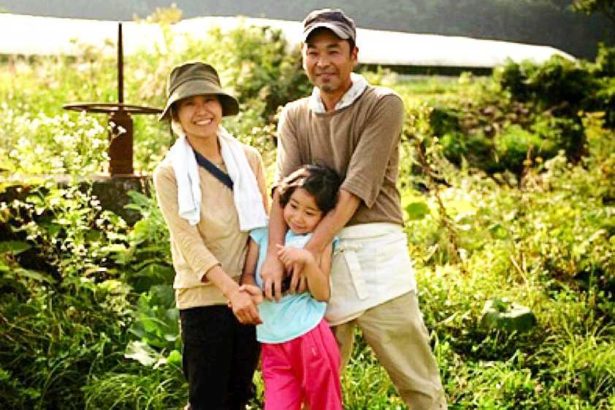
The story of Hokkaido's Makino Farm pursuing a down-to-earth life of self-sufficiency
Hokkaido Land Stories 03 | Living a down-to-earth life with all our might! Makino Farm's pursuit of self-sufficiency
条件筛选