-
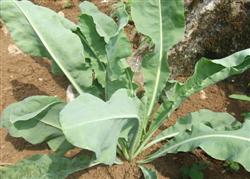
Detailed Explanation of Isatis Root Planting Management Methods and Technical Points
How to manage Isatis root planting? Please introduce the daily management methods. The daily management of Isatis root mainly includes field management and pest and disease control. For detailed methods, please refer to the following: Isatis root field management methods: When the seedlings are 7-10 cm tall, thin them out; when the seedlings are 12 cm tall, set the spacing, with a plant spacing of 7-10...
-
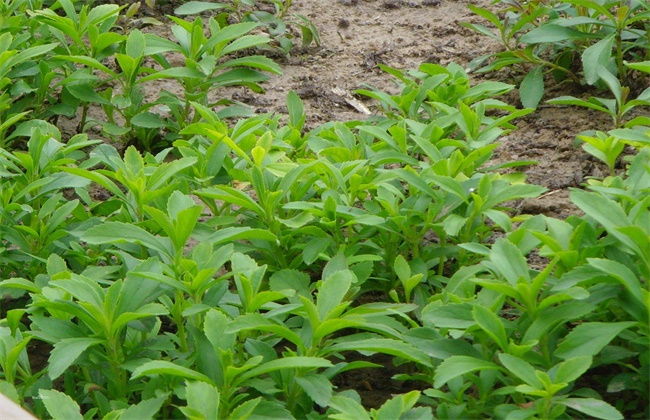
Detailed Explanation of the Key Points of Stevia Seedling Cultivation Techniques
Stevia Seedling Cultivation Techniques
-

Which medicinal herbs have market prospects that are favored by the major medicinal herb markets?
In the Bozhou market, the local Radix Paeoniae Alba at the Bozhou market town has shown unoptimistic sales in recent sessions, accompanied by a slight decline. Today at the market town, grade three and four goods are priced at 14 yuan, grade one and two non-standard...
-

Morphological Characteristics of Polygonatum and Introduction to Suitable Growing Environments
[Morphological Characteristics] Perennial herb, plant height 30-120 cm. The whole plant is hairless. The rhizome is yellowish-white, slightly sweet in taste, thick and fleshy, growing horizontally, formed by several chicken-head-shaped sections connected into a shape thick at the head and tapering at the tail; the end bearing the stem is relatively thick, and after the stem withers it leaves a round stem scar like a chicken's eye; the nodes are distinct, with a few roots growing at the nodes. The stem is single, slightly curved, cylindrical. Leaves are usually in whorls of 4-5, sessile; the leaf blade is linear-lanceolate, with a curled tip, grayish bloom on the underside, parallel main veins, and the central vein thick and raised on the underside.
-
What are the biological characteristics of Angelica sinensis? (Part Two)
(1) Root growth. From sowing to physiological maturity, Angelica sinensis takes three years, overwintering twice, with a total growth period of more than 500 days. After the seed germinates, the radicle elongates rapidly and grows downward in a curved manner, entering the soil. First, one main radicle emerges. When the main radicle extends to 3-4 cm, first-order lateral roots begin to form, and then second-order lateral roots appear on the first-order lateral roots. The main root continues to thicken and elongate and gradually becomes fleshy, forming a typical fleshy taproot system 20-30 cm long and 0.3-0.5 cm in diameter. In April of the following year
-

Detailed Introduction to Polygonatum Price and Planting Methods
Polygonatum Price and Planting Methods
-
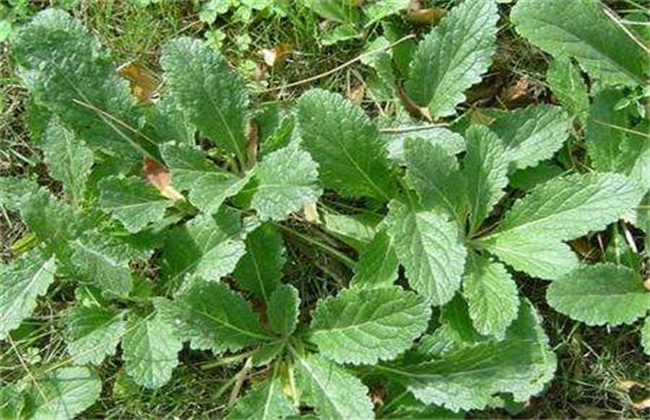
What are the growing environment requirements for rehmannia?
The growing environment requirements of rehmannia
-

Polygonatum odoratum seed prices and planting methods explained in detail
Polygonatum odoratum seed prices and planting methods
-
What is the correct harvesting method for Angelica sinensis?
How is Angelica sinensis harvested? Please explain: for autumn direct seeding of Angelica sinensis, it is harvested in the second year; for transplanted plants, it is harvested in the same year, after the plants turn yellow and wither in mid-October. Natural conditions vary from place to place, so the harvest time also differs to some extent. For example, in Minxian, Gansu, it is harvested 3 to 5 days after Frost's Descent; in Sichuan production areas, it is harvested around Frost's Descent; in Yan'an, Shaanxi, it is harvested in late October...
-
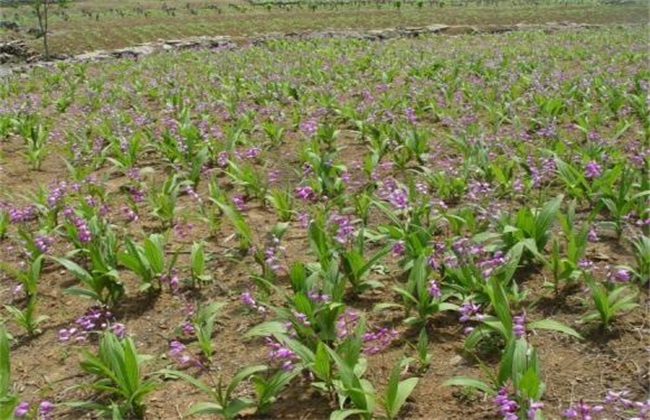
What are the risks of growing Bletilla striata? Growers need to understand them in advance
The cultivation risks of Bletilla striata
条件筛选