-
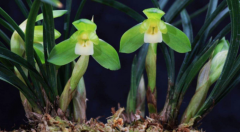
Is the Chunlan Yangshi Suhe worth growing? Fragrance and price introduction
Yangshi Hesu is a type of Chunlan (Cymbidium goeringii), its petals are of the lotus-form su (plain) type, and it was selected in 1920 by the master of Chenyi Studio. The traditional famous lotus-petal plain-heart variety "Yangshi Suhe" is known for its dwarf plant, with the flower hidden among the leaves. Compared with "Cuigai He", it appears even more pure and ice-clear in heart.
-

How to water Haworthia cooperi, does it need fertilizing?
People who rarely grow flowers and plants will probably find the name Haworthia cooperi rather unfamiliar when they first hear it, and not know what it is. In fact, Haworthia cooperi is a succulent plant; it has round, plump "fleshy" parts, and its leaves are thick and crystal clear. As a member of the succulent family, this plant is
-
A Detailed Guide to Growing and Caring for Haworthia limifolia
There are two ways to propagate Haworthia limifolia. The first is division, usually carried out in spring during repotting in April-May; simply use a knife to cut off the young offsets growing from the base of the mother plant, or plant them directly in a pot with their roots attached. The second is leaf cuttings, usually done in May-June; cut off the top of a leaf rosette, let it dry slightly, then place it
-
How to grow the Haworthia succulent
Soil: choose fertile sandy loam. Temperature: keep it around 20-30 degrees, with winter temperatures above 10 degrees and summer temperatures preferably below 30 degrees. Watering: not too much; just keep the potting soil from getting too dry. Fertilizing: apply fertilizer 1-2 times a year. Light
-
What is the outlook for Trichosanthes kirilowii cultivation? Is it worth growing?
The market outlook for Trichosanthes kirilowii cultivation is excellent: Trichosanthes kirilowii can grow on hillsides, hills, grasslands, idle land and other places, has strong adaptability, and is planted once and harvested for many years. Trichosanthes kirilowii is a Chinese medicinal herb variety with relatively high economic benefits, and market production and sales are brisk. The root of Trichosanthes kirilowii is processed and sun-dried for medicinal use and is called
-
What plant is Haworthia fasciata? Key points on how to grow it
Haworthia fasciata is a popular decorative green plant that people love. The plant is small and compact, with uniquely patterned leaves, and it can absorb various waste gases, bringing many benefits when placed in the home. Many people do not know what plant Haworthia fasciata is, or what the key points of its growing method are. Below we
-
What are the precautions for enclosed growing of Haworthia cooperi var. truncata? A detailed guide to the latest care methods
When Haworthia cooperi var. truncata encounters harsh climate conditions, it often needs to be kept alive through enclosed growing so that it always retains its ornamental value. However, enclosed growing of Haworthia cooperi var. truncata also requires mastering certain methods, techniques and precautions, otherwise it may
-
Does Haworthia maughanii need enclosed growing? Latest answer
Haworthia maughanii belongs to the Haworthia succulent plants and is a relatively valuable variety in the succulent world. For many succulents, enclosed growing is often possible. So, can the Haworthia maughanii variety also be grown enclosed? In fact, varieties like Haworthia cooperi and Haworthia maughanii
-
How to Grow Haworthia cooperi? A Detailed Guide to the Latest Growing Methods
Haworthia cooperi is a succulent native to South Africa. As succulents have gradually become popular in recent years, Haworthia cooperi has slowly risen in popularity too. Its leaves grow in a rosette arrangement and are emerald green, with semi-translucent leaf flesh somewhat similar to Haworthia cooperi var. truncata, looking
-
Top Ten Watermelon Varieties Ranking: Which One Is Most Worth Growing?
Watermelon is one of everyone's favorite fruits in summer, and the varieties on the market are also very rich. It can be said that watermelon can be cultivated all over our country, and basically every region has its own distinctive watermelon varieties. For melon farmers, to grow watermelon well, choosing
条件筛选