-

Indoor potted plants easily wilt without light; if your light is insufficient, don't buy these kinds on impulse
Your home has poor light, but you still want a few green plants to add some life? Don't rush to place an order! Some potted plants look easy to grow, but they are actually "little sun-lovers." If the light is insufficient, either the leaves turn yellow and drop off, or they grow leggy and ugly, and in the end you can only watch them fade away. In a low-light environment, absolutely don't touch these kinds of potted plants
-
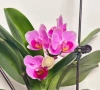
How often should you water a Phalaenopsis in autumn? Master the frequency and techniques to grow orchids in autumn without root rot!
Many friends who grow Phalaenopsis start worrying when autumn arrives: as temperatures gradually drop, they fear root rot if they water too much, but worry about drying out the plant if they water too little. So how many days apart should watering be? In fact, watering Phalaenopsis in autumn has its own rules: you cannot blindly fix a set number of days, and you also need to adjust based on its growth state. Below, we cover the autumn watering frequency, timing
-

These 4 green plants wilt without acid; when gardening in the south, don't forget to add acid
Southern friends who have grown flowers have surely noticed that some flowers look easy to keep, but after bringing them home, within a few days the leaves turn yellow and the buds drop. It's not that you forgot to water or fertilize; most likely you forgot to "add acid" for them! Although the southern climate is humid, many potting soils become alkaline over time, and camellia, osmanthus, gardenia, and jasmine
-

Can Phalaenopsis aerial roots be buried in sphagnum moss without being prone to dying?
Those aerial roots that Phalaenopsis sends out from beside its leaves - can they actually be buried in sphagnum moss? It always feels awkward to just let them dangle outside, but I'm also afraid that burying them might end up killing the plant. First, you need to understand that Phalaenopsis aerial roots are not ordinary roots. If you look closely, you'll find that most of them are green or
-

Indoor Plant Recommendations: Shade-Loving, Low-Maintenance Plants That Survive Without Sunlight
Today let's talk about those indoor green plants that "die in direct light" yet are especially easy to keep alive, perfect for people whose homes have poor lighting or who always forget to water. Stop agonizing over "I can't keep flowers because I don't have a balcony" - these picks are foolproof even if you buy them blind. Fortune Palm: The Fortune Palm - just place it in a corner of the living room, and even with only a bit of indirect light
-

Can a Phalaenopsis bloom without aerial roots? Here's how to make it grow roots again
Speaking of Phalaenopsis, if this flower loses its aerial roots, can it still bloom? Actually, it depends on the situation. The aerial roots of a Phalaenopsis mainly absorb moisture and nutrients from the air, and also help anchor the plant. If there aren't many aerial roots but there are still healthy water roots below and the leaves are vigorous, then as long as it's cared for properly, it will still bloom when it's time to bloom.
-

Why do old Phalaenopsis (moth orchid) plants need repotting, and can they survive without it?
Anyone who grows Phalaenopsis knows that after a year or two the plant becomes an old specimen: the leaves are no longer so perky and it blooms less. At this point some people say "it's time to repot," while others think "leave it alone, what if moving it kills it?" So why do old plants really need repotting? Can they truly not survive without it? Why do old plants have to move house? The
-

Why do Phalaenopsis orchids need root control, and can they bloom without it?
During the care of Phalaenopsis orchids, root control is an important management step. Some people wonder: "Do Phalaenopsis orchids really have to have their roots controlled? Can they not bloom without root control?" Root control, simply understood, means limiting the growth range of the Phalaenopsis root system so it does not grow roots wildly, but instead puts more energy into growing buds and blooming. Why do this
-

Phalaenopsis Buying Guide: With or Without a Flower Spike, Which Is Better?
Want to get a Phalaenopsis but do not know how to choose? Torn between buying one with a flower spike or without one? Do not panic! Master these buying points, and you can easily bring home a healthy and beautiful Phalaenopsis. What are some tips for buying a Phalaenopsis? First, whether you go to a flower market or shop online, be sure to check the leaf condition! Healthy Phalaenopsis
-

What does it mean when a Phalaenopsis orchid has a flower spike? What is the difference from one without a flower spike?
During the care of Phalaenopsis orchids, the appearance of a flower spike often fills people with anticipation and surprise. So what exactly does a Phalaenopsis orchid with a flower spike mean? And how does it differ from a Phalaenopsis orchid without a flower spike? The flower spike of a Phalaenopsis orchid is not an ordinary leaf, but a slender stem growing from the center of the plant or from a leaf axil.
条件筛选