-

White orchid roots: is it a sign of underwatering? Master the watering method and avoid root rot
I believe everyone will run into many problems when caring for Phalaenopsis orchids, and the most testing one for every flower grower is the "little moods" of the Phalaenopsis root system. So, how can you read their little moods in advance before watering? First of all, if you want to care for Phalaenopsis precisely, you need to know how to observe all kinds of conditions in the potting soil. Phalaenopsis
-

Control Methods for White Root Rot in Hawthorn Cultivation
Hawthorn white root rot is an important root disease of hawthorn trees in old hawthorn-producing areas and is the main cause of death of old and weak trees. I. Symptoms After infection, the roots are entangled with white to grayish-white silk-like nets, which are the pathogen's rhizomorphs, and a grayish-white thin downy substance is produced at the root crown area on the ground. Leaves become smaller and leaf margins scorch, and some or all of the small branches and large branches die back.
-
What to Do When White Orchid Tree Leaves Turn Yellow? Learn How to Deal with Root Rot
The white orchid tree (Magnolia alba) is a rather precious flowering plant, not only of very high ornamental value but also with a very wide range of uses; growing it at home can even bring good feng shui, making it deeply loved by gardening enthusiasts. But mastering the correct way to grow the white orchid tree is something every gardening enthusiast
-
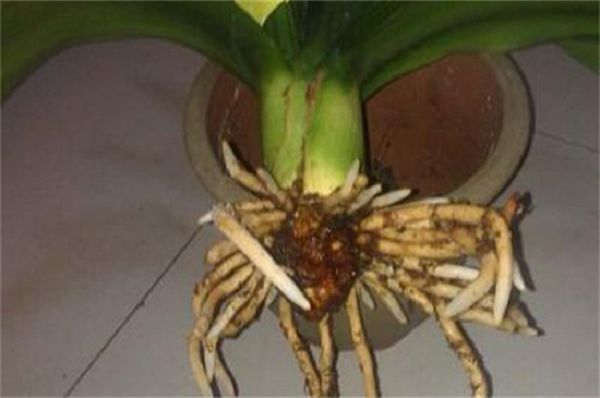
Can white liquor be used to disinfect Clivia roots that have rotted? White liquor irritates the roots and causes damage
Using white liquor to disinfect rotted Clivia roots irritates the roots and damages them
-
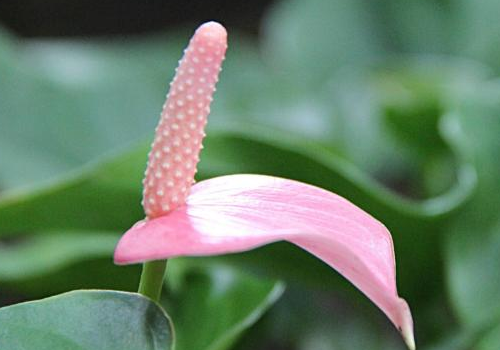
Differences Between Anthurium andraeanum Pink, Red and White Varieties and How to Fix Root Rot
Pink anthurium is very well suited to growing at home, with evergreen leaves and beautiful flowers. What are the differences between pink anthurium, red anthurium and white anthurium? What to do about root rot: What are the differences between pink anthurium, red anthurium and white anthurium: difference in shape. Shape of pink anthurium: the leaves emerge from the rhizome, have long petioles, are solitary, oblong-cordate or ovate, deep bright green
-
Symptoms and Control Methods of White Root Rot in Cherry Blossoms
Symptoms White root rot has become increasingly severe in damaging garden trees in recent years, especially in cherry blossoms. The disease mainly occurs on the roots of trees. After the fibrous roots are infected, it gradually spreads to the lateral roots and the main root. Its characteristic symptom is a layer of grayish-white silky mesh covering the diseased roots; afterward the roots rot, causing the cortex to separate, and the root absorption function is severely lost. In mild cases, the cherry blossom grows poorly and the tree vigor weakens; in severe cases, it causes death. Pathogen and disease pattern The pathogen is Dematophora necatrix Harting, and its sexual stage is the rare Rosellinia necatrix. This fungus also infects many plants such as poplar, willow, ginkgo, paulownia, wintersweet, crabapple, mountain peach, tea, spruce, cedar, flowering almond, tree peony and Chinese peony. The pathogen overwinters as mycelium, rhizomorphs and sclerotia in the soil or in diseased plant residues. White root rot is a soil-borne root disease, and its infection cycle is not obvious. In April-May of the following year, under conditions of abundant rain and moist soil, the rhizomorphs spread and transmit through the soil. The pathogen can invade through wounds and lenticels on young roots. Generally, trees planted in poorly drained, weak-growing and waterlogged low-lying land are more severely affected. In the Beijing area, white root rot occurs severely from July to August; later, small black dots, which are the pathogen's perithecia, grow on the mycelial membrane.
-
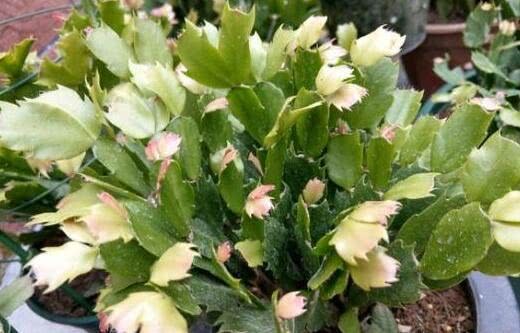
Propagating Christmas cactus by cuttings in autumn: use this and it grows big white roots in ten days without rotting
When it comes to the Christmas cactus, I believe gardening friends are all familiar with it. It has thick, fleshy leaves and belongs to the cactus family, but it is not a true cactus. Its flowers are bright in color and bloom at the tips of the leaves. Its normal flowering season is in winter...
条件筛选