-

Which rabbit breeds are good to raise? A brief introduction to several excellent rabbit breeds
1. Rex rabbit: Originating from the Cologne region of France, it is the world's most famous short-haired fur-type rabbit. Because its fur is short and smooth, with guard hairs (coarse hairs) not protruding above the downy surface, making it look especially beautiful, it is called "Rexrabbit" abroad, meaning king of rabbits, and is translated into Chinese as "Rex rabbit". Because its fur resembles otter fur, it is commonly called "otter rabbit" in China. Its coat comes in more than ten colors, including white, black, blue, yellow, gray, coffee, chinchilla blue, and Californian
-
Which method of growing Gastrodia elata in boxes is better?
The fixed bacterial-material planting method is superior to the double-layer planting method, and the double-layer planting method is superior to the single-layer planting method. In the fixed bacterial-material planting method, the bottom layer of growing medium and the bacterial sticks are left undisturbed, so the grown rhizomorphs are not damaged; after planting the Gastrodia tubers, the rhizomorphs quickly grow onto the tuber bodies, which can promote a high yield of Gastrodia elata, and the yield produced is higher than with the other two methods. The single-layer planting method is not as high-yielding as the double-layer planting method, so the fixed bacterial-material planting method and the double-layer planting method are recommended.
-
Which fish can survive out of water?
Fish rely on their gills to breathe the oxygen dissolved in water, so fish cannot live without water and will die quickly once they leave it. Generally, species with large gill openings die faster than those with small gill openings. But there are a few fish that can live for a long time out of water, because in addition to their gills as the main respiratory organ, these fish also have accessory respiratory organs to assist breathing, and thus can leave the water without dying. As is well known, fish such as climbing perch, betta, snakehead, and walking catfish can leave the water for a long time without dying. In addition to their own strong vitality,
-
What are the characteristics of the ecological environment in which licorice grows?
Licorice is widely distributed in the warm temperate and cold temperate continental monsoon climate zones of the arid and semi-arid regions of northern China. The suitable average annual growing temperature is between 3 and 10°C, and the altitude range is 250 to 1400 m. Licorice is an indicator plant of calcareous soils in the dry regions of China. Its requirements for soil are not very strict: it can grow in sandy loam, light loam, heavy loam and clay, and it grows best in sandy-covered loam with a sandy upper layer. Licorice has extremely strong cold resistance and drought tolerance; at an absolute minimum temperature of -47°C it still
-
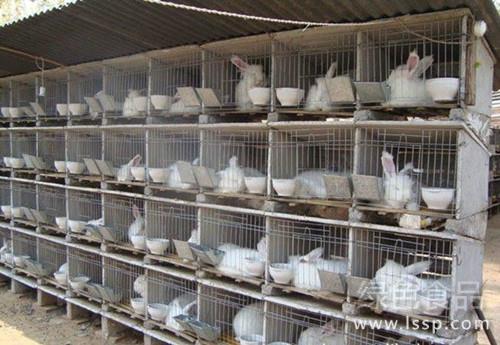
Seven key elements of fattening domestic rabbits, which can effectively improve meat quality and increase output
Fattening can improve meat quality and increase output: the seven key elements of fattening domestic rabbits
-
What are the characteristics of miniature bonsai, and which plants are suitable for growing them?
Miniature bonsai is also called palm bonsai, named so because the pot does not exceed the size of a palm. The height is generally less than 10 cm, making it an extremely small bonsai. Because of its small size and ease of display and arrangement, it is deeply welcomed by people at home and abroad. At present, the style of miniature bonsai has become popular throughout the world. Miniature bonsai already existed in ancient China. In 1972, on the corridor mural of the tomb of Li Xian, Crown Prince Zhanghuai of the Tang Dynasty (son of Wu Zetian), unearthed at Qianling in Shaanxi, there are two palace ladies holding potted plants. This is the prototype of ancient Chinese palm potted plants, which shows
-
Which parts need attention when spraying cotton?
Practice has shown that for cotton to yield well, management is key. In the growth and management of cotton, spraying pesticide is an important part of that management. The pests that commonly occur on cotton include: aphids, red spider mites, mirids (plant bugs), pink bollworms, cotton bollworms, diamondback moths, and so on. These pests lay eggs and cause damage in different places, so when spraying you must pay attention to the location. During the cotton seedling stage, aphids, red spider mites and others cause damage on the underside of the cotton leaves, so when spraying pesticide, the spray solution must be applied to the underside of the leaves. The pink bollworm that occurs in the middle and late stages of cotton lays eggs on tender tips, tender stems and the underside of tender leaves, and after bolls form
-
Which tree species in stump bonsai are suitable for leaf pruning?
Q: Which tree species in stump bonsai can have their leaves pruned, and what should be noted? A: There are many bonsai tree species suitable for leaf pruning, including Chinese elm (Ulmus parvifolia), Japanese bush cherry (Sageretia thea), ginkgo, Chinese wolfberry (Lycium chinense), red maple, pomegranate, Chinese hackberry (Celtis sinensis), banyan (Ficus microcarpa), and Chinese chaste tree (Vitex negundo), etc. The main benefits of leaf pruning on stumps are: 1. It can make the leaves smaller, which helps display the artistic effect of bonsai in shrinking a dragon into an inch. For example, after leaf pruning on Chinese chaste tree, the newly sprouted leaves can shrink to 1/5 the size of the original leaves; when the banyan has all its leaves and buds removed in early summer, under controlled water and sufficient sunlight, the new leaves can grow
-
Which peach and apricot varieties are suitable for courtyard planting?
Okubo Okubo originated in Japan and is now the main peach cultivar in North China. The fruit is nearly round, with an average single fruit weight of 220 g. The fruit apex is round and slightly concave, the suture is shallow and fairly distinct, the two sides are fairly symmetrical, and the fruit shape is uniform. The ground color of the skin is light greenish yellow, with red streaks. The flesh is milky white, with red on the sunny side, fine and soft in texture, juicy, with few fibers, aromatic, and freestone. The soluble solids content is 12%, and the quality is excellent. In the Beijing area, the fruit is harvested in late July. The fruit development period is 100 days. This
-
Which diseases cause high fever in pigs without purple patches on the skin?
1. Japanese encephalitis: The body temperature of affected pigs is 40-41°C, with teeth grinding, circling, visual impairment, and blind charging. Sows abort, and boars develop orchitis, which gradually atrophies and hardens, causing loss of breeding ability. For treatment and drug prevention, antiviral preparations such as amantadine and ribavirin combined with interferon, along with traditional Chinese medicine preparations for clearing heat and detoxifying, and antipyretic-analgesic preparations, should be used together, which has a certain therapeutic effect. 2. Pseudorabies: It mostly occurs in piglets aged 1-4 weeks, and piglets over 60 days of age show mild symptoms. Body temperature is 41-42°C. In the early stage of the disease, the pigs are restless and excitable
条件筛选