-

How to control the jujube bud weevil? Understanding its life habits is key
The jujube bud weevil belongs to the order Coleoptera, family Curculionidae. It occurs in Henan, Hebei, Shanxi, Liaoning and other famous jujube-producing areas, mainly harming jujube, apple, pear and other fruit trees. The jujube bud weevil emerges from the soil in early spring and first damages the young buds of jujube trees. It is the earliest pest to appear on jujube trees. When the population density is high, it can eat all the jujube leaves, causing a second flush of buds and resulting in reduced yield or total crop failure. The adult is dark gray or earth-yellow, with a black head, two curved elytra that are 2 times as long as wide, and a silvery-gray ventral surface. The eggs are milky white, turning brown later, oblong,
-

What to Do When Rice Weevils Appear in Houseplants
What should I do with fresh flowers and plants at home? A flower owner taught me a little trick, and the bugs are dead. Hello everyone, welcome to Three Tricks, I'm the host of Zhengbian, sharing different life tips every day. Today, I'll talk with you. Now, as living standards improve, everyone has started growing flowers
-
Occurrence Patterns and Control Methods of the Rice Water Weevil
The rice water weevil is an internationally recognized agricultural plant quarantine pest. It first occurred in the Americas, and the countries in Asia where it occurs include Japan, South Korea, North Korea, and others. The place where the rice water weevil was first discovered in China was Tanghai County, Hebei Province, in 1987. The area where the rice water weevil was first discovered in our province was Ji'an City in the Tonghua region in August 1993. At present, this pest occurs to varying degrees in most areas of Heilongjiang Province. I. Degree of damage caused by the rice water weevil. The rice water weevil mainly damages rice, and also damages some
-
The rice weevil slayer: "Dr. Rice Weevil" Yao Meiji has stuck with his research for 31 years, protecting granaries across Taiwan
He is the rice weevil slayer! "Dr. Rice Weevil" Yao Meiji's 31 years of dedication, using research to protect granaries across Taiwan
-
How to control the jujube bud weevil? Detailed control methods
Control methods for the jujube bud weevil
-
Identification and control methods of the licorice seed weevil
Morphological characteristics: The adult is oval, brown or dark brown, with a body length of 2.5-3mm and a width of 1.5-1.8mm; the antennae are broad and short, serrate, and do not reach the base of the elytra. The pronotum is covered with punctures and dense light brown hairs, and its posterior margin is as wide as the elytra. The elytra are covered with punctures and dense light brown hairs. The pygidium is long, slightly pointed at the tip, and the ventral surface is covered with dense light brown hairs. The inner margin of the hind femur has 1 small, indistinct tubercle near the tip; the inner margin of the hind tibia has 1 long tooth at the tip; the first segment of the hind tarsus is the longest. Damaged crop: licorice. Damage symptoms: main
-
Occurrence Patterns and Control Methods of the Rice Water Weevil
The rice water weevil is an internationally recognized quarantine pest of agricultural plants. It first occurred in the Americas. In Asia, the countries where it occurs include Japan, South Korea, North Korea, and others. The place where the rice water weevil was first discovered in China was in 1987 in Tanghai County, Hebei Province. The area where the rice water weevil was first discovered in our province was in August 1993 in Ji'an City in the Tonghua region. At present, most areas of our province have this pest to varying degrees. I. Damage level of the rice water weevil. The rice water weevil mainly damages rice and also damages some grass
-
What is the occurrence pattern of the jujube bud weevil
The occurrence pattern of the jujube bud weevil
-
What are the symptoms of damage caused by the jujube bud weevil?
Damage symptoms of the jujube bud weevil
-
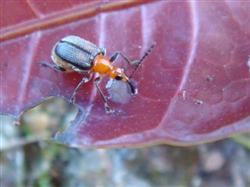
What are the control methods for mango weevil infestation?
1. The mango leaf-cutting weevil is widely distributed. Adult beetles feed on tender mango leaves, causing the leaves to dry up; or the female lays eggs on tender leaves and bites the tender leaves off at the base, affecting plant growth. Control methods: ① During the period of new shoot growth, pick up the bitten-off fallen leaves from affected plants once every 3 days, dry them in the sun and burn them to kill the larvae;...
条件筛选