-

How to feed weaned piglets so they grow fast
Abstract Before weaned piglets are moved into the nursery barn, the temperature should be maintained at around 26°C, then they should be grouped according to health, size, and sex, an appropriate amount of antibiotics and electrolytic multivitamins should be added to the drinking water, the nursery barn should be ventilated, and manure should be cleaned up promptly. Farming
-
What are the treatment methods for diarrhea in weaned piglets
Summary For diarrhea in weaned piglets, a drug sensitivity test can be carried out to select the right drug for symptomatic treatment. If conditions do not allow, drugs such as Ben Cao Xie Li Qing, Chang Xiao Yi Zhen and Bai Li Sha can also be chosen for treatment. In severe cases, about 20 ml of compound saline or 5% glucose
-
How Are Piglets Weaned? Correct Methods and Points to Note
Abstract One-time weaning: In the first three days before weaning, start reducing the amount of milk fed, then separate the sow and the piglets, keep the piglets on the original farrowing crate for one more week, and finally move them to the piglet nursery. Batch weaning: Wean in batches according to the piglets' feed intake, size and constitution,
-
What to do about coughing and wheezing in weaned piglets? Experience sharing on traditional Chinese medicine prevention and treatment in pig farming
Coughing and wheezing in piglets from 10 days after weaning to 30 kg body weight is usually associated in Western veterinary medicine with porcine postweaning multisystemic wasting syndrome (i.e. circovirus) infection, with an incidence rate ranging from 20 percent to 45 percent; the mortality rate of affected piglets is generally 30 percent, and can reach as high as 80 percent, with body temperature of 40.5°C to 41.5°C. Piglets show rough and disheveled coat, affected pigs have diarrhea combined with respiratory symptoms and neurological symptoms, severe emaciation, and death from exhaustion. This disease poses a very great threat to the pig farming industry. It is most severe in the three seasons of spring, autumn and winter. In traditional Chinese veterinary medicine theory, this disease belongs to warm disease symptoms; the cause is external contraction of wind pathogen invading the lung, and cold, summerheat, dryness, warmth and the like can all combine with it. The main site of the lesions is in the lung. In traditional Chinese veterinary medicine theory, lung qi governs respiration and opens into the nose, externally corresponding to the skin and hair, and governs the opening and closing of the interstices. When lung qi is sufficient, the opening and closing of the skin and interstices is normal, and external pathogens are not easily able to invade; otherwise the pig body is plagued by disease. Using Qingfei Zhike San combined with Maxing Shigan San with modifications, this formula can pungent-cool diffuse and vent, clear the lung and calm wheezing, clear and purge lung heat, and resolve phlegm and stop coughing. Add it to piglet feed as a powder at 0.6 percent, continuously for 2 to 3 weeks. In Western veterinary medicine theory, this formula is believed to have fairly strong antibacterial and inhibitory effects on Actinomyces pleuris, Staphylococcus aureus and Pneumococcus; this formula also has effects such as anti-influenza virus action, and also has obvious antipyretic and anti-inflammatory effects, and can improve the immune function within the animal body.
-
Can Piglets Be Weaned in Summer? Detailed Explanation of the Specific Methods
The feeding and management level of weaned piglets is an important part of ensuring the profitability of large-scale pig farms. During the nursery stage, the maternal antibody level of piglets and the piglets' own immune level are relatively low. In addition, stress of varying degrees from group transfer, environment, and feed changes brings certain difficulties to
-
Causes and Solutions of Diarrhea in Early-Weaned Piglets
The causes of post-weaning diarrhea in piglets are complex. Research over the past 20 years has shown that dietary factors are the main cause of post-weaning diarrhea in piglets. The reasons are: (1) A certain number of pathogenic microorganisms (pathogenic Escherichia coli and rotavirus, etc.) generally exist in the gastrointestinal tract of healthy piglets. (2) Introducing isolated pathogenic microorganisms into the gastrointestinal tract of unweaned piglets and weaned piglets that are either not supplemented or fully supplemented with feed did not always cause diarrhea. (3) The proliferation of intestinal pathogenic microorganisms is not necessarily linked to post-weaning diarrhea. (4) When no pathogenic microorganisms are present or proliferating, weaned piglets can still develop diarrhea. (5) If weaning does not cause intestinal damage, piglets will not develop diarrhea, although pathogenic Escherichia coli can still be detected in piglet feces. (6) Practice has proven that antibiotics are not completely effective in preventing and treating post-weaning diarrhea in piglets.
-
Key Technical Points for the Feeding and Management of Weaned Young Rabbits
Management Techniques for Weaned Young Rabbits
-
How to Promote Gut Health in Weaned Piglets? Practical Methods Shared
How to Promote Gut Health in Weaned Piglets
-
Scientific management methods and technical key points for weaned young rabbits
Management of weaned young rabbits
-
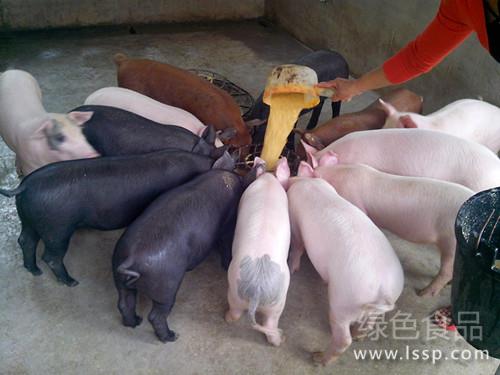
Feeding wet feed to weaned piglets works well and can increase feed and water intake
Can increase feed and water intake in piglets; feeding wet feed to weaned piglets works well
条件筛选