-

Shoring Up Rural Weaknesses Is Key to Building a Moderately Prosperous Society in All Respects
The report to the 18th National Congress of the Communist Party of China put forward the Two Centenary Goals, and the Fifth Plenary Session of the 18th CPC Central Committee stressed that building a moderately prosperous society in all respects by 2020 is the first of the Two Centenary Goals. Now 2020 is very close, and the tasks of construction in all areas are
-
Fresh produce category fills the gap of e-commerce giants during Double 11
Looking back at the development of recent years, although Double 11 gets livelier every year, its model and have barely changed. The home turf always belongs to those few e-commerce giants, and the featured products are also concentrated in digital 3C, cosmetics, clothing, luggage and other physical goods, and users' consumption
-
Corn market in Q2 may show a pattern of weakness in the north and stability in the south
Corn in Q2 may show a pattern of weakness in the north and stability in the south. In April, after the overall obvious rise in March, the domestic corn market price showed a trend of slowing gains, overall stabilization and local pullbacks. Specifically: in early April, domestic corn continued the post-Spring Festival rise. In mid-to-late April, under the influence of multiple factors such as the temporary storage corn purchase approaching its end, persistently sluggish auction transactions and overall market demand falling into a "predicament", domestic corn market prices showed a "general decline" pattern.
-
Behind the Super Rice Crop Failure: Institutional Flaws and the Variety's Own Weaknesses
In mid-April, the media successively published reports on the yield reduction and total crop failure of ten thousand mu of "Liangyou 0293" hybrid rice in Anhui last October, drawing public attention to super rice. Behind this seemingly accidental incident, the flaws of China's agricultural insurance and relief systems are highlighted, and it also reflects
-
Two Major Weaknesses in Chinese Agriculture Need Urgent Solutions
The introductory section of the No. 1 Central Document points out some major trend-related issues facing Chinese agriculture in the future. Among them, I think two aspects deserve the most attention: First, domestic agricultural production costs are rising rapidly, and the prices of bulk agricultural products are generally higher than those on the international market. How to innovate agricultural support and protection policies and improve agricultural competitiveness under the "double squeeze" is a major test we must face; Second, China's agricultural resources are scarce, overdeveloped, and increasingly polluted. How to ensure the effective supply of agricultural products and quality safety under hard resource and environmental constraints, and enhance the capacity for sustainable agricultural development, is a major challenge we must meet.
-
China's soybean market sees sluggish buying and selling, with both supply and demand showing weakness
Since this year, China has implemented a target price subsidy policy for soybeans. Recently, reporters learned during interviews in Heilongjiang Province, China's main soybean-producing area, that Heilongjiang had a bumper soybean harvest this year, but the buying and selling market was quiet, and the downward trend in soybean prices was very obvious. Market wait-and-see sentiment
-
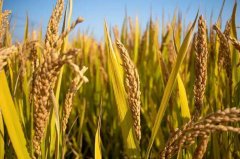
Rice Taikeng 17: Disadvantages, Weaknesses, and Variety Characteristics
Rice is one of our staple foods, and the cultivation of rice and the breeding of new varieties are very important. Do you know the rice variety Taikeng 17? Variety Characteristics I. General Agronomic Traits Taikeng 17 is a medium-late maturing variety. Its growth duration (from transplanting to maturity) is 127 days for the first crop and 112 days for the second crop, similar to the currently most widely cultivated Tainung 67; the tip of the glume is light yellow, the grain color is light yellow, awnless, and the grain shape is medium; the plant height is medium, averaging 104.2 cm for the first crop and 102.4 cm for the second crop; the average number of panicles per hill is 16.9 for the first crop and 14.0 for the second crop; the average number of grains per panicle is 91.6 for the first crop and 100.0 for the second crop; the 1000-grain weight is 23.7 g for the first crop and 24.3 g for the second crop; all of the above traits are also similar to those of Tainung 67. The fertility rate is 78.2% for the first crop and 77.2% for the second crop.
-
What Are Killer Bees Afraid Of? Learn About Their Natural Enemies and Weaknesses
Killer bees, also known as African honey bees, have a relatively strong lethal impact on humans and livestock, and the main harm caused by African honey bees lies in their aggressiveness. So what are they afraid of? How do you deal with a sting? 1. What are killer bees afraid of? Killer bees are afraid of severe cold and smoke, because severe cold weather will freeze them to death, and smoke can also suffocate them. In addition, hunger or microorganisms can also cause the death of killer bees. And phorid flies are the nemesis of bees, and killer bees are no exception.
-
What Are Sharks Afraid Of? Unveiling the Natural Enemies and Weaknesses of Sharks
Fish fear sharks, while sharks fear dolphins. In groups, dolphins join forces and organizedly besiege a shark, taking turns striking the shark's flanks with their powerful snouts. Because a shark's skeleton is soft and its ability to protect its internal organs is poor, the clever dolphins seize on its vital weakness and desperately
-

Snake Plant Has Only Two Weaknesses: Once You Know Them, It's Hard to Kill
1. Snake plants have only two weaknesses: getting too cold and being overwatered. If you forget about your snake plant in a corner for months, it will probably still be alive and well when you find it again. But if you water it every day, it may take only a few days before...
条件筛选