Snake Plant Has Only Two Weaknesses: Once You Know Them, It's Hard to Kill
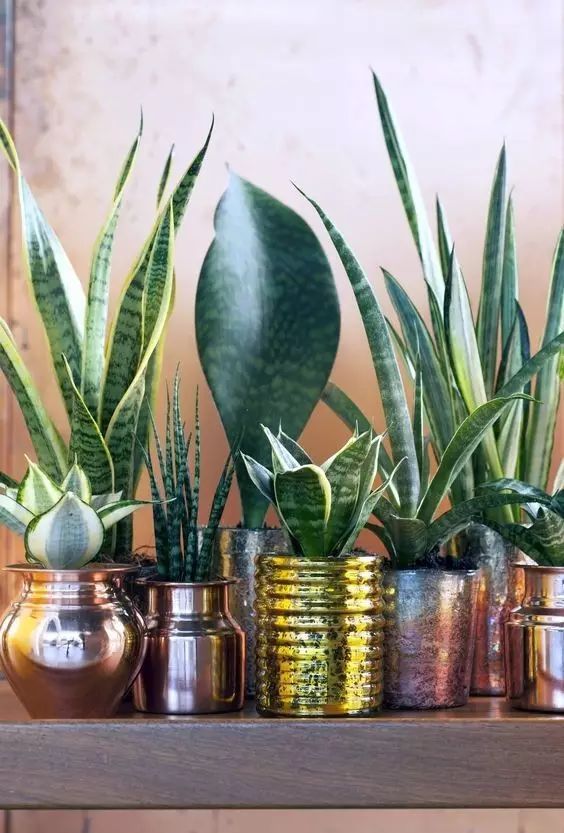
1. Snake plants have only two weaknesses: getting too cold and being overwatered.
If you forget about your snake plant in a corner for months, it will probably still be alive and well when you find it again. But if you water it every day, it may take only a few days before its stems and roots start to rot.
(If you collect all 8 kinds of snake plants above, that is really something impressive)
This plant is almost impossible to kill. A year ago, my younger brother put his snake plant under the south-facing window, and from spring to summer he never watered it once. In autumn, when he found it in the corner, apart from the leaves looking a bit pale, it was completely fine.
In winter, if the temperature where you are is below 5°C, it can easily freeze to death. These are the plant's only two weaknesses.
2. Three common problems with snake plants that gardeners encounter:
1. Rot at the base of the stem or leaves turning yellow and soft
It is very likely root rot, which is usually caused by overwatering, especially watering too much in winter, when it is particularly easy for the plant to get sick (in winter you must water very little, or simply not water at all).
Root rot is hopeless. You can only cut off the rotten part. If it is not severe, wash it, soak it in carbendazim, let it dry, and then plant it, and it might possibly be saved.
If the root rot is severe, then you can only cut off the healthy, thick leaves to use for leaf cuttings (as shown in the picture above).
The method is simple: just cut the leaves into sections 5-7 cm long and care for them with warmth and moisture.
Keep the upper end of the leaf facing up, make sure the scissors are very sharp and sterilized, and keep the soil slightly moist.
2. Winter cold damage (do not water too much in winter)
Many gardeners' snake plants freeze to death, because 5°C is the lowest safe temperature for snake plants. Above this threshold, cold damage happens very easily. With cold damage, you can only let it slowly recover; if it is severe, there is no saving it.
3. Brown spots on the leaves
Random, irregular spots on the leaves are usually caused by sunlight that is too strong, burning the leaves.
For example, many gardeners keep their snake plants indoors in a shaded spot for a long time, where the light is gentle. Then one day, on a whim, they take the snake plant outside to bask in the sun, and that is when it is most likely to get sunburned. If it is midday sun, it is even worse.
If the leaf spots are at the leaf tip, then it is not a big deal, but no one knows how to solve it, except by cutting it off in one go.
Because the exact cause of this condition in snake plants is not yet very clear, there is no particularly good way to solve it. However, this kind of leaf spot is extremely rare.