-
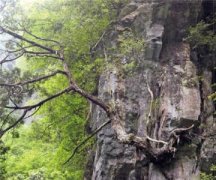
What Tree Species Is the Chinese Arborvitae? A Complete Collection of Wild Chinese Arborvitae Pictures and a Price Overview
What tree species is the Chinese arborvitae? The Chinese arborvitae is a shrub or tree of the Cupressaceae family, genus Thuja; it generally grows in the crevices of cliffs at an altitude of 700-2100 m, in areas with shallow soil and rock; but now this tree has become an endangered species. It is mainly produced in Sichuan, China
-
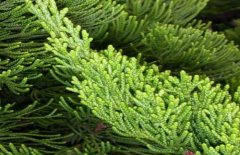
Chinese Arborvitae Leaf Benefits and Uses, Differences Between Chinese Arborvitae and Cliff Cypress with Pictures, and Sapling Prices
Chinese arborvitae is a cypress plant, and people often call this kind of cypress cliff cypress, but in fact these two cypresses are very different. In what ways do they differ? What are the benefits and uses of Chinese arborvitae leaves? How much does one cypress sapling cost? Chinese arborvitae is a very easy-to-grow kind of cypress.
-
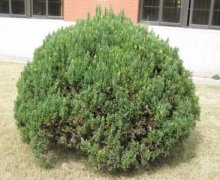
What kind of plant is Chinese juniper? Blooming time and differences from Chinese arborvitae
Chinese juniper is a type of cypress, an evergreen tree, mainly distributed in the northeastern and northern regions of our country, and its current distribution range is relatively wide, in areas south of Inner Mongolia, and it is found in Sichuan and Yunnan. So do you know when the blooming period of Chinese juniper is? Chinese juniper and
-

Methods for Bending Chinese Arborvitae Bonsai and Pruning Techniques for Chinese Arborvitae Bonsai
As a slow-growing evergreen tree of the subphylum Gymnospermae, Chinese arborvitae (Platycladus orientalis) is deeply loved by people because it stays green all year round and is not large in size, and it is often kept indoors as a bonsai. The wood of Chinese arborvitae is medium in hardness, and in cultivation the bonsai pruning and bending
-
A detailed guide to Chinese toon seedling cultivation: master these key points for easy growing
Chinese toon contains multiple vitamins and trace elements, making it a food ingredient very helpful to the human body. Chinese toon is delicious and much loved by people. As the Chinese toon planting industry becomes more and more popular, cultivating Chinese toon also requires scientific methods. Below, the editor will chat with everyone about
-
Key Points and Methods of Apple Tree Pruning Techniques Explained
The apple tree is a variety with strong vitality, able to survive even in cold climates. Apple trees have a dormant period each year that lasts until the second month of the year, and this is the best time to prune the miscellaneous branches on the apple tree. When pruning, there are also many small tips.
-
How to Propagate Senecio vitalis f. variegata? Learn the Propagation Methods in One Article
Senecio vitalis f. variegata is a perennial succulent herb in the genus Senecio, Asteraceae. It is a variegated cultivar of Senecio vitalis, growing in spring and autumn and going semi-dormant in the high temperatures of summer. So how do you propagate Senecio vitalis f. variegata? 1. How to Propagate Senecio vitalis f. variegata. Senecio vitalis f. variegata can be propagated by cuttings, division, and sowing.
-
When Do Jujube Trees Usually Bloom? A Detailed Guide to the Flowering Period
Jujube contains abundant vitamin C and vitamin P. Besides being eaten fresh, it can often be made into candied and dried fruits such as candied jujube, red jujube, smoked jujube, black jujube, wine jujube and tooth jujube, and can also be processed into jujube paste, jujube flour, jujube wine and jujube vinegar as raw materials for the food industry. So, in which month do jujube
-
What problems and matters need attention when raising chickens
Summary Choose chicks with sufficient vitality, raise them free-range in summer and mostly indoors in winter; when it is too cold, the chicken coop needs light and heating. Chickens of similar size should be raised together, and hens and chicks should be raised separately. Scientific and reasonable feeding not only makes chickens grow faster but also increases egg production. Farms should regularly vaccinate the flock, the chickens' drinking utensils should be disinfected often, and good ventilation in the coop should be maintained.
-
Prevention and Treatment of Vitamin B Deficiency in Masked Palm Civets
Vitamin B deficiency is caused by a lack of vitamin B complex and is characterized by polyneuritis; a series of changes such as heart failure may also occur. Clinical symptoms of vitamin B deficiency: when vitamin B complex is lacking in the feed, after 20-30 days the diseased civets show loss of appetite, and after a further
条件筛选