-
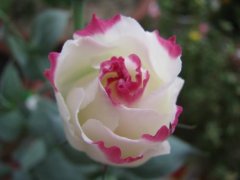
Eustoma (Lisianthus) Cultivation Methods, Growing Environment, Vernalization Treatment and Harvesting
Eustoma is native to North America and is a species known as Texas blue-bell. Through cultivation and improvement by horticulturists, it is now popular all over the world and has entered the top ten rankings of the Dutch auction market. It has many varieties, with flower colors ranging from deep violet-blue, rose
-

What are the latest methods for vernalization treatment of clivia?
For vernalization treatment of clivia, first you need to manage temperature control well. Before it shoots up its scape and blooms, place it in an environment with a room temperature of about 5-10°C. During this period, reduce watering, preferably keeping the soil slightly dry, and also stop fertilizing. After vernalization
-
Summary of Experience in Vernalization and Flowering Period Management of Northern Spring and Huilan Orchids
fengrenyu The best vernalization time is the 2-month period from Minor Snow to Major Cold (between November 22 and January 22 each year), with the key focus on the latter month, namely Winter Solstice to Major Cold (December 22 to January 22). Select those Spring and Huilan orchids whose flower buds have emerged 3-4CM and are slightly rounded and plump for vernalization. Some orchids bloom...
-
How long does vernalization generally take for orchids?
Beiyuan Lanren Orchid vernalization refers to the low-temperature process that orchids must undergo during their reproductive growth period. The orchid seedlings and buds enter dormancy and almost stop growing, accumulating dry matter nutrients to supply the flower buds. It plays a role that cannot be ignored in promoting the growth of flower buds, and the vernalization time for orchids varies greatly depending on the region. See below for details...
-
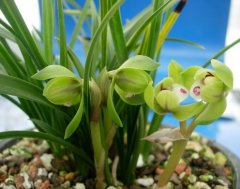
What three issues should be noted in the vernalization of Chinese orchids?
The period from the Winter Solstice to Major Cold is the season with the lowest temperatures across China, commonly known as deep winter. When it comes to cultivating orchids in deep winter, we must not forget the vernalization of orchids....
-
What is the relationship between bud withering and vernalization?
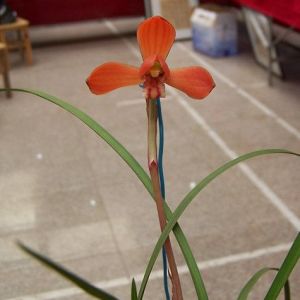
A colored-flower Cymbidium goeringii, a pity it has no fragrance.
-
How to water orchids during winter vernalization
Vernalization happens in the depths of winter, so watering should strictly follow the rule of "keep dry in winter," keeping the potting soil slightly moist and on the dry side. During dormancy, orchid plants are in a low-consumption phase, but because the air is dry and there are many strong winds, the potting soil often loses water and dries out. You should check the potting soil regularly and avoid strong winds at the right times. You can water thoroughly once every 10-15 days (it is recommended to use water when the temperature is higher at noon...
-
Orchid Vernalization Tips: How to Help Orchids Vernalize Better
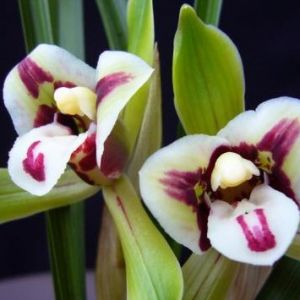
Cymbidium goeringii, stamen-petaled butterfly type, rare flower, famous cultivar. The leaves grow to about 40 cm, forming a U shape, semi-arching, uniform in type, neat and consistent. The center of the flower is round and full, and the butterfly-transformed petals are broad and round in shape, pioneering the round and well-proportioned center in the stamen-petaled butterfly category of Cymbidium goeringii! The three outer petals open with balanced poise, with the petal tips narrowing at the base and forming corners, and the center and outer petals match perfectly...
-
A Brief Analysis of the Role and Methods of Cold Vernalization in Cymbidium goeringii
Orchids that need vernalization are those in the bud stage; orchids that have not produced flower buds do not need vernalization. A large temperature difference between day and night is a necessary condition for good bloom quality. Vernalize in sunlight, bloom in shade, tall stems and good quality (this suits natural vernalization in the Jiangsu-Zhejiang region); if vernalizing indoors as in the north, shade vernalization is recommended (temperature controlled at 1-12°C, with a temperature difference of about 10°C for about 40 to 50 days), then bloom in light (the "bloom in light" here does not mean direct sunlight either; diffuse light is best, ensuring Cymbidium goeringii temperatures of 8-20°C and Cymbidium faberi temperatures of 10-23°C, preferably not exceeding 25°C)
-
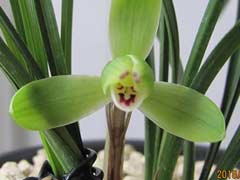
How long do Cymbidium goeringii flower buds need vernalization? | Try not to go below 70 days
I saw a fellow orchid grower ask how long Cymbidium goeringii flower buds need vernalization. The vernalization period should preferably be 70-100 days, and try not to go below 70 days. The longer the vernalization time, the better the flowering quality will relatively be, but it should not be too long, otherwise it will have all that energy and nowhere to use it...
条件筛选