Eustoma (Lisianthus) Cultivation Methods, Growing Environment, Vernalization Treatment and Harvesting
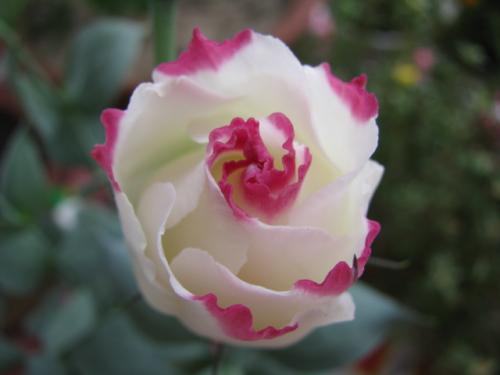
Eustoma is native to North America and is a species known as Texas blue-bell. Through cultivation and improvement by horticulturists, it is now popular all over the world and has entered the top ten rankings of the Dutch auction market. It has many varieties, with flower colors ranging from deep violet-blue, rose, pink, white to bicolor series, and petals in single or double forms. Cultivation is further divided into early, mid-season and late varieties. In addition to cut flowers, it is also used as a potted flower and bedding plant. Eustoma was first introduced into Taiwan, China in the mid-1970s and cultivated in Puli, but because its growth and flowering habits were not fully understood, the seedling stage was long and production was unstable. Only in recent years has the production situation gradually improved. Eustoma is currently an emerging cut flower crop, and cultivation has spread throughout the townships of central and southern Taiwan, China, with the area also increasing one after another. However, because flower growers still do not understand the varietal characteristics and seedling sources of eustoma very well, the cultivation process is full of difficulties, and the probability of failure is still very high.
Growing Environment
Eustoma can be planted in simple greenhouses for wind protection and rain protection, or in more precise environment-controlled greenhouses, or even cultivated in the open field. The most suitable temperature for cultivating eustoma is above 15°C. To maintain the best quality, the daytime temperature should be below 25°C. Nevertheless, eustoma plants can still tolerate higher temperatures. Under suitable climatic conditions, open-field cultivation is a feasible method. Its facilities only provide movable plastic covers to prevent flowering plants from being destroyed when it rains. However, when eustoma is produced under full sun, plants of the same variety reach only 60% of the length of plants in a greenhouse or with external shading. At present, most eustoma cultivation in Taiwan, China uses tunnel-type plastic houses, which are still insufficient for cold protection in winter, while in summer the temperature often exceeds 30°C. Therefore, there is still room for improvement in the facilities used for cultivating eustoma in Taiwan, China.
Cultivation Methods
Land preparation: For eustoma cultivation, the soil pH requirement is between 6.3 and 7.0, which is higher than for general flowers. At the same time, the soil calcium content should be high, and phosphorus fertilizer should be sufficient. Adjusting the pH, increasing calcium content, and applying phosphorus fertilizer should be done during land preparation. During land preparation, the soil should be fully tilled and loosened to avoid a hard layer at the bottom that affects eustoma root growth. Soil diseases such as Fusarium wilt and damping-off are common phenomena, especially in soil that is frequently continuously cropped. During land preparation, steam or methyl bromide can be used for disinfection, or biological control methods such as adding organic fertilizer can be used to accelerate soil microbial reproduction and reduce disease occurrence.
Bed building: After land preparation, bed building begins. The width of the beds should match the specifications of the non-woven fabric covering, drip irrigation, and anti-lodging net. Anti-lodging net specifications include 15 cm×15 cm and 15×20 cm. When producing high-quality eustoma cut flowers, a double-layer net frame is often used. Cultivation density should match the anti-lodging net specifications, light intensity and intended use. Generally, outdoor light exceeding 65,000 lux at noon is regarded as strong light; a light intensity of 32,000 to 65,000 lux is most suitable, while below 32,000 lux is insufficient light. Because light intensity in Taiwan, China is affected by the seasons, growers can choose for themselves. In summer or under high light intensity, the recommended cultivation density is 84 plants/sq m or more, while in winter or under low light, the cultivation density is 64 plants/sq m.
Seedling raising: Eustoma seeds are quite small, about 19,000 seeds/gram (non-pelleted). Seedling-raising technology is demanding and equipment must be good. At present, growers in Taiwan, China all purchase eustoma plug seedlings from professional seedling nurseries or import plug seedlings through traders as agents. When selecting, attention must be paid to quality, because any damage during the seedling stage may affect the quality of the flower stem at maturity. Plug seedlings should be transplanted before the root system becomes tangled. Do not damage the roots during transplanting, and do not use overly aged plug seedlings, so as to avoid delayed growth or failure during cultivation. When planting, do not set the plants deeper than the original plug seedling and prevent lodging so as to avoid disease. Most people consider eustoma plug seedling production to be the most difficult, so they adopt the practice of purchasing professionally grown plug seedlings for planting. The following are several points to note when raising eustoma plug seedlings:
1. The germination temperature is between 22 and 24°C; do not exceed 28°C, otherwise it will lead to rosette.
2. Maintain humidity close to 100%, and use sufficient water to dissolve the material surrounding the seeds.
3. Maintain high levels of calcium and nitrate nitrogen in the seedling medium.
4. Keep the seedling medium pH above 5.8.
5. The seedling period depends on the variety; under the climate of Taiwan, China it can be completed in 8 to 10 weeks.
Fertilization: To grow eustoma well, the soil nutrient content must be sufficient. Some growers apply slow-release fertilizer that can last for 3 months immediately after transplanting, while other growers use liquid fertilizer (Hyponex No. 15, 1000x solution) from the beginning after transplanting. Generally, nitrogen fertilizer should mainly be in nitrate nitrogen form, and potassium content should be equivalent to nitrogen. Whether using drip irrigation or spray irrigation, the nitrogen and potassium concentration in each irrigation should be 200 ppm. During production, unless the soil maintains a high calcium content, calcium should be supplemented at any time. Calcium supplementation is best done with calcium nitrate solution.
Irrigation: Eustoma irrigation must be done carefully. Excessive irrigation will increase the plant's susceptibility to soil diseases, while excessive drought will lead to delayed flowering, and short, thin flower stems with reduced quality. Usually plants have lower water requirements under low temperature and low light. Most growers use spray irrigation at the beginning of transplanting, and switch to drip irrigation only after the plant roots have penetrated deep into the bed. Under high temperature and high light, spray irrigation has a better effect on plants. Increasing the humidity inside the greenhouse at noon under high temperature and high light can promote eustoma flower stem elongation, but after flower buds have formed, spray irrigation should be avoided and humidity should be reduced to maintain flowering quality.
Electric lighting: In eustoma cultivation, depending on the variety, the cultivation period and flowering quality are affected by light intensity and day length. Growers of eustoma have already gained sufficient experience in discussing the adjustment of day-length effects; that is, under low-light conditions, providing supplemental light can promote flower stem elongation and flower induction. Usually growers are accustomed to adopting a 16-hour day length. This is carried out in greenhouse facilities using 150 Watt white light bulbs spaced 3 m apart, with row spacing of 4.5 m.
Bud removal: Experiments show that electric lighting treatment has an enhancing effect on plant growth and cut flower quality. Bud removal treatment in eustoma can delay harvest and adjust the market supply period by 1 to 2 weeks, which is extremely beneficial for flower growers' shipments. Tsukada of Japan (1991) pointed out that long-day treatment promotes flower bud differentiation, can increase the number of flower buds and internode length, improve cut flower quality, and advance flowering. Conversely, in summer-cropping cultivation where planting is done in spring and flowers are cut in autumn, because the plant undergoes the long-day, high-temperature summer, it quickly shifts from vegetative growth to reproductive growth. After transplanting or after the first cut, a 30-day short-day treatment (9-hour day length) can promote an increase in node number and branch number, thereby improving quality and yield. The comprehensive test results of this station from 1991 to 1992 show that eustoma easily falls into growth disorder and enters the rosette phenomenon under low temperature in winter or high temperature in summer. Moderate dormancy in eustoma or a growth period reaching 90 days has an enhancing effect on cut flower quality. In summer, ratoon cultivation because of high temperature and high humidity, serious pests and diseases, and thin and short flower stems, has poor quality. Therefore, it is recommended that eustoma planting should choose the most suitable growing temperature (about 20 to 25°C), that is, March and October each year are the most suitable planting periods (in the flatlands of the Tainan area).
Vernalization treatment: The seedling-raising period of eustoma from sowing to transplanting totals 70 days, low-temperature treatment lasts 30 days, the period from transplanting to first flowering totals 69 days, and the flowering period is 21 days. The spring experiment began with seedling raising during the low-temperature period (December to February), but transplanting in the field between March and April occurred as temperatures were rising, and at this time eustoma began to grow. By May to June, temperatures rose rapidly and plants grew rapidly. Therefore, from growth to flowering was 69 to 90 days. This result was consistent with expectations, namely that low-temperature treatment of seedlings raised during the low-temperature period had poor effect. In previous years, seedlings were raised during the high-temperature period from May to July and transplanted in the field from July to September. After planting, due to high-temperature stress, the plants immediately entered the dormant rosette phenomenon and had to wait until April to May of the following year to resume growth. Low-temperature treatment of seedlings during the high-temperature period (May to July) has been shown by experiments to break dormancy and overcome the rosette phenomenon, depending on the chilling requirement of the variety.
Harvesting
When one or more flower buds have opened (3 flowers for domestic sales in Taiwan, China), eustoma cut flowers are harvested. Eustoma growers often remove the first flower, and sometimes the second flower, before harvest, so that more flowers can be obtained on the same flower stem. In Taiwan, China and Japan, eustoma cut flowers sold to the market are bundled in 10 stems per bunch. Some markets require the use of sleeves, while Taiwan, China currently uses upright containers for transport. Eustoma cut flowers are not sensitive to ethylene. After harvest, treatment with 10% sugar solution for 24 hours can extend vase life. Harvesting is carried out in the morning, after which the flowers are sent to the collection point for grading, packing, and before transport and sale, field heat should first be removed to ensure quality. The eustoma cultivation period varies with variety and environment from transplanting to harvest; usually under low light and low temperature it takes 15 weeks, while under high light and suitable temperature it takes 12 weeks. However, producing high-quality cut flowers requires lower temperature and a longer time.