-

Schumacher may become a vegetative state patient, wife plans to spend over a hundred million yuan to build a high-grade sickroom
From his injury on December 29 last year to now, Schumacher has been in a coma for a full three months, and Corinna has been by the side of the racing king in a hospital in France. Although former F1 doctor Hartstein believes that fans should prepare for the worst and said that Schumacher's condition was misdiagnosed
-

Detailed Explanation of Key Techniques for Vegetative Cutting Propagation of Tea Plants
1. Site Selection The nursery should be chosen in paddy fields or hillside plots with convenient irrigation and drainage. Plots where tobacco, hemp, tuber crops, or vegetables were previously grown should not be used as nurseries to avoid root-knot nematodes. 2. Seedbed Preparation After the nursery site is deep-plowed and the soil is harrowed and broken up, seedbeds are made 10-15 cm high and 100 cm wide, oriented east-west, with length determined by the terrain. The ditch between seedbeds is 40-50 cm wide. Apply 1-2 tons of decomposed stable manure per mu, mix thoroughly with the seedbed soil and level it, then spread a layer of 5
-
Nursery Management Techniques for Vegetative Cutting Propagation of Tea Plants
(1) Watering On sunny days, within 20 days after cuttings are inserted, water once in the morning and once in the evening each day to keep the soil moist; from day 20 to 60, water once a day, and pay attention to drainage on rainy days. (2) Fertilizing Fertilizing can begin 60 days after cuttings are inserted, once every 7-10 days, then changed to once every 15 days after 2 months. In the third month after cuttings are inserted, apply 1.5 kg of urea per mu each time; from the fifth month onward, apply 2-2.5 kg of urea each time, and each application per mu must be diluted with 12 dan of water; the fertilizer solution should be mixed evenly to avoid damaging roots and leaves. (3) Removing shade material Tea
-
Detailed Explanation of Methods for Storage and Preservation of Tea Plant Vegetative Propagules
Direct field preservation of tea plant vegetative propagules requires a large amount of land and labor, so long-term preservation techniques for tea roots, seedlings, seeds and pollen have been studied. Root preservation involves sterilizing the lignified roots before spring sprouting, storing them together with sterilized semi-dry soil or sphagnum moss in plastic bags, and placing them in an environment of 1-5°C. After 7 years of storage, the occurrence of adventitious buds can reach up to 70%. Stored at 1°C for 6 years, the roots can still regenerate. Under low-temperature storage conditions, the consumption of carbohydrates in root tissues
-
How to prevent and control excessive vegetative growth in cotton? A detailed guide to practical techniques
At present, cotton has entered the squaring stage, and preventing excessive vegetative growth in cotton must begin now. So-called excessive vegetative growth means the cotton has lost its normal reproductive function, that is, it only flowers without setting bolls, or it flowers heavily but sets few bolls. The causes are first climatic factors, second the blind and random introduction of cotton varieties, and third cultivation methods that do not match climate change. According to records, when the temperature exceeds 35°C, pollen development becomes abnormal and normal pollination cannot occur; while sustained drought intensifies the shedding of squares and bolls. In addition, in mid-August some cotton areas experience
-
Causes of Cotton Excessive Vegetative Growth and Control Methods
The phenomenon in which vegetative organs such as stems, branches and leaves of the cotton plant grow excessively, causing an imbalance between vegetative growth and reproductive growth, is called excessive vegetative growth, commonly known as "runaway growth." After cotton squaring, vegetative growth and reproductive growth proceed simultaneously. If vegetative growth is too rapid and reproductive growth is inhibited, it will cause shedding of squares and bolls, and in severe cases, no bolls will set. Causes of excessive vegetative growth: mainly excessive application of fertilizer and water. From squaring to the early flowering stage is the period of fastest vegetative growth in the entire life of cotton. If nitrogen fertilizer is supplied in excess, it will cause an imbalance in the carbon-to-nitrogen metabolism ratio
-
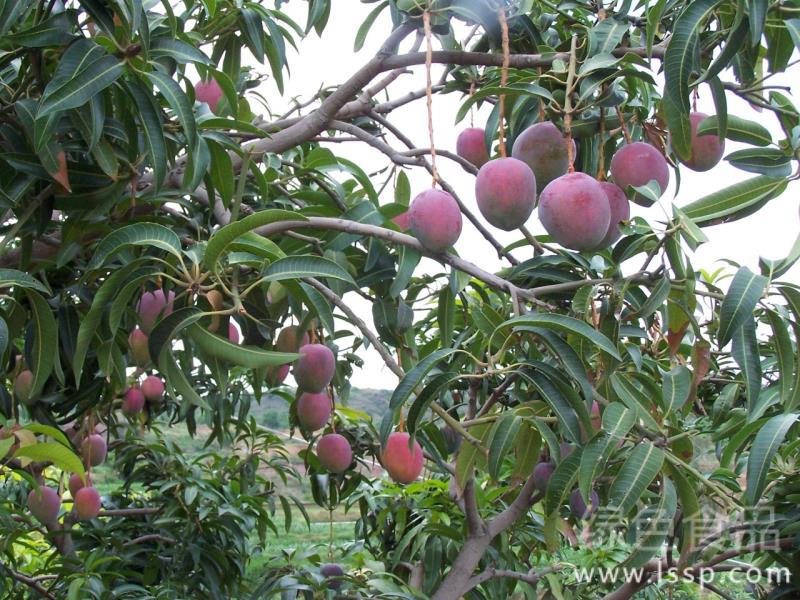
How should mango trees be fertilized to resolve the conflict between vegetative and reproductive growth?
How to fertilize mango trees to resolve the conflict between vegetative and reproductive growth
-
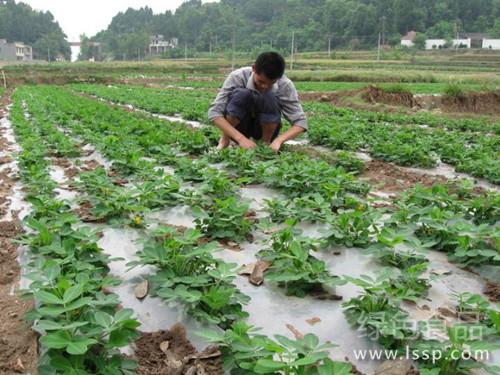
Key field management points for high-yield peanuts: topdressing, disease prevention, prevention of excessive vegetative growth, and prevention of premature senescence
Field management for high-yield peanuts: topdressing, disease prevention, prevention of excessive vegetative growth, and prevention of premature senescence
-
条件筛选