-

How to Water Vegetables in a Greenhouse? A Detailed Guide to the Correct Watering Method
How to Water Vegetables in a Greenhouse
-

How to remedy pesticide damage in greenhouse vegetables
What to do when pesticide damage occurs in greenhouse vegetables
-
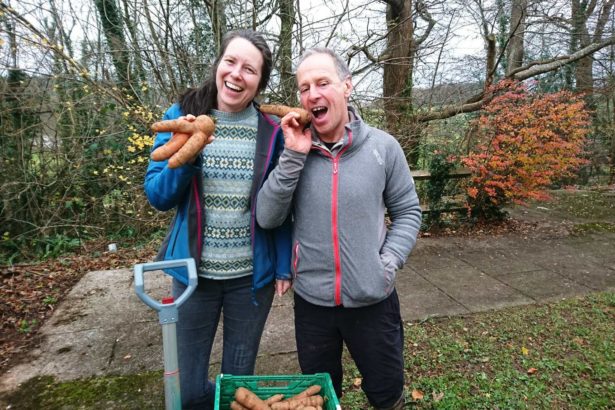
How Do Discarded Fruits and Vegetables Get Reborn? A Visit to the UK with Food Save
Food Save / UK Visit Notes: Giving Rejected Fruits and Vegetables a "Second Life"
-
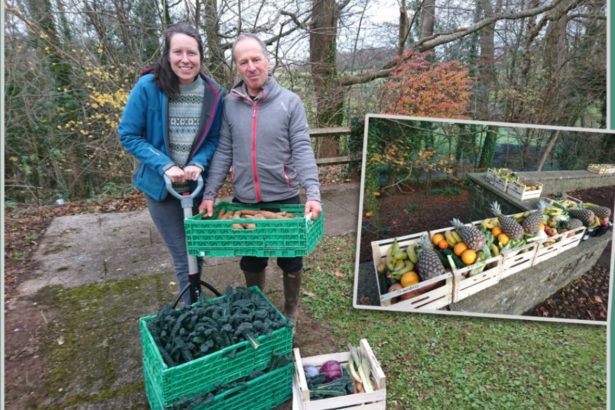
How do rejected fruit and vegetables get a new lease of life? A visit to the UK
A visit to the UK - giving rejected fruit and vegetables a "rebirth"
-

Fruit and vegetable prices generally fall after the Spring Festival; building dedicated cold-chain fruit and vegetable trains to prevent fruit and vegetable prices from falling
Last year, Taipei Agricultural Products Marketing Corporation saw overall vegetable auction prices drop by 30% due to multiple factors such as a surge in fruit and vegetable supply, weak consumption, and consecutive market closures. This year, subsidies are expected to help Taipei Agricultural Products Marketing Corporation build a cold-chain system to extend the freshness period of fruits and vegetables. Let's take a look. Connecting production areas, using cold chain
-

Introduction to New Varieties of Arugula, a Specialty Vegetable
Arugula is a rare specialty vegetable selected from local varieties by the Institute of Vegetables and Flowers, Chinese Academy of Agricultural Sciences. Characteristics: The taproot is well developed and the root system penetrates deep into the soil. The mature plant is 30--40 cm tall. The stem is round and covered with fine hairs, and the stem diameter is 0.2--0.4 cm. The leaves are deeply pinnately lobed with wavy margins, 10--15 cm long and 5--8 cm wide, and the petioles are 5--7 cm long. The flowers are yellow with black longitudinal stripes on the petals, and the fruit is a silique. Arugula prefers a warm, cool and humid climate. It is resistant
-
Introduction to Shenxian No. 1, an excellent vegetable soybean variety
Main characteristics: plant height 45 cm, determinate podding habit, uniform maturity, 3-seed pods account for more than 70%; fresh pods are green, with a lining inside the pod, fresh seeds have high crude protein content, tender taste, and excellent quality. Good early maturity; in the Yangtze River Basin region, about 65 days from emergence to fresh pod harvest, with fresh pod yield of 1000 kg per mu. Dry seed 100-seed weight 38 g. Key cultivation techniques: choose fertile, flat loam or sandy loam fields for planting. When the soil temperature in the 5-10 cm soil layer is stable at 1
-
What about Xidou 3, a superior soybean variety for both grain and vegetable use?
I. Yield Performance In 1997, the Chongqing Soil and Fertilizer Station conducted a variety comparison trial in Yubei District, Banan District and Jiangjin City, where the average yield across the 3 trial sites was 146.4 kg/667 sq m, ranking first in the trial. In 1998, the Tongnan County Soil and Fertilizer Station conducted a large-plot comparative trial of Xidou 3 and Yudou No. 1, and the results showed that Xidou 3 had an actual yield of 236 kg per 667 sq m, a 14.6% increase over Yudou No. 1. Through years of multi-site trials, demonstrations, and promotion practices in various places, Xidou 3 has shown that it is currently a new ideal soybean variety for both grain and vegetable use in the southwest region, with high yield potential,
-
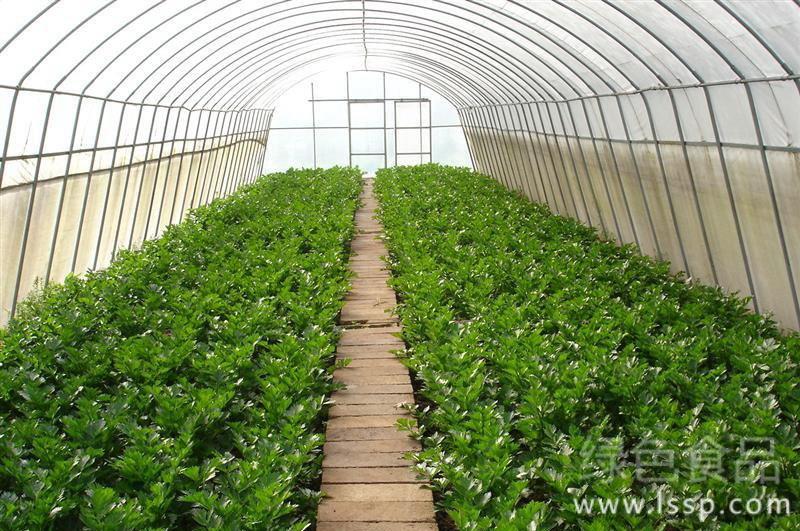
Six common mistakes to avoid when changing greenhouse film, vegetable growers should steer clear of them
Six common mistakes vegetable growers make when changing greenhouse film
-
Differences Between Madeira Vine, Tian Sanqi and New Vine Vegetable
Aliases: Tian Sanqi, tofu vegetable, new vine vegetable. Family and genus: Basellaceae, perennial herbaceous plant. Distribution: Cultivated in Yunnan, Sichuan, Hubei, Taiwan, China and other provinces, with bulbils and leaves used as food. Morphological characteristics: Madeira vine is a perennial succulent small vine of the Basellaceae family, with a well-developed root system; half a year after planting, tubers can form underground. The stem is round, the young stem is green, and the mature stem turns brown; adventitious roots easily form at the nodes. The leaves are alternate, heart-shaped, 8-15 cm long, 9-16 cm wide,
条件筛选