-
-
Differences and Characteristics Between Golden Trumpet Tree and Pink Trumpet Tree and Their Propagation Methods
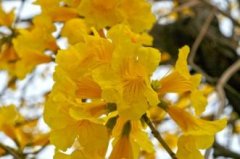
The genus Tabebuia consists of tropical trees. After being introduced to Taiwan, China, they grow well on the plains of the central and southern regions. In recent years, horticultural landscape cultivation has been increasingly on the rise. Winters in the north are damp and cold, so protection against cold damage must be strictly maintained. There are mainly two varieties: the Golden Trumpet Tree and the Pink Trumpet
-

Complete Guide to Tulip Varieties and Their Characteristics
There are an extremely large number of cultivated tulip varieties. According to incomplete statistics, there are currently more than 8,000, divided into Mendel Early Flowering, Double Early Flowering, Darwin Hybrid, ...
-

What varieties of cherry blossoms are there? An introduction to common types and their characteristics
1. Mountain cherry is a variety of cherry blossom. A wild species, with small flowers, white or tinged with pink, single-petaled flowers. 2. Double red cherry is a cultivated variety of cherry blossom. Double-petaled flowers, pink. 3. Weeping cherry is a cultivated variety of cherry blossom. Branches droop, flowers pink. 4. Japanese dawn cherry is a variety of cherry blossom with drooping branches and new leaves of a bronze color. Double-petaled flowers, large blooms, pink, fragrant. The flowering period is relatively late. 5. Magnificent cherry is a cultivated variety of cherry blossom. Double-petaled flowers, large blooms, light red, with relatively long
-
Introduction to Common Cherry Blossom Varieties and Key Management Points
What is commonly called cherry blossom refers to plants of the subgenus Cerasus within the genus Prunus (Pruns) of the Rosaceae family. There are over 100 species worldwide, distributed in the warm regions of Asia, Europe, and North America; China has 45 species, mainly distributed in the western and southwestern regions. Most are deciduous trees, 5-25 m tall, with broadly spreading crowns, grayish-brown bark with horizontal striations, grayish-white branchlets with small dot-like lenticels, oblong-obovate leaves with pointed tips and wedge-shaped bases, serrated margins, and often glands at the leaf base or on the petiole. Cherry blossoms are a very important early-spring ornamental
-
Introduction to Tokyo Cherry Blossom Varieties and Analysis of Their Main Characteristics
Family and genus: Rosaceae. Alternative names: Japanese cherry, Edo cherry. Morphological characteristics: Deciduous tree with dark brown, smooth bark; young twigs hairy. Leaves ovate-elliptic to obovate, 5-12cm long, apex acutely acuminate, base rounded to broadly cuneate, margin with fine pointed double serrations, veins on the underside and petioles pubescent. Flowers white to pale pink, 2-3cm in diameter, usually single-petaled, slightly fragrant; calyx tube tubular, hairy; pedicel about 2cm long, with short pubescence; 3-6 flowers arranged in short racemes. Drupe nearly spherical, black. Flowering period April.
-
What are the common cultivated varieties of geranium?
Common cultivated varieties of geranium: Common varieties include True Love, with single red flowers. Fantasia, a large-flowered type, with semi-double red flowers. Chewing Gum, a bicolour variety, with deep red flowers and a pink centre. Purple Ball 2 Pebal, with semi-double purple-red flowers. Tango Purple, a large-flowered type, with pure purple flowers. Melodo, a large-flowered type, with semi-double bright red flowers. Jana, a large-flowered, bicolour variety, with deep pink flowers and a carmine centre. Samba, a large-flowered type, with deep red flowers. Arava, with semi-double light orange-red flowers. Grape Designer, with semi-double
-
Cultivation techniques for new large-flowered geranium varieties
The large-flowered geraniums 'Coral', 'Ice Cave' and 'Scene' have a plant height of 30 to 40 cm, with round and large flower heads, good mass planting effect and few pests and diseases, making them excellent material for landscape applications. Geraniums of this type are all award-winning varieties from European flower trials. Their growth habit favours a cool climate, with a suitable growing temperature of 5°C to 25°C. The plants enter a semi-dormant state during the high-temperature period in summer, and in cold winter regions they can overwinter with only slight protection. They prefer a location with ample light, tolerate dryness and dislike waterlogging, and require a loose growing medium that
-
What are the new large-flowered carnation varieties?
1. Variety introduction: In the late period of the "Ninth Five-Year Plan", the Flower Research Institute of the Yunnan Academy of Agricultural Sciences undertook the provincial Science and Technology Department's science and technology tackling project "Breeding of New Large-flowered Carnation Varieties", and has bred a group of new cut-flower carnation varieties (lines). Some of the new varieties, after small-scale trial planting by flower growers, have shown good production suitability and marketability. Four applications for new carnation variety rights were filed with the Plant Variety Protection Office of the Ministry of Agriculture of China. Among them, compared with Master, currently the foreign variety of the same red series with the largest planting area, Yunhong No. 1
-
What are the cultivated species of lilies? A detailed introduction to common varieties
1. Lilium lancifolium, also called tiger lily. Its bulb is nearly flat-spherical, about 3.5 cm high, 4-8 cm in diameter, and weighs more than 250 g. The scales are broadly ovate, 2.5-3 cm long and 1.4-2.5 cm wide, white and slightly tinged with yellow. It is high in starch and slightly bitter. The aerial stem is 0.8-1.5 m tall, with purple stripes and white woolly hairs. The leaves are scattered, short-oblong-lanceolate or lanceolate, nearly hairless on both sides, with white hairs at the tip, papillate along the margin, with 5-7 veins, and bulbils in the upper leaf axils. The flowers are orange-red, opening downward, with the tepals recurved outward
条件筛选